Showing posts with label inspiration. Show all posts

Sunday, 11 July 2021

Are You Swimming With or Against the Current of Life?

The Current of Life 

The story of the green sea turtle

Niklas Göke

In his book The Cafe on the Edge of the World, John Strelecky tells the story of a man in a hurry.

The man, a busy professional also named John, is stuck in a massive traffic jam en route to his much needed vacation. When he tries to circumvent the roadblock, he gets lost and, running out of fuel, energy, and growing ever hungrier, turns in to a cafe in the middle of nowhere — The Cafe of Questions.

Inside the cafe, John gets a delicious breakfast, but he is also confronted with a series of uncomfortable, oddly well-timed questions, such as “Why are you here?” “Do you fear death?” and “Are you fulfilled?” The waitress, cook, and fellow guests seem to be able to read his mind, and they all make him reflect deeply on the path in life he has chosen thus far.

At one point in the book, the waitress, Casey, sits down in John’s booth and tells him the story of the green sea turtle. She too was once on vacation, she says. Snorkeling off the coast of Hawaii, she spotted a green sea turtle right next to her in the water. This being the first time she ever saw one, she was excited and decided to follow the little guy for a while.

“To my surprise, although he appeared to be moving pretty slowly, sometimes paddling his flippers and other times just floating, I couldn’t keep up with him. I was wearing fins, which gave me propulsion power through the water, and didn’t have on a buoyancy vest or anything that would slow me down. Yet he kept moving farther from me, even though I was trying to keep up. After about ten minutes, he lost me. Tired, disappointed, and a little embarrassed I couldn’t keep up with a turtle, I turned back and snorkeled to shore.”

The next day, Casey returned to the same spot, and again, she found and tried to keep up with another green sea turtle. As she realized that turtle too was about to lose her, she stopped paddling and just floated in the water.

“As I was floating on the surface, I realized something: When the turtle was swimming, it linked its movements to the movements of the water. When a wave was coming at him, he would float, and paddle just enough to hold his position. When the pull of the wave was from behind him though, he’d paddle faster, so that he was using the movement of the water to his advantage. The turtle never fought the waves. Instead, he used them.”

Casey, on the other hand, had been paddling the whole time. This was easy enough when the tide was in her favor, but the more she fought the incoming waves, the less energy she had to capitalize on the outgoing ones later.

“As wave after wave came in and went out, I became more and more fatigued and less effective. Not the turtle though. He kept optimizing his movements with the movements of the water. That’s why he was able to swim faster than I could.”

If you’re like me — and John — at this point in the story, you’ll wonder: That’s great — but what does it have to do with me and my life? Actually, a whole lot, as Casey will explain in a second.

Have you ever felt like you’re fighting an uphill battle? As if for every two steps forward, life somehow pushes you one step back?

It happens to all of us. We do our best to fulfill our duties as responsible adults, and yet, it seems we must fight tooth and nail to make room for the few people and activities that are truly important to us. Why is that?

Well, as the green sea turtle might tell us: “You’re swimming against the current of life. Why don’t you try swimming with it?”

After Casey gives him some time to think about the story, John interprets it as follows:

“I think the turtle — the green sea turtle — taught you that if you aren’t in tune with what you want to do, you can waste your energy on lots of other things. Then, when opportunities come your way for what you do want, you might not have the time or strength to spend on them.”

Casey smiles, for she knows the power of grasping an important lesson out of one’s own thinking, and then she adds some more context to John’s insight:

“Each day, there are so many people trying to persuade you to spend your time and energy on them. Think about just your mail and email. If you were to participate in every activity, sale, and service offering you get notified of — you’d have no free time. And that’s just mail and email. Add on all the people who want to capture your attention for television time, online activities, places to eat, travel destinations…You can quickly find yourself living a life that’s just a compilation of what everyone else is doing, or what people want you to be doing.”

Casey then explains that since she observed the turtle moving effortlessly through the water, she has taken a new perspective on life: The incoming waves represent all the people, activities, and things that clamor for a share of her attention, time, or energy but don’t contribute to what she really wants to do in life. In essence, they block her from fulfilling her purpose. Meanwhile, the things and people that support Casey living in sync with her calling are like outgoing waves — they carry her towards her destiny.

That’s the lesson of the green sea turtle, and even though it’s a big one to swallow with his pancakes, John decides to chew on it for a while. I hope you will too.

When Casey leaves John to ponder her story, he asks her for pen and paper. On the back of his napkin, he calculates that if he spends 20 minutes a day flicking through unimportant mail for 60 years, that’s over 300 days of his life — almost an entire year, wasted on one incoming wave.

What about all the others? What about TV commercials, mindless radio listening, and people trying to network with him for their advancement? And those are just the distractions John didn’t choose. He too is human. He’ll distract himself as well along the way.

John is shocked. He tells Casey about his discovery. While she reminds him that not all mail is junk — and not all distractions are wasted time — she does admit:

“It can get you thinking. That’s why my time with the green sea turtle made such a big impact on me.”

When you feel like all you do is struggle, ask yourself: “Am I swimming with the current of life? Or am I desperately paddling against it?”

Do you focus too much on distractions? Are you allowing the wrong activities and people to take up your time? If so, it is no wonder every hour you spend on hobbies and friends you love feels like an hour you must mine from the hardest rock with your bare hands.

At the same time, for every distraction you ignore, one ally will look your way. Wait for the right wave, the right circumstances to arrive, and then ride it with everything you’ve got. If the knitted beanie trend is fading, maybe wait a year to start your knitting business. If a friend offers you a small book deal to tell a story you’ve always wanted to tell, go for it!

After years of high-paying but also highly stressful jobs, John Strelecky decided to finally fulfill his childhood dream of traveling the world. When he came back, he wrote the book he needed to read; he gave himself the message he needed to hear.

Since then, that message has been shared millions of times around the world: Don’t swim against the current of life. Focus on the right people, the right activities, and the right things. Only then will it carry you to your dreams.

It’s just one of many metaphors in his book, but I have no doubt that, somewhere on the edge of the world, a green sea turtle once taught Strelecky that lesson — and from that very same turtle, we can still learn to navigate the seas of life today.

I write for dreamers, doers, and unbroken optimists. For my best articles & book updates, go here: https://niklasgoeke.com/


Monday, 8 February 2021

For Everyone Who’s Twenty, Ambitious, and Lost

Youth 


Hear this: don’t trust yourself.

 Photo:  Canva


We’ve all heard the phrase, “trust yourself.”

It’s popular. It feels good. It’s even true.

As my dad likes to say, “We’re the ultimate experts of ourselves.” Nobody can tell you what life you should live, what to eat for breakfast, whom to date, and where to work.

Yet…

When you’re young, trusting yourself is a double-edged sword.

Yes, it’s important to “follow your bliss” and all of that. But if there’s anything you lack in your twenties, it’s experience. (Also, wit, knowledge, and perspective.)

Choices that seem right at first glance (e.g., go travel the world with a backpack) might actually be stupid choices. Dreams that seem yours (e.g., become a multi-millionaire by 30) might not be such. Beliefs that seem right (e.g., all men should be financially successful) might be short-sighted.

As Stephen Colbert once noticed, “If we all had followed our first dreams, the world would be teeming with cowboys and princesses…”

The good thing about dreams is that they change. And so do we.

Making mistakes is part of the process, sure. But blindly trusting your young — and inexperienced — self might lead you astray.

Whenever I see 20-year-olds pushed to make decisions about their career, I think, “Do you really want to delegate making a decision about your entire future to a hormone-driven, sex-obsessed, YouTube-watching, vodka-drinking 20-year-old?”

A better option would be to seek guidance.

Not by blindly following other people’s advice — after all, you’ve got your own life to live — but by absorbing the perspective of wiser, older, more experienced human beings.

You don’t need a mentor. The Internet is full of brilliant people recording podcasts, giving commencement speeches, writing blogs. (If you need a start, watch this commencement speech, read this blog, and listen to this podcast.)

Have heroes and role models instead.

Always remember that to a sixty-year-old, twenty is a baby. (So is thirty and forty.) Experienced people see what you don’t see. They see the forest behind the trees, while you’re obsessed with “making it” and not looking bad on Instagram.

It’s not bad to ask for help when you need it. In fact, it’s a sign of wisdom and humility. The most successful people in the world were guided. (Even Luke Skywalker.)

If there’s one thing every young person needs help with, it’s perspective. Keeping the right mindset about your age, capabilities, and options.

Being grateful, patient. Not complaining or selfish.

When it comes to that, I say, “Don’t trust yourself.”

Trust people who’ve walked the path before you instead.

If you enjoyed this, subscribe to my daily blog. It’s free and you’ll get posts like this by email.

Written by


Saturday, 10 October 2020

This 130 Year Old Formula Explains How Self-Esteem Works

Self Esteem 


 Thanks to Michael Dam for sharing their work on Unsplash.


In 1994, Michael Jordan, the greatest basketball player of all time, retired from the Chicago Bulls and tried to pursue a professional baseball career. Some say Michael was paying tribute to his father, who used to be a semi-pro baseball player and loved the game immensely.

From the start, everyone criticized Jordan’s baseball skills. His swings weren’t particularly good, and he was a slow runner in baseball terms.

The funny thing is that Michael Jordan’s first sport was baseball. And he was pretty good as a kid, but at 31 years old, he simply wasn’t good enough for the MLB. It makes me think; what if Jordan never pursued basketball?

There’s a quote that I thought about when I saw Jordan’s baseball adventure (there’s an excellent ESPN doc called ‘Jordan Rides the Bus’ about this). The quote is attributed to Einstein:

“Everybody is a genius. But if you judge a fish by its ability to climb a tree, it will live its whole life believing that it is stupid.”

It hasn’t been verified if Einstein really said that. But it’s so true regardless of who said it. If you’re feeling bad about yourself in life or are low on self-esteem, just remember that Michael Jordan, arguably the best basketball player of all time, would’ve lived his life believing he was just a mediocre athlete if he did not pursue basketball.

What Is Self-Esteem?

Psychology defines it as an individual’s overall sense of self-worth or personal value. It’s how much we appreciate and like ourselves.

Many factors affect our self-esteem. Things like genetics, childhood experiences, and age, are out of our control. But other factors like our stamina, strength, thoughts, and personal circumstances can be managed.

Self-esteem is not some permanent state of mind, though. It changes over time. As the Michael Jordan story shows, self-esteem largely depends on the current situation we’re in. What you’re currently going through or what happened to you in the past doesn’t determine how you will feel tomorrow.

So what does that look like in daily life? Well, it’s difficult to keep healthy relationships, excel at work, cope well with stressful situations, and even be happy if you lack a sense of self-worth. Here are two situations that show how self-esteem impacts our daily lives.

Self-talk

If you constantly talk yourself out of everything you want to do, you end up doing nothing. I recently started teaching an online course about digital entrepreneurship. And nearly every person goes through something like this:

“I had this great idea and got excited about it. Then, I looked it up and saw it already exists. I don’t know how to come up with something unique.”

And then, they go on blaming themselves. Another thing I often hear is, “I want to start a blog but there are already millions of them.” When I started, it was the same thing. I could have said, “Well, there are already a million productivity blogs so I’m not going to start one.”

Let’s be honest. These are all excuses. We all come up with “reasons” why we shouldn’t start a business, write a book, talk to the person you fancy, move to a different country, start losing weight, etc.

Working with others

Without confidence, we can’t do things like committing to something, sticking to our decisions, and taking calculated risks. You can’t work well if you keep second-guessing your own actions.

No one likes to work with people who are unsure about everything. It’s so frustrating. But we fail to look in the mirror.

When you’re in a meeting, and a client or boss attacks you or expresses concerns, will you tell them the truth, or will you cop out and give an excuse?

The William James Formula

So, how do you improve your self-esteem? In 1890, William James, “The Father of American Psychology,” published The Principles of Psychology. I’ve been a fan of James’ work for many years. My book, Think Straight, is primarily based on his philosophy of Pragmatism.

William James says that self-worth is based on two elements: Our actual achievements, and our aspirations. He demonstrated this idea in an equation:


Self-esteem = success/pretensions

Our self-esteem is dictated by how well we’re doing in life (success) divided by how good we feel about ourselves (pretensions). Good self-esteem is the result of having more success than pretensions.

How To Use This Formula

What I like about this formula is that it’s practical, realistic, and honest. It’s not about positive affirmations or saying stuff like, “you’re a badass” without results.

But we can’t have success with everything we do. As William James said, a person has to “pick out the one on which to stake his salvation.”

Michael Jordan could’ve been an okay baseball player. But he could only be exceptional at basketball. Basketball is his “salvation.” If you want to become great at something, you need to know what you’re good at and what you consider important.

If you feel like you can’t do anything, then you’re likely doing the wrong thing.

Too many people do stuff that don’t correspond to their strengths, and this is where they fail.

As we succeed more in life, our self-esteem grows. So, ask yourself: Are you doing something you can be great at?

Sometimes, we feel stuck. Maybe you’re working a dead-end job, or something you enjoy but having little success with, and you don’t know what to do. That’s okay. I go through those moments as well.

The most important thing is that we focus on our strengths, skills, and areas we can achieve something meaningful, just like Jordan and basketball — not baseball. Your self-esteem will grow as a result of that.

Written by

I write about productivity, habits, decision making, and wealth building. Subscribe to my newsletter to get free articles in your inbox: dariusforoux.com/


Saturday, 5 September 2020

If Reading Books Hasn’t Transformed Your Life, You’re Doing It Wrong

The Value of Reading


Five simple steps to retain and master what you read


Thanks to Jonathan Borba for sharing their work on Unsplash.


In my early 20s, I worked for an obnoxiously rich boss in New York City’s financial district. On my first day of work, he convinced me I could achieve what he had.
“But first,” he said. “You need to read this book. He opened up his desk drawer and pulled out a fresh copy of Think and Grow Rich by Napolean Hill. “It will change your life.”
On my subway ride home that evening, I read the first few pages and devoured the rest of it that night. The next morning, I sprung out of bed in my dreary studio apartment, certain the wisdom dropped into my lap would catapult me to the stratosphere of success.
Three months later, the riches never came. Broke, discouraged, and sickened by the industry, I quit. The book, apparently, did not change my life.
Years later, I hired a mentor and told him this story. He disagreed with my assertion that a book couldn’t change your life. I had gone about it the wrong way, according to him. He then shared with me his technique to make books truly life-changing.
His reasoning made sense. You can’t get the full value from a book by reading it once. It takes repetition to learn and master the material.
That revelation was both depressing and encouraging. I hadn’t benefited from books because I had rifled through them, intent consuming rather than harvesting the wisdom contained within them.
But to read a book ten times. Who could motivate themselves to wade through the same material over and over? I couldn’t. I got bored after two readings of even the most engaging texts.
But what if you could read a book only once but benefit from it as though you had read it ten times?
That’s when I came up with a system.

Five simple steps to retain and master what you read

Let’s be honest. Just about every nonfiction, self-help book you read can be distilled down to two or three pages of notes. The rest of it is all fluff.
With that in mind, we need to extract the valuable material once and then organize it into a summarized version that makes sense to us.
Sure, you can buy book summaries and forego this effort. But I find that I need to read the book and write notes in my own words. Otherwise, I miss out on context and meaning. I’m also not as invested in the assimilation phase — a phase you are unlikely to do if you’re buying the cliff notes.

Step 1 — Notate

As you read your book, place an X or checkmark next to every concept or idea. Don’t worry about repetitive points. You’ll deal with that later. In some sections, you’ll find examples that explain a concept. For each one, put a star next to the beginning of the example. Different symbols help distinguish between instruction from explanation.
If you’re working off an electronic book, make use of the highlighting and note feature to distinguish between teachings you want to flag and examples that help you understand the lessons.

Step 2 — Distill

Once you finish reading and notating, go through the markup and transfer the salient points to a document. Be sure to put the page number at the end of each entry, so you can refer back to the book at a later date if you need further reference. Put your notes in your own words; it helps the learning process.
You’ll find redundancies as you go through your notations. Whenever you see repetition, ask yourself if the new explanation supersedes the old one or if the previous one proves superior.
As you review examples of different points, choose the one instance that best helps you visualize the lesson. It’s tempting to include multiple “for example” entries, but that will clutter up your summary.

Step 3 — Edit

Once you finish the distillation process, step away from your document for a few days. You’ll need to distance yourself from it before you can edit effectively.
As you go through the editing process, reword anything that doesn’t make sense. Remove remaining redundancies and cut anything that fails to advance your understanding of the topic. By the time you finish, your summary should be no more than three pages.
Continue this process two or three more times. Take additional steps to consolidate and clean up your verbiage. Each time you go through the process, it solidifies the learning.

Step 4 — Assimilate

It’s this step that most folks skip. They finish a book, feeling like they’re on the cusp of a life change. They see the world through a different lens. And then, they move onto the next book without taking the time to test-drive, customize, and absorb what they had learned.

Execution closes the learning circle. It’s where the great teachings become part of your everyday thinking and skillset. It’s here that the wisdom from a great book can truly change your life.
Review your summarized notes once per day. For each lesson in your document, do one action each day to practice it until you assimilate it into your daily routine. In some cases, you may need to practice a new way of thinking. In other books, it could be skill development or technique refinement.
Here’s a snippet from the document I created for the book On Writing Well by William Zinsser.

Back when I read this, I spent a week making sure I reduced each story to the smallest possible objective. Once finished, I moved on to the next lesson.

Step 5 — Reinforce

What about a year or five years from now? You’ll end up with a ton of book summaries. It’s cumbersome and unrealistic to review each one indefinitely. Here’s a practical way to reinforce what you’ve learned.
For each of your most-read book categories, draw the essential points from each summary, and create a checklist. This practice gives you a handy way to review material long after you’ve finished the assimilation phase. You may end up with a bunch of different checklists. I have ones for writing, personal finance, creativity, sales, and mindset.

Written by

Tuesday, 4 August 2020

Look for These Qualities in People and You’ll Be Surrounded by Amazing Humans

People Who Help You Grow


 Coronavirus has somewhat shown us the value of people, on the one hand, the amazing helpers, on the other, those who stockpiled goodies as if there was no tomorrow with no regard for their fellow humans who were perhaps more in need.  It pays to assess carefully who you surround yourself with!

This is how you find people who add value to your life.


Aug 2 · 4 min read

Monday, 29 June 2020

Ikigai: The Most Misunderstood Secret to A Happy Life

Happiness


Who wouldn’t want to live a life where they are rich, passionate, talented, and changing the world? It sounds perfect, doesn’t it? Yet it’s unrealistic and not the only way to live a life of meaning.
The Japanese have a beautiful concept to guide their lives called ikigai. I learned it from karate masters on the beautiful Japanese islands of Okinawa. Researchers have claimed ikigai is the reason why the islands have the highest density of 100-year-olds in the world.

Ikigai is the reason to be and reason to live.

I want to demystify ikigai for you to help you live your version of your best life. I will clear the confusion of the Western understanding and make you realize it’s within your reach.

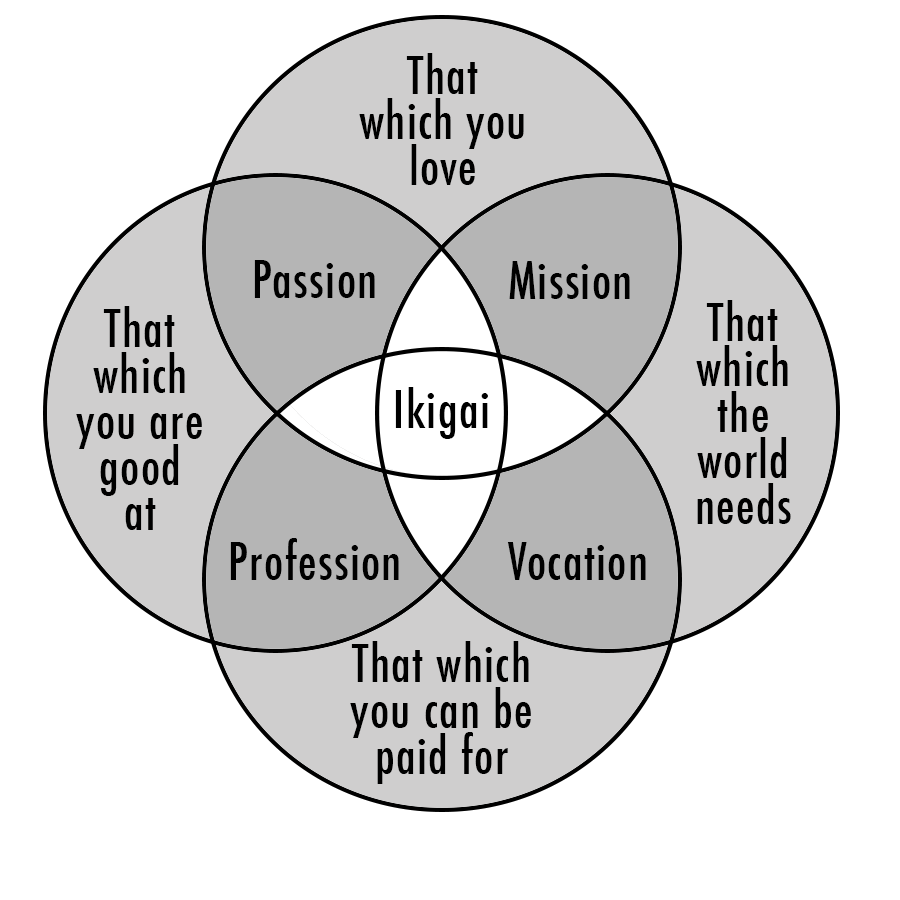
Ikigai is Not Four Circles

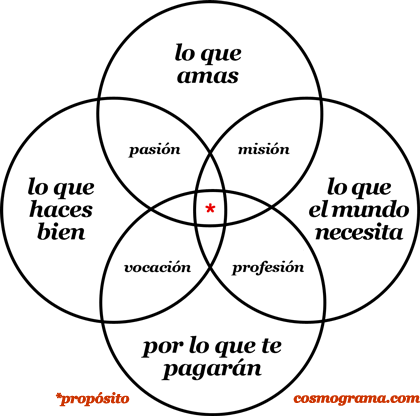
Now ikigai is most famous in the West for a four circle Venn diagram. The internet is full of claims it is about finding a perfect sweet spot between:
  • What you love
  • What you care about
  • What the world needs
  • What you can get paid for

Left: Winn, Marc. Ikigai Venn Diagram. What’s Your Ikigai?, The View Inside Me, May 14, 2014, http://theviewinside.me/what-is-your-ikigai/. Right: Zuzunaga, Andres. Proposito. 2011, https://www.cosmograma.com/proposito.php
This could be great advice but it’s nonsense to call it ikigai. The diagram creator, Marc Winn, admitted he watched one TED talk then changed one word on another concept. The famous ikigai diagram is really psychological astrologer Andres Zuzunaga’s theory of purpose!
So if you’ve been following this model, thank Zuzunaga and stop calling it ikigai. Awkward right?
Now let us explore how to promote your reason for living.


Your Ikigai Doesn’t Need to Make You Rich

Your career does not need to be your ikigai. Many books have hijacked the concept and sold it as career advice. There is more to life than work!
In a large study, only 31% of Japanese people who said they had an ikigai said it was work-related. Bear in mind Japan has one of the most extreme workaholic cultures in the world. They even have a word for death by overwork, karoshi! Hobbies, family, and friends all scored higher than work when asked about their ideal ikigai.
Some of the greatest living instructors taught me karate in Okinawa. For weeks I spent 4 hours training every day in the sweltering heat. Do you know how much it cost? $20 to help pay for the upkeep of the dojo. The people who taught me refused any payment except for a box of matcha flavored treats. Sensei Kinjo explained they are here because of the joy it brings our lives, not for money.
They all had other normal jobs such as being teachers, policemen, and postmen. They could choose to make a living from their skill but it would spoil it for them. Addiction to monetizing everything can get in the way of our ikigai. Stop to think about whether keeping your passion as a hobby adds more value to your life.
Many elderly Okinawan women were housewives. Their ikigai was their family and a close group of friends. Would you dare to tell them their lives had no purpose because they didn’t make money?
If your career is the reason you get up in the morning then awesome. Yet if it’s not, there’s no need to despair. It is okay for work to just allow you to make the most of what you do enjoy.


Your Ikigai Doesn’t Need to be Found

If you take only one thing from reading this, let it be the knowledge your purpose in life is not floating in the air waiting to be caught. Your reason to live comes from inside and you decide what it is.
Self-doubt plagues even some of my most successful friends. Why? Because they haven’t found the magical purpose they read about. The idea something is out there to make our lives perfect is a lie. It’s comforting to begin with but destructive when the chase seems eternal.
I wonder how many of the Okinawan masters knew at the age of 3 when they started this would be their reason to live. I think you know the answer. Our purpose can come into our lives accidentally and we grow to love it.
My day job in the tech industry puts fire in my belly now but I was sure I wanted to work in a bank when I was younger. It doesn’t mean I am free from the odd mundane task. Yet I make a game out of these to create challenges and enjoyment.
Stop seeking to do what you enjoy, instead enjoy what you do. It’s a simple mindset shift yet so powerful. What is a task you hate? How can you make it more enjoyable?
We should be mindful that doing more of what we enjoy doesn’t always mean we will be happier. A passion for running doesn’t mean it needs to dominate your life. Running 5km at the weekend is not the same as the brutal schedule of a professional runner. You may already have the ingredients for your perfect life. You just need to allow your senses to guide you to the right proportions.


Your Ikigai can be Multidimensional

The idea of one pure purpose in life is enticing. Yet most of us don’t live like this and we can find joy in many parts of our lives.
Is a happy person cheating on their ikigai if they love their family and their work? Of course not. We want different areas of our lives to be reasons for us to get up. This gives us stability so our peace is not fragile. A person who finds joy in different areas of their lives will rarely fail to jump out of bed.
In martial arts circles, there is a weird purity argument where people want to prove their style is the best. Yet the Okinawan karate masters themselves train in karate, kobudo, and judo. After training, I have seen for myself they also love the company of their friends and some cheeky karaoke!
Titans of humanity such as Nelson Mandela may be used to argue a single life purpose is important. When we dive a bit deeper, Nelson Mandela had many things to give his daily life meaning. He did an exercise routine and cranked out hundreds of push-ups even at an advanced age. He had letters and visits from his family. He shared his prison sentence with some of his closest friends.
There is an obsession with making sacrifices to be happy. Often this is to take one of our purposes to the extreme and to “grow”. You can have a family, friends, hobbies and a happy career. When making sacrifices, it is best to first pause and self-reflect.
Imagine your daily life when you’ve reached your goals. Does this lifestyle align with what you enjoy? I’m guilty of thinking about a single event where I would feel happy rather than the daily routine. If you can see your days will be full of enjoyment then steam forwards.


Your Ikigai can Change

Change is the only constant in life. It makes sense what gets us out of bed when we are children is different from when we are elderly.
We must allow our purpose to evolve when our situation changes. Our body physically changes over time but so does the way we view the world. Maybe parkour gives you a reason to wake up when you are young but it won’t go too well for you when you aren’t. When we cling onto our past selves, we can’t enjoy the present moment.
In Okinawa, I trained with people who were monsters in their physical prime. This was the place the most dangerous man in all of Japan learned his craft. Their focus shifted with age from the ecstasy of their training to the delight of students growing. Before they trained to be the best in the world and now the best in the world come to train with them.
In Homo Deus, Yuval Noah Hariri explains our authentic self is a rationalization our brain creates from a series of events. We can change anything including our principles. A person who hates animals, can later in life have a pet which lights up their day. I can confess I thought I would never do yoga because I wasn’t that type of person. Now it is a key part of my life.
Don’t limit yourself out of loyalty to a person you no longer are. It’s ok to accept you’ve changed as isn’t this part of the whole point of growth? Allow yourself to try new things and who knows it could be a source of ikigai for decades to come.


Your Ikigai can be Simple

Your ikigai isn’t about impressing other people. You don’t need to shout it at everyone you meet. It’s what is important to you not who other people would like you to be. Not everyone can be an Olympic athlete or billionaire.
Ken Mogi, a neuroscientist, makes ‘the joy of little things’ one of his pillars of ikigai. Yukari Mishuhashi, a journalist, says you can uncover your ikigai by asking simple questions:
  • What brings happiness to my everyday life?
  • What puts a smile on my face just thinking about it?
  • What would I continue to do even if I had enough money to live happily ever after?
One of the instructors in Okinawa was a postman. How many of you dream of being a postman? Yet he loved his life. He was active and saw the city every day. He would stop for a chat when he delivered to his friends’ houses or passed by someone he knew. So many of us chase career success to make us happy but I wonder how many of us are happier than this postman.
For the Japanese, ikigai can be a practice in gratitude. We can tend to get caught in what we don’t have yet rather than what we do. Many of us won’t need to make drastic life changes to enjoy ikigai. All we need to do is give value to what is already in our lives without shame.
Don’t compare yourselves to others when working out what wakes you up in the morning. Enjoy the simple things in life such as a gentle walk or good book. Be grateful for the small things and you’re less likely to lose your head in the clouds.


All You Need to Know

If you had heard of ikigai before, I hope I’ve changed your mind on what it is. For those new to the concept, I hope I’ve given you the freedom to express yourself away from the toxic rules society can impose on us.
I don’t know who you are but I know you have a reason to live. I know your life has value. You already had ikigai but now I hope you are more conscious of it and don’t let it slip.
Here’s my ikigai cheat sheet:
  • Ikigai is not four circles
  • Your ikigai doesn’t need to make you rich
  • Your ikigai doesn’t need to be found
  • Your ikigai can be multidimensional
  • Your ikigai can change
  • Your ikigai can be simple
Thank you for reading and have a wonderful day!


Written by

★ Polymath & relentless learner ★ 7x Top Writer focussed on Personal Growth and Writing ★ 300k+ views Quora & Medium 2020 ★ Mod @ Medium Dreamers

Saturday, 27 June 2020

This 4 Minute Exercise Can Seriously Boost Your Self-Awareness

Exercise


If you’re going to audit anything, start with yourself

Jun 24 · 4 min read


If you’re going to audit anything, start with yourself

“You’re making things harder than they need to be. Stop thinking so damn much. You need to start a ‘Love / Hate’ list.”

Don’t mess up the endgame

“If you’re a hot air balloon, you’ll fly a lot higher if you focus on dropping the weight that is holding you down instead of adding heat to the balloon.” — Conor Neill.

Be careful, you may end up with a journaling habit


Personal Growth

Sharing our ideas and experiences.

Written by

Co-creator of 2 little boys with my dream girl - Career Coach featured in Fast Co, Business Insider, Inc — say hi @ www.linkedin.com/in/mikethompsonblog

Sharing our ideas and experiences.