"Life doesn't go from A to B -- it's messy," says sailing legend Tracy Edwards. In this inspiring talk, she tells how she went from teenage misfit to skipper of the first all-female crew in the toughest race on the seas -- and how she now helps young people around the world achieve their dreams, too.
This talk was presented at an official TED conference, and was featured by our editors on the home page.
About the speaker
Tracy Edwards · Trailblazer
Tracy Edwards MBE battled against the odds (and the sea) to become the first woman to win the Yachtsman of the Year Trophy.
Who
wouldn’t want to live a life where they are rich, passionate, talented,
and changing the world? It sounds perfect, doesn’t it? Yet it’s
unrealistic and not the only way to live a life of meaning.
The Japanese have a beautiful concept to guide their lives called ikigai. I learned it from karate masters on the beautiful Japanese islands of Okinawa. Researchers have claimed ikigai is the reason why the islands have the highest density of 100-year-olds in the world.
Ikigai is the reason to be and reason to live.
I want to demystify ikigai for
you to help you live your version of your best life. I will clear the
confusion of the Western understanding and make you realize it’s within
your reach.
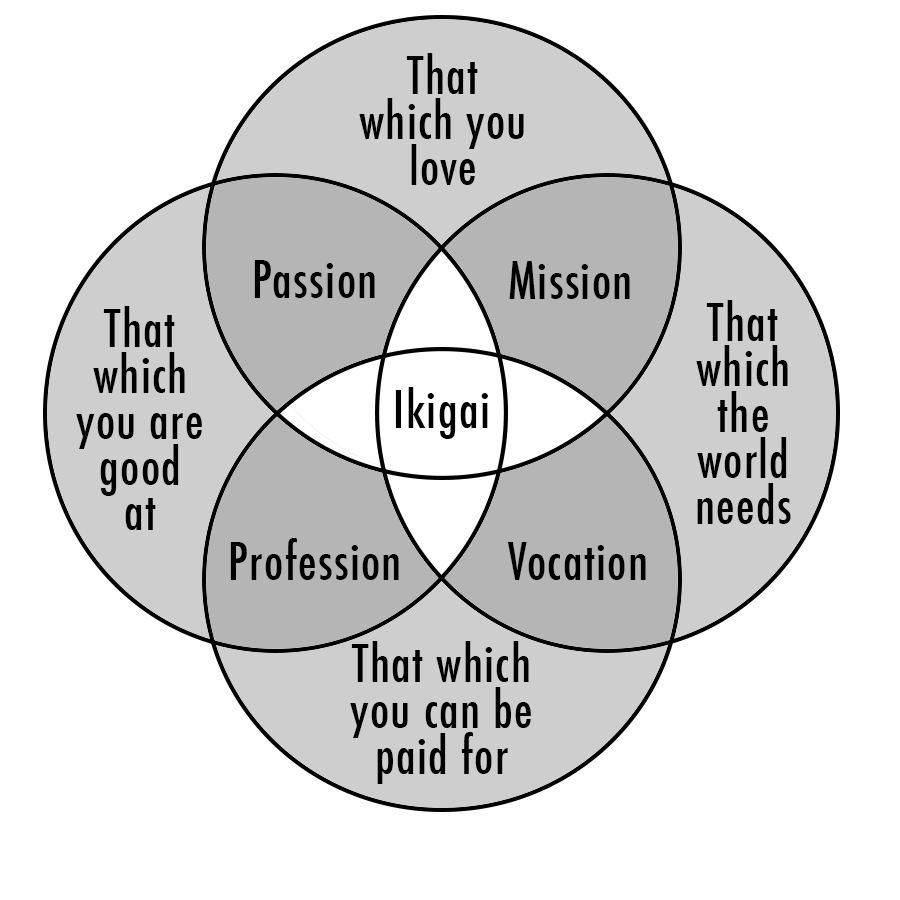
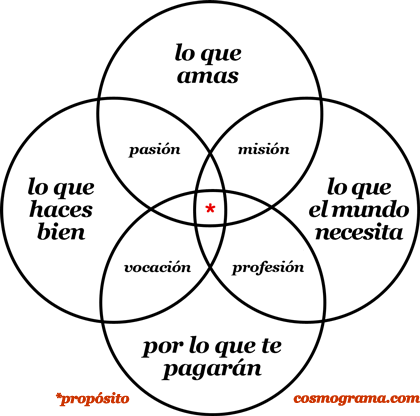
Ikigai is Not Four Circles
Now ikigai is
most famous in the West for a four circle Venn diagram. The internet is
full of claims it is about finding a perfect sweet spot between:
So if you’ve been following this model, thank Zuzunaga and stop calling it ikigai. Awkward right?
Now let us explore how to promote your reason for living.
Your Ikigai Doesn’t Need to Make You Rich
Your career does not need to be your ikigai. Many books have hijacked the concept and sold it as career advice. There is more to life than work!
In a large study, only 31% of Japanese people who said they had an ikigai said
it was work-related. Bear in mind Japan has one of the most extreme
workaholic cultures in the world. They even have a word for death by
overwork, karoshi! Hobbies, family, and friends all scored higher than work when asked about their ideal ikigai.
Some
of the greatest living instructors taught me karate in Okinawa. For
weeks I spent 4 hours training every day in the sweltering heat. Do you
know how much it cost? $20 to help pay for the upkeep of the dojo. The
people who taught me refused any payment except for a box of matcha
flavored treats. Sensei Kinjo explained they are here because of the joy
it brings our lives, not for money.
They
all had other normal jobs such as being teachers, policemen, and
postmen. They could choose to make a living from their skill but it
would spoil it for them. Addiction to monetizing
everything can get in the way of our ikigai. Stop to think about whether
keeping your passion as a hobby adds more value to your life.
Many elderly Okinawan women were housewives. Their ikigai was
their family and a close group of friends. Would you dare to tell them
their lives had no purpose because they didn’t make money?
If
your career is the reason you get up in the morning then awesome. Yet
if it’s not, there’s no need to despair. It is okay for work to just
allow you to make the most of what you do enjoy.
Your Ikigai Doesn’t Need to be Found
If
you take only one thing from reading this, let it be the knowledge your
purpose in life is not floating in the air waiting to be caught. Your
reason to live comes from inside and you decide what it is.
Self-doubt
plagues even some of my most successful friends. Why? Because they
haven’t found the magical purpose they read about. The idea something is out there to make our lives perfect is a lie. It’s comforting to begin with but destructive when the chase seems eternal.
I
wonder how many of the Okinawan masters knew at the age of 3 when they
started this would be their reason to live. I think you know the answer.
Our purpose can come into our lives accidentally and we grow to love it.
My
day job in the tech industry puts fire in my belly now but I was sure I
wanted to work in a bank when I was younger. It doesn’t mean I am free
from the odd mundane task. Yet I make a game out of these to create
challenges and enjoyment.
Stop seeking to do what you enjoy, instead enjoy what you do. It’s a simple mindset shift yet so powerful. What is a task you hate? How can you make it more enjoyable?
We
should be mindful that doing more of what we enjoy doesn’t always mean
we will be happier. A passion for running doesn’t mean it needs to
dominate your life. Running 5km at the weekend is not the same as the
brutal schedule of a professional runner. You may already have the
ingredients for your perfect life. You just need to allow your senses to
guide you to the right proportions.
Your Ikigai can be Multidimensional
The
idea of one pure purpose in life is enticing. Yet most of us don’t live
like this and we can find joy in many parts of our lives.
Is a happy person cheating on their ikigai if
they love their family and their work? Of course not. We want different
areas of our lives to be reasons for us to get up. This gives us
stability so our peace is not fragile. A person who finds joy in different areas of their lives will rarely fail to jump out of bed.
In
martial arts circles, there is a weird purity argument where people
want to prove their style is the best. Yet the Okinawan karate masters
themselves train in karate, kobudo, and judo. After training, I have
seen for myself they also love the company of their friends and some
cheeky karaoke!
Titans
of humanity such as Nelson Mandela may be used to argue a single life
purpose is important. When we dive a bit deeper, Nelson Mandela had many
things to give his daily life meaning. He did an exercise routine and
cranked out hundreds of push-ups even at an advanced age. He had letters
and visits from his family. He shared his prison sentence with some of
his closest friends.
There
is an obsession with making sacrifices to be happy. Often this is to
take one of our purposes to the extreme and to “grow”. You can have a family, friends, hobbies and a happy career. When making sacrifices, it is best to first pause and self-reflect.
Imagine
your daily life when you’ve reached your goals. Does this lifestyle
align with what you enjoy? I’m guilty of thinking about a single event
where I would feel happy rather than the daily routine. If you can see
your days will be full of enjoyment then steam forwards.
Your Ikigai can Change
Change
is the only constant in life. It makes sense what gets us out of bed
when we are children is different from when we are elderly.
We must allow our purpose to evolve when our situation changes. Our
body physically changes over time but so does the way we view the
world. Maybe parkour gives you a reason to wake up when you are young
but it won’t go too well for you when you aren’t. When we cling onto our
past selves, we can’t enjoy the present moment.
In Okinawa, I trained with people who were monsters in their physical prime. This was the place the most dangerous man in all of Japan learned his craft.
Their focus shifted with age from the ecstasy of their training to the
delight of students growing. Before they trained to be the best in the
world and now the best in the world come to train with them.
In Homo Deus, Yuval Noah Hariri explains our authentic self is a rationalization our brain creates from a series of events. We can change anything including our principles.
A person who hates animals, can later in life have a pet which lights
up their day. I can confess I thought I would never do yoga because I
wasn’t that type of person. Now it is a key part of my life.
Don’t limit yourself out of loyalty to a person you no longer are.
It’s ok to accept you’ve changed as isn’t this part of the whole point
of growth? Allow yourself to try new things and who knows it could be a
source of ikigai for decades to come.
Your Ikigai can be Simple
Your ikigai isn’t about impressing other people. You don’t need to shout it at everyone you meet. It’s what is important to you not who other people would like you to be. Not everyone can be an Olympic athlete or billionaire.
Ken Mogi, a neuroscientist, makes ‘the joy of little things’ one of his pillars of ikigai. Yukari Mishuhashi, a journalist, says you can uncover your ikigai by asking simple questions:
What brings happiness to my everyday life?
What puts a smile on my face just thinking about it?
What would I continue to do even if I had enough money to live happily ever after?
One
of the instructors in Okinawa was a postman. How many of you dream of
being a postman? Yet he loved his life. He was active and saw the city
every day. He would stop for a chat when he delivered to his friends’
houses or passed by someone he knew. So many of us chase career success
to make us happy but I wonder how many of us are happier than this
postman.
For
the Japanese, ikigai can be a practice in gratitude. We can tend to get
caught in what we don’t have yet rather than what we do. Many of us
won’t need to make drastic life changes to enjoy ikigai. All we need to do is give value to what is already in our lives without shame.
Don’t
compare yourselves to others when working out what wakes you up in the
morning. Enjoy the simple things in life such as a gentle walk or good
book. Be grateful for the small things and you’re less likely to lose
your head in the clouds.
All You Need to Know
If you had heard of ikigai before,
I hope I’ve changed your mind on what it is. For those new to the
concept, I hope I’ve given you the freedom to express yourself away from
the toxic rules society can impose on us.
I don’t know who you are but I know you have a reason to live. I know your life has value. You already had ikigai but now I hope you are more conscious of it and don’t let it slip.
Each time we progress in life, we have to confront the shadows that were holding us back in the first place.
We don’t heal our wounds and then move forward; we move forward, and we are prompted to heal our wounds.
But sometimes, we get stuck, pulled back into the shadows of who we
used to be. We return to the same self-sabotaging behaviors, over and
over again.
Often, those self-sabotaging tendencies look like this:
1. Discomfort is your comfort zone
If
you’ve spent years in a state of discomfort, it’s going to take a long
time to reacclimate yourself to comfort. This seems completely
counterintuitive, but human beings are built to seek out what’s
familiar. If you don’t become aware of what you keep returning to —
habits, choices, behaviors, beliefs — those comforting tendencies will
begin to dictate your life.
“I’ve
decided to start calling it a familiar zone, because that’s really what
it is. There’s nothing comfortable about staying small, keeping
yourself ‘safe’ by not stretching yourself or doing anything new,” personal coach Teddey Hicks says.
If
all we’ve known in life is discomfort (such as struggling to keep a job
or stay in a relationship), we’ll recreate that feeling because we
crave what’s familiar. When a problem is familiar, we know what to do
about it. It affirms our preexisting beliefs about ourselves, and we
assume it’s inevitable.
What
seems most comfortable is not always what’s best for us — it’s just
what we’re used to. Slowly, we must re-adapt to a healthier comfort zone
in which we’re used to (and crave) things that improve our lives.
Just
as discomfort being our comfort zone, trauma can sometimes trick us
into feeling attracted to someone who isn’t right for us but simply
feels familiar.
This
is why your one good friend always chooses the partner who’s completely
wrong for them, explaining that’s just “their type.” It’s why you see
people almost magnetized to the exact type of individual you know will
hurt them in some way.
Experiencing trauma withsomeone — or being attracted to them because of similar wounds, such as what happens in trauma bonding — can also produce a sense of togetherness that isn’t always healthy. As writer Arah Iloabugichukwu explains in MadamNoire:
Shared
pain brings people together. Known by sociologists as “social glue,”
trauma behaves like a binding agent in social settings, forging
connections between survivors known as “trauma bonds.” Stockholm
syndrome, a term used to describe the distorted relationship between
kidnappers and their victims-turned-defenders, demonstrates one form
these bonds can take over time. While confusing to us on the outside,
Stockholm syndrome creates a mental escape for victims by reconfiguring
the brain to find comfort in captivity.
It’s
not that everyone’s masochistic. It’s that unconsciously, when we see
or sense behaviors we recognize, we regard the person exhibiting those
behaviors as someone we can trust, someone we can open up to.
If we are traumatized in any way, familiarity is so appealing it can seem like attraction.
3. You’re facing old feelings that have resurfaced
Emotions
we resist feeling do not simply go away — they can become embedded in
our bodies, typically in our cellular memory or fascia. Often, we ignore
these feelings because we don’t feel safe enough to express them.
When
life stabilizes in some significant way, we begin to feel safe again.
This is why people tend to have breakdowns around big (and often
positive) life events, like weddings, having children, or making a
long-awaited move. It’s not a coincidence. When we feel safe enough, we
give ourselves permission to feel. That permission to feel can translate
into permission to heal.
You
may not realize it, but major life changes can often bring up really
ancient wounds — perhaps even wounds you didn’t know existed.
Maybe
you’ve fallen in love again after a long hiatus, failing to realize the
mistrust you developed from years of bad relationships has made you
disinclined to fully open your heart. You find yourself paranoid,
nervous, and anxious. What you’re dealing with, deep down, is a need to
release old beliefs and fears about what life should or shouldn’t be.
This is not an opportunity to hurt again; it’s simply an invitation to revisit emotions you forgot you hadn’t dealt with.
4. You don’t trust yourself yet
If
you have a history of making less-than-desirable choices, it’s no
surprise that you’ll probably be a little wary when it comes to any new
or different decisions.
Maybe
you’ve always picked the wrong relationship. Maybe you’ve decided to
leave your full-time job and work for yourself, but you’ve made big
mistakes with money before. Maybe you didn’t value or prioritize the
right things in life — and you deeply regret it. How can you be sure you
won’t repeat your past mistakes? Are things really different now?
That kind of self-doubt can be paralyzing.
Over
time, you have to relearn how to trust your decision-making skills. You
have to understand that what matters most is learning lessonsfrom the mistakes you made so you don’t repeat them.
You
picked the wrong relationships before, now you know what to look for.
You’ve made money mistakes before, which is why you should be extra
diligent if you’re taking a risk in your career. You didn’t prioritize
the right things in the past, which is why you should check in daily to
ensure you’re not going to regret choices you’re making now.
We are not foolproof. We are always human. There is no way to guarantee a 100% positive outcome every time.
All we can do is what we know in the moment to be best. Then, we adapt from there.
5. You believe there’s only so much good you can have
When
you’re a child and only have marginal control over life, you come to
understand — and then believe — that life can only be so good. You are,
ultimately, under someone else’s control, and your happiness cannot be
sustained forever. Then, as you grow up, you learn you have autonomy.
But sometimes it seems that the “upper limit” has already been set for us even with that autonomy. Psychologist Gay Hendricks
uses this term to describe the amount of happiness we’re used to or
that we think is appropriate for us. Once we surpass our “upper
limit”—i.e., our lives have become better than we’re used to—we actually
start self-sabotaging to bring ourselves back to what’s comfortable.
To
raise our “upper limit,” we must slowly adjust to small improvements in
our lives. Over time, they become our new “normal” and, therefore, what
we want to recreate.
If
you’ve experienced a pattern of back-and-forth growth — where you made
progress and then “lost” it all — you might try to insulate yourself by
generating more stress and confusion. We do this as a way of shielding
ourselves from pain.
If
you’re already hurting, nothing can come along and make you feel worse.
If you’re already aware of your most negative qualities, nobody can put
you down. If you’re already struggling to keep up with the basics, you
never have to turn your attention to the deeper issues — the ones you
actually care about.
We
often believe, falsely, that there can only be so much good in life
before it’s outweighed by bad. In reality, the more good you build in
your life, the more goodness it produces. The more
you stabilize, the less susceptible you are to a potential blow. The
more you love yourself, the less other people’s opinions matter.
6. Without problems, you don’t know who you are
If
you’ve been wrapped up in simply trying to survive for the majority of
your life, you might find yourself having an identity crisis when those
problems subside.
If
you’re always known as the sweet person who struggles, who do you
become when you’re not struggling? If you’re always the person who
justifies their complacency by not being able to afford otherwise, who
are you now that you can? If you’re always the person who has
relationship problems to gossip about with your friends, what do you
talk about if you don’t?
We
build identities around our most repeated habits and when those habits
are negative, they become who we think we are. What we have to do is invent a new identity.
We
have to become different people — ones who identify with what actually
moves us forward and makes us happy, not what we’ve always known and
never dared to question.
None
of these behaviors are deal-breakers. They’re natural steps in the
process of progress. By identifying old attachments, allowing
long-forgotten emotions to surface, and examining old beliefs about what
your life can and cannot be, you’re making unprecedented forward
movement.
Always keen on helpfing people find their purpose, this article immediately got me interested. It was written for the Huffington Post.......................... Here is the first paragraph:
You know you’re here for big things, right? You have a difference to
make and a purpose to live. And if you’re doing that right now —
perfect. Keep doing your thing
.
If you’re not, and you’re unsure how to start, it’s possible you’ve
missed the important journey you need to take to get to where you want
to be.
Whatever you like to call it — personal growth, personal development,
self-acutalization or finding yourself — this journey is you exploring
and developing who you truly are. It explores identity, talents and
potential, as well as dreams and aspirations. It develops you
physically, mentally, spiritually and intellectually.
And it can look however you want it to — that’s the personal part!
Your journey might involve training, up-skilling and traveling; or it
might involve yoga, meditating and spiritual healing.
The key is to put yourself into situations that will trigger that exploration and development.
There are now so many Gurus who offer courses in self-development and success. It is at times difficult to know who to follow based on your own particular needs. Brendon Burchard is up there with the greatest. He's just reached a million followers on his Facebook page. That means he has stuff to teach us. Check this out!
Bob Proctor is a complete Master when it comes to self-development. He studied Napoleon Hill's book: 'Think and Grow Rich', and has built an empire around those principles. Enjoy!