Showing posts with label walking. Show all posts
Showing posts with label walking. Show all posts
Monday, 20 March 2023
Dual-task walking performance may be an early indicator of accelerated brain aging
Dual-task walking performance may be an early indicator of accelerated brain aging: Walking is a complex task that is most commonly performed while completing other tasks like talking, reading signs, or making decisions.

Thursday, 26 August 2021
The Facts About Fat Burning and Running
Sorry, but there’s no workout “zone” that will magically melt your fat stores.
Runners World

Photo by Unsplash on Unsplash
If you’re reading this while sitting down, congratulations—you’re primarily burning fat. However, if you get up and start moving around your home, you won’t burn as much fat. And if you felt really active and broke into a sprint outside, you’ll be burning almost no fat.
While everything we just said is true, it doesn’t mean all you have to do is sit tight and watch your fat stores melt away. The common presentation of how to exercise to lose fat—presented in admittedly exaggerated form above—is misleading.
There’s no special “fat-burning zone” that’s key to getting lean. Here’s what you need to know about burning fat through exercise.
What Fuels Your Running?
Look at wall charts or cardio equipment in the gym, or listen to many personal trainers, and you’ll encounter the fat-burning zone. The standard advice for getting in this zone is to work out at about 60 percent of your maximum heart rate.
That level of exertion is relatively low-intensity. Runners can usually talk in complete sentences at this effort, which is an easy pace like you might run the day before a race or the day after a hard interval workout. Working in this zone, it’s said, will burn more fat, and therefore result in greater long-term weight loss, than doing the same exercise at higher intensities.
On the surface, there’s some substance to part of this claim, according to decades of research. At all times, your body fuels itself primarily by burning a mix of fat and glycogen (the stored form of carbohydrate in your muscles). The less active you are at a given moment, the greater the percentage of that fuel mix comes from fat. At rest, fat constitutes as much as 85 percent of calories burned. That figure shifts to about 70 percent at an easy walking pace. If you transition to a moderate-effort run, the mix becomes about 50 percent fat and 50 percent carbohydrate, and moves increasingly toward carbohydrate the faster you go.
One reason your body goes through this shift is because your brain runs almost entirely on carbohydrates, and it wants to preserve its limited carbohydrate stores. Although burning fat requires a lot more oxygen than does burning carbohydrate, there’s plenty of oxygen available when you’re at rest or working at a low intensity. As you start exercising harder, however, your body needs fuel more quickly, and turns more to carbohydrates.
This change in the fuel-burned ratio is why you might hit “The Wall” when trying to run a marathon as fast as possible, but you might not during an ultramarathon. A marathon run at faster than your normal training pace can use up all of the glycogen stored in your muscles. When that happens—usually in the final 10K—your muscles turn to fat to fuel your stubborn insistence on reaching the finish line. But burning fat requires a lot more oxygen than burning carbohydrate, so to meet that demand for more oxygen, you have to slow considerably, usually by a minute per mile or more.
In contrast, if you’ve ever run an ultramarathon, it was likely at a much lower intensity, probably slower than your normal easy pace. The percentage of each mile that’s fueled by fat is higher than at the faster pace of racing a marathon. So even though you might be running longer in an ultra, you’re less likely to have that sensation of having to suddenly slow significantly because of depleted glycogen stores. Even the leanest runners have enough body fat to fuel hundreds of miles at a leisurely pace.
There’s Burning Fat, and There’s Losing Weight
So, it’s true that at some workout intensities you’re burning a higher percentage of fat than at other intensities. But running a certain pace so that you burn a higher percentage of fat doesn’t magically melt fat away. And even if it did, the difference in total fat burned in running three miles slowly and doing the same distance faster is perhaps a couple dozen calories. That’s negligible in the grand scheme of things, given that burning a pound of fat entails burning about 3,500 calories.
More important, as Asker Jeukendrup, Ph.D., a leading sport nutrition researcher, puts it, fat burning and weight loss aren’t synonymous. Weight control is a matter of calories in and calories out. Burn more calories than you consume, and you’ll eventually lose weight. Do the opposite, and you’ll eventually gain weight. “If you burn more fat, but you eat more calories than the calories you burn in total, you will not lose weight,” Jeukendrup has written.
Because total calories burned is what matters, perhaps you can see another flaw with the “fat-burning zone” line of thinking: You could spend an hour walking three miles; of the roughly 300 calories you’d burn, a higher percentage would be from fat than if you ran three miles. But in that hour, you might run six miles, burning about twice as many calories.

Photo by Staff
If you want to get all geeky, the math in the following example (and in the graphic) argues against the fat-burning zone.
Walk three miles in an hour, and of the roughly 300 calories you’ll burn, about 210 of them (70 percent) will be fueled by fat. Run 10-minute miles for that hour, and of the roughly 600 calories you’ll burn, about 300 (50 percent) of them will be fueled by fat. Also, your metabolism stays revved up longer after vigorous workouts than it does after low-intensity exercise. While this postrun burn is likely only a few dozen additional calories, or less than the amount in a banana, every bit helps if weight loss is one of your goals.
The Real Reason to Consider Fat Burning as a Runner
Running at the gentle effort of around 60 percent of your maximum heart rate isn’t the key to weight loss, but there are still many reasons to regularly run at this pace.
Easy runs help you recover before and after harder workouts, they provide great cardiovascular and mental health benefits, and they’re simply enjoyable. Easy running also allows you to accumulate lots of mileage, and thereby burn more calories, if doing so is one of your motivations to run.
As for fat burning and running, perhaps the most important reason to care about the topic has to do with training performance, not weight loss. As we noted above, at sustained higher-effort levels, such as half marathon to marathon pace, your running is fueled by a higher percentage of carbohydrates than at slower paces. Run far enough at these paces, and you’ll start to deplete your muscle’s glycogen stores, and you’ll have to slow.
One of the main goals of marathon training is to become more efficient at burning fat when running these faster paces. If you can train your muscles to burn a little more fat per mile when running at marathon pace, then your glycogen stores will last longer, and your chances of holding a strong pace to the finish will increase.
The best way to accomplish that is by running not at a gentle
jog, but at close to your marathon pace, with wiggle room of about 5
percent per mile faster or slower. For example, if your marathon race
pace is 8:00 per mile, then run between roughly 7:36 and 8:24 per mile.
You can do these runs as stand-alone workouts, such as 6 to 10 miles at marathon pace after a 1- or 2-mile warm-up. You can also incorporate them into the latter part of your long runs, such as running easy for an hour and then running another hour at around marathon pace. When done a few times a month, sustained runs at these effort levels will improve your muscle’s fat-burning efficiency.
Starting some medium-length to long runs on an empty stomach, such as soon after waking up, and taking in no fuel during those runs, can also train your body to burn more fat at a given pace. It’s best to save these “fasted” runs for easy to medium-effort sessions. (Learn more about the good and bad of fasted cardio workouts here.)
All of this might seem like a lot to remember about fat burning. The key takeaway: Ignore claims you’ll lose more weight by running in a special “fat-burning zone.” Follow a good training plan, eat a well-balanced diet, and stay healthy enough to run the amount you want to, and you’ll likely settle at what for you is a good running weight.
Monday, 23 August 2021
11 Biggest Benefits of Walking to Improve Your Health, According to Doctors

Photo by Jack Finnigan on Unsplash
Lower your blood pressure, lose weight, and feel less stress by following this science-backed advice.
Country Living- Meghan Rabbitt
Taking a 30-minute walk a day is kind of like that proverbial apple: There’s a good chance it’ll keep the doctor away. From helping you lose weight to lowering your blood pressure and reducing your risk of chronic diseases—going for regular walks is one of the best things you can do for your health, says Melina B. Jampolis, M.D., author of The Doctor on Demand Diet.
“Walking is the number one exercise I recommend to most of my patients because it is very easy to do, requires nothing but a pair of tennis shoes, and has tremendous mental and physical benefits,” she says. Here’s what you can expect when you start walking for just 30 minutes every day, most days of the week.
1. Walking will improve your mood.
A glass of wine or a square (or three) of dark chocolate can blunt the edge of a rough day—but going for a walk is a zero-calorie strategy that offers the same perk, says Dr. Jampolis.
“Research shows that regular walking actually modifies your nervous system so much that you’ll experience a decrease in anger and hostility,” she says, especially when you going for a stroll through some greenery or soaking in a bit of sunlight. This can be particularly helpful during the colder months, when seasonal depression spikes.
Finally, when you make your walks social—you stride with, say, your partner, a neighbor, or a good friend—that interaction helps you feel connected, says Dr. Jampolis, which can make you feel happier.
2. It will help you burn calories and lose weight.
This one may seem obvious, but it’s certainly a happy benefit for those who start walking regularly, says Dr. Jampolis. “As you continue to walk, you may notice your pants begin to fit more loosely around your midsection, even if the number on the scale isn’t moving much,” she says. “That's because regular walking can help improve your body's response to insulin, which can help reduce belly fat.”
Ariel Iasevoli, a personal trainer at Crunch gyms in New York City, adds that walking every day is one of the most effective low-impact ways to mobilize fat and positively alter body composition. "Daily walking increases metabolism by burning extra calories and by preventing muscle loss, which is particularly important as we get older," says Iasevoli. The best part? You don't have to slog it out on a treadmill at the gym to see these benefits. “One of my clients reduced her body fat by 2% in just one month by walking home from work each day, which was just under a mile,” she says.
The secret to walking off the weight: intervals, says Michele Staten, a walking coach and author of Prevention's Walk Your Way to Better Health. "Interval walking really cranks up your afterburn, the calories you burn long after your official walk is over," Stanten says. To add intervals, warm up for 3 minutes. Then spend 25 minutes alternating between 1 minute of fast walking (almost as fast as you can go) and 1 minute of brisk walking (aiming for a 6 on a 1 to 10 intensity scale). Then cool down for 2 minutes.
3. Walking can reduce your risk of chronic disease.
The statistics are impressive: The American Diabetes Association says walking lowers your blood sugar levels and your overall risk for diabetes. Researchers at the University of Boulder Colorado and the University of Tennessee found that regular walking lowered blood pressure by as much as 11 points and may reduce the risk of stroke by 20-40%. One of the most cited studies on walking and health, published in a 2002 study in The New England Journal of Medicine, found that those who walked enough to meet physical activity guidelines (30 or more minutes of moderate activity on five or more days per week) had a 30% lower risk of cardiovascular disease, compared with those who did not walk regularly.
“The physical benefits of walking are well documented,” says Scott Danberg, director of fitness at Pritikin Longevity Center + Spa in Miami. With impressive results like these, there's a good chance you'll get a pat on the back from your doc at your next checkup.
For disease prevention, longer walks are key, says s Stanten. Include a longer, hour-long walk once or twice a week, she says.
4. It can even delay the onset of varicose veins.
As you age, your risk of unsightly varicose veins increases—it's just not fair. However, walking is a proven way to prevent those unsightly lines from developing, says Luis Navarro, M.D., founder, and director of The Vein Treatment Center in New York City.
“The venous system includes a circulatory section known as 'the second heart,' which is formed by muscles, veins, and valves located in our calf and foot,” he explains. “This system works to push blood back up to the heart and lungs—and walking strengthens this secondary circulatory system by strengthening and preserving leg muscle, which boosts healthy blood flow.” If you already suffer from varicose veins, daily walking can help ease related swelling and restlessness in your legs, says Dr. Navarro. "Also, if you are genetically predisposed to have varicose and/or spider veins, walking daily can help delay the onset."
5. Your digestion will improve by walking more.
If you currently praise coffee for keeping your digestive system going strong, get ready to start thanking your morning walk instead. That’s because a regular walking routine can greatly improve your bowel movements, says Tara Alaichamy, D.P.T., a physical therapist at Cancer Treatment Centers of America. “One of the very first things an abdominal surgery patient is required to do is to walk because it utilizes core and abdominal muscles, encouraging movement in our GI system,” she says.
6. And your other goals will start to seem more reachable.
When you become a regular walker, you will have established a regular routine—and when you have a routine, you are more likely to continue with the activity and take on new healthy behaviors. “I firmly believe that walking regularly can help you to accomplish other goals you set your mind to,” says Kim Evans, a personal trainer, and daily walker.
7. Walking can help you feel more creative.
Whether you're feeling stuck at work or you’ve been searching for a solution to a tricky problem, research shows it’s a good idea to get moving: According to a 2014 study in the Journal of Experimental Psychology, Learning, Memory, and Cognition, going for a walk can spark creativity. “Researchers administered creative-thinking tests to subjects while seated and while walking and found that the walkers thought more creatively than the sitters,” says Dr. Jampolis.
8. And it can help alleviate joint pain.
Contrary to what you might think, pounding pavement can help improve your range of motion and mobility because walking increases blood flow to tense areas and helps strengthen the muscles surrounding your joints. In fact, research shows that walking for at least 10 minutes a day—or about an hour every week—can stave off disability and arthritis pain in older adults. An April 2019 study in the American Journal of Preventive Medicine followed 1,564 adults older than 49 years old with lower-body joint pain. Participants were asked to to walk for an hour each week. Those who didn't walk for at least an hour each week reported that they were walking too slowly and had issues performing their morning routine, while participants who stuck with their walking routine had better mobility.
9. Walking more can boost your immunity.
It turns out that putting one foot in front of the other could help reduce your risk for disease and promote longevity. Research from Arthritis Research & Therapy suggests that high-intensity interval walk training can help improve immune function in older adults with rheumatoid arthritis, an inflammatory disease that affects the joints. A recent study from Chronic Respiratory Disease also shows that walking may help patients with chronic obstructive pulmonary disease (COPD) reduce their morbidity and mortality risk. Patients with COPD tend to be overweight or obese because they're unable to exercise for longer periods of time and may find it hard to breathe during intense movements. But walking can help improve symptoms and lower their risk for cardiovascular disease and metabolic syndrome, among other things.
10. It can even help you live longer!
Ever wonder how people from Blue Zones are able to live to 100? Their secret to a longer and healthier life involves walking and getting outside. A study in the Journal of the American Geriatrics Society showed that older adults, between the ages of 70 and 90, who left the house and were physically active lived longer than those who didn't. Staying active also helps you stay connected to loved ones and friends who can provide emotional support, which is especially important as you age.
11. And last but not least, you’ll sleep better at night.
If you work out regularly, you know that you'll sleep better at night. That's because sleep naturally boosts the effects of melatonin, the sleep hormone. A 2019 study from Sleep found that postmenopausal women who do light to moderate intensity physical activity snooze better at night than those who are sedentary. Walking also helps reduce pain and stress, which can cause sleep disturbances.
How was it? Save stories you love and never lose them.
Sunday, 18 July 2021
Forget 10,000 steps — here's how much you should actually walk per day, according to science

Photo by Ladyfern Photos on Unsplash
By Gaby Landsverk
- Walking can help reduce your risk of illness and improve mental and physical health.
- But it's an old marketing myth that the optimal number is 10,000 steps a day.
- For health, researchers found 7,000 to 8,000 daily steps was beneficial.
- Visit Insider's homepage for more stories.
Despite the recommendations of pedometers everywhere, there's nothing scientific to the goal of walking 10,000 steps a day, for health or for weight loss .
That magic number is an arbitrary one that originated as an advertising campaign decades ago.
While walking is great for your health, research suggests 7,000 to 8,000 steps might be a better goal.
10,000 steps a day started as a marketing slogan
The idea that walking 10,000 steps is optimal came from a catchy ad in Japanese, according to Daniel Lieberman, a Harvard paleoanthropologist who has studied the evolution of exercise.
Lieberman wrote in his recent book, "Exercised," that the Manpo-kei (translated as 10,000-step meter) was invented in the 1960s by the Japanese company Yamasa Tokei — the producer of the first commercial pedometer — which chose the name because it sounded good.
And it worked.
The company sold its product, and the concept became popularized all over the world as a metric for health.
Walking is great for your health, but you don't need to hit a certain target to see benefits
Lieberman told Insider there were some perks to getting 10,000 steps a day.
It's a convenient number for people to remember, walking that much (about 5 miles a day) is linked to health benefits, and walking is an accessible activity for many.
"We all have deep fundamental instincts to avoid unnecessary activity, so we need those nudges to help people get started," Lieberman said.
But it's not necessary hit 10,000 steps a day, research shows, and the health perks of walking may be on a spectrum.
A 2019 study on older women found that those who walked 4,400 steps a day had lower mortality rates over four years of follow-up than those who walked the least (about 2,700 steps a day or fewer).
But the reduction in risk appeared to max out at about 7,500 steps a day, and researchers found no additional benefits to walking 10,000 or more daily steps.
Similarly, a 2020 study found that taking 8,000 to 12,000 steps a day was linked to lower risk of dying of any cause during the study, compared with 4,000 steps a day.
Together, these studies suggest that moving more can benefit your health, whether or not you hit the magic number.
Some evidence suggests walking doesn't lead to significant weight loss long term
There's some evidence that people who walk 10,000 steps a day are more likely to lose weight than those who walk just 3,500 steps daily. It seems to make intuitive sense that adding a few extra miles to your routine would help, thanks to the extra calories you're burning.
But new research suggests that may not be the case.
Herman Pontzer, an evolutionary biologist, collected data showing that traditional hunter-gatherers, who walk miles each day, burn nearly the same number of calories as sedentary Americans.
His theory to explain this is that, over time, the body compensates for extra energy you burn through exercise by budgeting more carefully or increasing your hunger signals so you eat more to make up for it.
While this theory is somewhat controversial and requires more research, it suggests the relationship between walking and weight loss isn't as straightforward as people may think. So walking 10,000 steps a day isn't a hard and fast rule for shedding pounds any more than it's a prescription for better health.
If you are looking to lose weight, there's no harm in walking, but changing your diet is key — and evidence suggests combing those measures leads to the best results.
Wednesday, 28 April 2021
Walking workouts are great for heart, bone, and muscle health – and almost everyone can do it
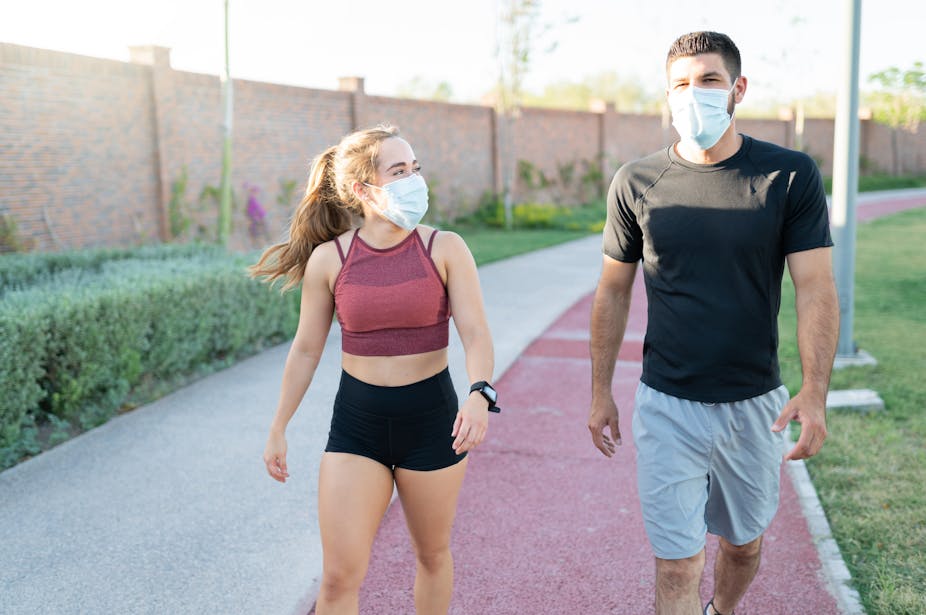
Pandemic restrictions have led many people to start walking more, often because they’ve had few other things to do or just as a way to get moving. Walking workouts have even become popular, with plenty of “challenges” and exercise videos to be found online.
Walking is good for you, there’s not much doubt about this. As a way of adding physical activity into your life, it has many advantages. There’s a very low barrier to entry, meaning almost everyone, regardless of age or ability, can start walking regularly as a form of exercise.
Walking has clear benefits on keeping our bodies functioning as we get older, improving cardiovascular health, helping lose fat mass and maintain muscle mass, and helping to maintain bone density as well. And these benefits are true for people of all ages. It seems that the more active you are as a young adult can affect overall health and (in rats, at least) bone and muscle physical function in later life.
Walking outside is also associated with mental health benefits, particularly if you’re able to walk in parks or green spaces. Such “green exercise” can improve mental health and wellbeing, reduce symptoms of depression, and lower blood pressure to a greater degree than similar urban exercise.
These effects are so strong that walking on a treadmill in a sterile laboratory environment, but while watching a TV showing green spaces, can improve stress responses and improve self-esteem and mood when compared to watching scenes of urban built environments.
How many steps?
But how many steps are required? Although we’re often told to aim for 10,000 steps a day, this number is not really evidence based. In a study of 16,741 older women (average age 72 years), people who walked less than 2,000 steps a day were shown as having the highest risk of death from many different causes, such as cancer or cardiovascular disease. People who walked more were less likely to die from any cause.
This effect plateaued at about 7,500 steps, suggesting (at least in this population of older women) that activity beyond this didn’t impart further benefit in terms of mortality. Simply put, walking more likely helps you live longer, but 10,000 steps wasn’t any different to 8,000 steps. Similar results are seen in adults older than 40, with a pleateau in effectiveness of increasing step counts somewhere between 8,000 and 10,000 steps.
Read more: Do we really need to walk 10,000 steps a day?
Another factor to consider is walking pace. As intuitive as it may seem, it’s worth pointing out that walking faster is better for you than walking slowly. In a recent randomised control trial, 12 months of walking five times a week for 50 minutes at low speed didn’t improve measures of fitness, while walking at a faster speed did. (The researchers used a personalised measure for each person – so “fast” versus “slow” depended on each individual.)
Walking speed is also a predictor of mortality in older people. People who walk slower are much more likely to die over the next 14 years of all causes than those who walked at a faster pace.
Is walking enough?
But while walking is good for you, it’s not a magic cure for everything. To gain even further benefits, consider adding in both higher intensity exercises and strengthening exercises, as recommended by the World Health Organization and NHS England.
This should include vigorous, challenging, quick movements that get your heart beating faster and make you out of breath – such as running or cycling up hills, sports games, or walking up stairs. Again, intensity is at play here. So although walking is good for cardiovascular fitness, running is better, even if you still only use similar amounts of calories on a short run versus a longer walk.
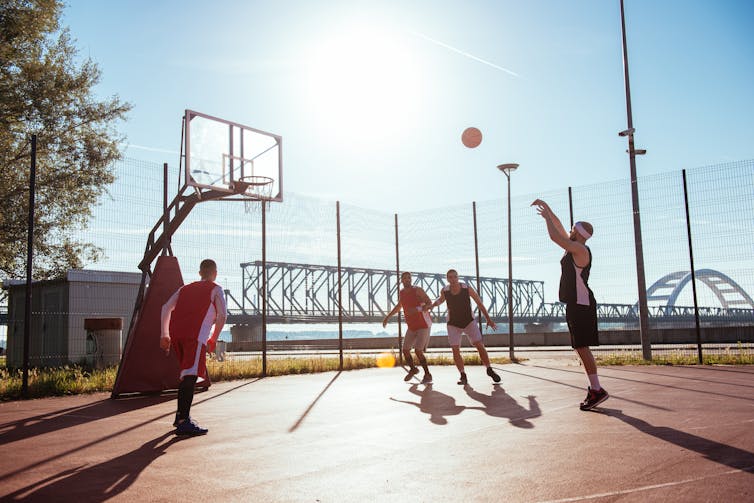
Muscle strengthening exercises, such as weightlifting, are also great for building muscle mass and strength at all ages. These will help maintain muscle mass and function with older age, and are associated with reduced incidence of chronic diseases.
Importantly, losses in muscle mass and function start in your 30s-40s. So exercising while you’re younger isn’t just good for you now, but could help your health and function decades later.
In place of step counts, the World Health Organization suggests people think of “minutes of activity”, and that people should achieve at least 150 minutes of moderate intensity exercise a week, or at least 75 minutes vigorous intensity exercise if you prefer. Moderate intensity activity is about a six out of ten on your personal intensity scale – so things like light sports, walking briskly or dancing.
Activity trackers can also help you keep an eye on how many minutes you’re active daily. Most smart phones have apps built in and many are freely available to download.
So, is walking good for you? Yes. Do you need to walk 10,000 steps a day? Probably not, but it’s not going to do you harm if you do. If you are trying to maximise your gain in health benefits through being more active, consider adding in other types of exercises alongside lighter activities like walking that challenge your fitness and strength.
With expert insight and analysis on vital issues from coronavirus to climate change, our articles will always be free to read. But by supporting The Conversation, you can help ensure the free flow of accurate information – essential to guide, reassure and inform in times like these. A small donation can help The Conversation ensure that you and others keep hearing from academic experts.
Stephen Khan
Editor
Thursday, 4 February 2021
Forget the Gym: Walking Is the Superior Form of Exercise

More on the benefits of walking!
I am certainly not advocating civil disobedience in the pages of Men’s Health, but if there’s one thing that kept me fit, sane and healthy during the first lockdown of 2020, it was walking.
And should the worst happen and lockdowns become a semi-regular feature of the coming months, it’s in the simple practice of pedestrianism that I know I’ll find solace again.
Last spring, as infection levels rocketed and the numbers of people hospitalised, intubated and dying were all rising, I would set out for long walks on the empty streets of south London, where I live. In the government’s “shield” category – by reason of being on chemotherapy for an incurable myeloid blood condition – I knew I’d encounter no one who would pose any threat to me, viral or otherwise, while I would scrupulously avoid coming into contact with the rare and fugitive souls I’d spot traversing the once-bustling but now eerily silent city.
The decision to walk contained just that soupçon of defiance necessary to convince me that while mass hysteria gripped the nation, I remained calmly autonomous. The physical activity during those chilly small hours was sufficient to maintain muscle tone and healthy posture, even if pounding pavement and parkland is no substitute for pumping iron.
But it’s in the overall promotion of that quality we’ve come to think of as “wellness” – in contrast to the apparent sickness of the very planet itself – that walking seems to come, ambling, into its own.
The Outside Advantage
I cycle to get around and have increased this since the pandemic, for obvious reasons. I do yoga from time to time, when my ageing frame begins to creak and groan. But I confess: going to the yoga studio is a stretch for me, while gyms have always filled me with an instinctive revulsion. You don’t have to be a communist to appreciate the force of Marx’s observation: “The worker does not make use of the working conditions. The working conditions make use of the worker; but it takes machinery to give this reversal a technically concrete form.” Well, we may not work on assembly lines in factories as much as formerly, but I can’t help seeing the contemporary gymnasium, with its emphasis on training with machines, as a strange sort of nostalgia for that state: working out in lieu of… working.
There’s this problem with the gym – then there’s that hell described by Jean-Paul Sartre as “other people”. I once visited Gold’s Gym at Venice Beach in California, the legendary location for the film Pumping Iron (1977), which pulled competitive bodybuilding, preening and posing, into public perception. The gym’s manager told me that the most important pieces of equipment in the entire establishment were the mirrors, and laughed indulgently (he was built like the proverbial well-constructed outdoor lavatory) at his clientele’s, and his own, consummate narcissism. But for those of us who neither possess such a hardened body nor are desirous of building one, gyms can be intimidating places – intimidating, and expensive, too.
Related Story

During lockdown, people were doing sit-ups, press-ups and even lifting weights in parks and other open spaces, but as soon as the gyms reopened, many disappeared back indoors. I really cannot understand this. To me, the most bizarre sight in the world is someone on a running or cycling machine, rather than running, cycling, or, of course, walking. Most of us, I’d contend, spend too much time either looking at screens (both for work and leisure) or through them, as we commute to work, drive to the shop, or even drive to take exercise. The last of these seems to me another cosmic solecism – and as it’s often the prelude to exercising inside, constitutes a doubling down on the denatured and technologically mediated nature of our contemporary existence. And, with the pandemic unabated, life for many of us has become still more desk-bound, the outside worlds of work, sociality and leisure all collapsing into two dimensions and 26-odd inches.
This content is imported from {embed-name}. You may be able to find
the same content in another format, or you may be able to find more
information, at their web site.
The great virtue of walking as a serious pursuit is that it requires nothing by way of equipment or specialist kit except the comfortable and hard-wearing shoes you already possess. There are no joining fees to walk, and you certainly won’t feel body-shamed by your fellow pedestrians, many of whom will be pensioners on their way to the shops. Walking is also by its nature spontaneous: you do it all the time, anyway, so why not simply increase the amount you do? The pensioners are strolling to the shops. So can you. And you can do it even if the shops are a lot further off. Which brings me to my main selling point for new-entrant walkers: its immediacy is what makes walking so appealing. There’s no need to locate a venue; you simply get up and walk out whichever door is nearest. I’m fairly rigorous about this aspect of walking, and I think it’s key to the success of the entire enterprise. Indeed, while I can just about accept driving to take a walk in a particularly beautiful or interesting place, for me, the really life-sustaining walks are the ones I take from wherever I happen to be.
If I’m in the country, I walk in that countryside. If I’m in the city, I walk in that built environment. And if I’m in Selly Oak on a wet Sunday afternoon in January, then I take a walk in Selly Oak. Walking is the way I bring my mind and body together through being actively in the place I am, rather than trying to avoid it by travelling somewhere else, or blot it out by filling one or other of my senses with quite other environments.
The most conspicuous example of this is music, via headphones or car stereo, so as to make a soundtrack for the film of your life – which is really, when you think about it, creating a giant, imaginary screen around your experience of the world. I know, you’re thinking, “But Selly Oak (or Southampton, or Selhurst, for that matter) is pretty boring on a wet Sunday afternoon in January.” To which I can only reply with one of those exquisitely annoying parental formulations: if you’re bored, it’s because you’re boring. And by “boring”, I mean unwilling to take an interest in anything that doesn’t immediately appeal to you.
This content is imported from YouTube. You may be able to find the
same content in another format, or you may be able to find more
information, at their web site.
Lost Connections
Let me reinforce this with an anecdote. I once went to Easter Island, the most remote inhabited island in the world and one of the most exotic and extraordinary places to boot. The friend I went with was not a walker – though he did have other virtues – but gamely agreed, in principle, to join me for some hikes. The first attempt I made to hold him to his promise was also the last. We had driven to the north end of the island, where there’s an extinct volcano, Poike. It’s an extraordinary sight: an eminence of some 370m, entirely covered in grass, but with two quartz-glinting granitic outcrops on its shoulder, like epaulettes on a military officer’s tunic. We parked our hire car and began walking towards it – the giant, bright-green knoll, outlined by the deep ultramarine of the mid-Pacific Ocean. After no longer than five minutes, my companion – a famous artist – groaned: “I’m bored.” And I struggled hard not to pick up one of the chunks of quartz lying in the grass and use it to bash his brains in.
Which is all by way of illustrating this point: you cannot come to walking expecting some sort of quick fix. This is the ultimate slow activity. Yet once you’ve attuned yourself to the leisurely progress you’re making, you start to appreciate the extraordinary benefits. For one, as you’re not on an A-to-B journey with a specific aim in mind, you really can forget about any reward associated with arrival – such as the endorphin hit beloved of our running brethren – and instead abandon yourself to the pleasures of transit itself. In a car, or even on a bike, the world’s contours are ironed out for you, but on foot there’s a direct correlation between your muscle movements and your senses. The play of the breeze, the sunshine (and, naturally, the rain) on your face and any exposed flesh; the swish of grasses and other herbage against your legs; the smells and the sights – the walker is constantly surveying the territory he moves through with a full 360° panoramic viewing.
Moreover, unlike anyone using mechanised transport, he also has – returned to him, as it were – the foreground, which for most, most of the time, is reduced to a blur. The walker, if he consents not to be bored, has returned to him those vestigial senses of exteroception (the dispensation of objects in the vicinity), proprioception (awareness of the dispensation of his own body), and even interoception – that hearkening to the movements of our internal organs that, for the most part, we repress.
Furthermore, the car driver, the train and plane passenger – they all see the world around them as a series of detached views, but the walker is resolutely rooted in that world, his calves aching as he ascends a hill, his knees taking up the strain as he descends. I bumper stickerishly proclaimed above that it’s the journey that matters for the walker, and that arriving brings no special reward, but there’s at least one exception to this. When doing really long country walks – and I’m talking around 25 miles in a day – I find that just before I fall asleep that night, I’m visited with the most extraordinary reverie. I experience the entire day’s journey over again: every stile I’ve climbed and stream I’ve leaped, the whorled windows of cottages I’ve peered into and the muddy furrows I’ve ploughed along.
The first time this happened to me, I was overwhelmed. I had just done 25 miles out from central London and into the Essex countryside. There was the long distance, which, even as I was walking had gifted me a sensual and immediate awareness of the topography, and there was the map-reading, whereby I found myself regularly looking from the three-dimensional territory to its two-dimensional representation, and then back again.
The way we currently navigate using GPS systems places us at the centre of the screen and world. In this way, it gives us absolute location (we can even get a precise grid reference), yet no real orientation. We’ve all had the experience of getting off a train or bus and then wandering about trying to coordinate our movements with those of our little-blue-dot alter ego, so that we can work out where the hell we are. But old-fashioned map-reading, which is the method I’d strongly enjoin for longer exurban walks, entails orienting yourself as a condition of any route-finding at all. This means that the further you go, the more you start to apprehend that that wood must border that reservoir – and furthermore, that the ground rising behind the reservoir must be a spur of that range of hill. It’s this precise interpretation of the landscape (not without reason is it termed “map-reading”) that leads to the astonishing exactness of recall. I retraced that walk into Essex a decade later and found that I could do it without any recourse to the map, such was the detail with which I remembered the first venture.
In Search of Lost Time
Of course, walking without a map is an even more liberating experience. I am not a rambler, or any other species of Gore-Tex-sporting hiker. Don’t get me wrong – I have nothing against them, but their preoccupation with walking in particular places and at particular times is an anathema to me. My walking isn’t simply a leisure pursuit; rather, it’s transportation, entertainment, fitness regime and psychotherapy rolled into one. Apart from the aforementioned sensible shoes, I do take waterproofs with me. The über-annoying and self-satisfied hikers say things like: “There’s no such thing as bad weather, only inappropriate clothing.” And in respect of these temperate and rain-washed isles, they’re most definitely right. However, though adequately equipped to this extent, I often set out with no clear idea of where I’m going to go. This is the dérive – or aimless drift – beloved of psychogeographers, among whose number I’m happy to include myself.
Taking our cue from the Situationists, a group of art revolutionaries who wandered the storied streets of 1950s and 1960s Paris, we see walking as a way of not only traversing space but time as well. Let me explain: once attuned to topography and well versed in the built environment, the walker becomes alert to a different sort of temporality: not the collective hallucination of incremental time displayed on the watches and computer displays that we all look at too much, but the subjective apprehension of our own duration in this world – our fundamental pace, if you like. The French Enlightenment philosopher Jean-Jacques Rousseau (himself no mean stomper) maintained: “We think at walking pace.” And what’s revealed to me when I’m walking and thinking at the same pace is the pace of everything around me – just as when we pass by two tall trees or buildings, their position relative to one another (the parallax view) makes us aware of the angle of our own traverse, so there’s a temporal parallax that enables us to become aware of time not simply as an inexorable river flowing in one direction, but a huge and fluid body of fluxes and refluxes, in which we swim even as we walk.
I realise the above may seem a little verging on the mystical – especially if you began reading this with competitive track walking in mind, so hoping for some straightforward tips on whether you need spiked shoes, and how to avoid wiggling your arse too egregiously. I am, however, in deadly earnest. I sincerely believe that a walker can experience a form of time travel; moreover, that if he understands the environment he’s moving through even a modicum, there’s a sort of letting go that occurs as the metronomic beat of the legs begins to resemble some sort of chant – a physical “om mani padme hum”, if you like. We’re familiar with the free association of ideas, but in these states of walking meditation, I often feel as if I am free-associating places and spaces: seeing where I’ve been in terms of where I am now, and vice versa, such that it no longer matters if I’m boxed in by wet privet in Selly Oak on a wet Sunday afternoon in January.
I would never claim that my sort of walking is adventurous in the way that man-hauling to the South Pole, or rowing the Atlantic is considered to be. But I wouldn’t want that sort of adventure anyway, given that it involves ceaseless and strenuous repetition to the exclusion of all else. Talk about being bored. Instead, for me, the adventure begins every day I set out. I’m confident, even if I’m only walking to a bypass-bound retail park, that I’ll encounter something fresh, new and provocative – rather than just another “new car smell” Magic Tree air-freshener, dangling from the rear-view mirror, like a man caught in a trap.
Sunday, 31 January 2021
I Kept a Walking Streak for a Full Year — and Discovered 7 Surprising Benefits Along the Way
Click the link above for the full article:
Rudri Bhatt Patel
Rudri Bhatt Patel is a former attorney turned writer and editor. Her work has appeared in The Washington Post, Saveur, Business Insider, Civil Eats and elsewhere. She lives in Phoenix with her family. Photo by Jennifer-Ann Coffin-Grey on Unsplash
Over a year ago — on Jan. 1, 2020 — I decided to make a promise to myself: I would walk or run outside every single day of the year. To track my progress, I dedicated a calendar page in my bullet journal to highlight the days I met my goal. It could be a three-mile run or a 30-minute walk around my neighborhood. My intention was primarily to remain consistent with my original objective, and I decided to maintain this habit for 365 days — in other words, I would develop a year-long streak.
Tanya Dalton, a productivity expert and the founder of inkWELL Press Productivity Co., says employing the 3 Rs are helpful in meeting streak goals:
Record: All too often, we don’t take the time to realize how hard we’ve worked until we step back and take a moment to reflect and record that success. Putting your successes to paper shows you how you are progressing and allows you to see the progress you’ve made.
Reward: Dopamine can do wonders and act as a springboard to keep going. Reward yourself in a manner that is favorable to you and that will incentivize you to keep going.
Redirect: The hard truth about habits is that you will fall, stumble, and miss. Everyone is human, which means we aren’t perfect. Give yourself grace when you get off track and then use the first two Rs to get back in the right direction.
I employed this strategy in my maintaining my walking and running habit and all 3 Rs helped in trying to keep the streak alive. After an entire year of walking and running, I’ve learned seven important truths to making habits stick all year long.
On days I didn’t feel like walking or running outside, my streak motivated me to do so.
There were definitely nights when I went to sleep later than usual — as a result, my motivation to run or walk outdoors the following morning would sound unappealing. I’d wake up tired and would often outline several reasons why I “didn’t have time” to squeeze in a walk or run. But the moment I thought about putting a large, bold X on my calendar, I realized it would break my streak. That single thought motivated me to keep it going. As a compromise, on low-motivation days, I’d walk a little less, but at least it compelled me to keep going, and helped me avoid the dreaded X.
Keeping my walking and running habit every day helped me avoid procrastination.
Procrastination sometimes interferes with keeping consistent with a goal. Because I knew I had to get in my outdoor time every single day, it became easier to meet this goal when I decided to make it a priority first thing in the morning. I began placing my running clothes near my bedroom door each night, which served as a good reminder to tackle my exercise before I started work or household chores, or mindlessly scrolled on my phone. Realizing I couldn’t wait until late in the day allowed me to make my streak habit a priority. ....
Save

Wednesday, 27 January 2021
The joy of steps: 20 ways to give purpose to your daily walk
Has
the novelty of a prescribed stroll long since worn off? From tracking
animals to uncovering hidden history, here’s how to discover a new world
in your neighbourhood

Last modified on Tue 19 Jan 2021 09.45 GMT
The weather is rubbish, there is nowhere to go and, bereft of the joys of spring, the daily lockdown walk can feel pointless. But, of course, it is not: the mental and physical health perks of exercise are immune to seasonal changes. We need to gallivant around outside in daylight so that our circadian rhythms can regulate sleep and alertness. (Yes, even when the sky is resolutely leaden, it is still technically daylight.) Walking warms you up, too; when you get back indoors, it will feel positively tropical.
But if meeting these basic needs isn’t enough to enthuse you, there are myriad ways to add purpose to your stride and draw your attention to the underappreciated joys of winter walking.
Aim low
Even Alex Strauss, the author of The Mindful Walker, has to tackle her resistance to get out on wild winter days. Sometimes, she says, “it takes a few mind games to get motivated. When it’s cold, when it’s grey, instead of saying you’re going to go out and do a 40-minute walk, allow yourself to say: ‘I’m going to do five minutes.’ Your brain is much less likely to resist that. Then, once you’re out there, it often turns into a longer walk.”
Spot winter birds
“It’s a big misconception that not a lot goes on in winter,” says the Springwatch presenter Megan McCubbin, who will be gracing our screens again from 19 January on BBC Two with her stepdad, Chris Packham, in Winterwatch. Plus, it is easier to spot birds in leafless trees. “There are some amazing winter spectacles to see, if it’s safe to do so within regulations. One of my favourites is the starling murmurations. The birds come together in their hundreds, if not thousands, in particular areas across the UK – for safety in numbers, as they’re going in to roost. They perform the most amazing synchronised movements in the sky.”
If you can get to open fields at dusk, you might spot “the beautiful white silhouettes of barn owls hunting along the hedgerows and across fields”, she says. “While our summer and spring visitors might have left on their migration, we’ve got a lot of winter visitors.” Waxwings come to the UK for some relief from freezing Russia and their fluffy crests and waxy red wing markings make them “one of the most attractive visitors we get. We often see them around car parks and in urban trees.”
Take a story walk
The Echoes interactive “sound walks” app contains audio made by artists, musicians, authors and historians around the world, with content triggered by GPS or Apple iBeacons along the route. The musical soundtrack for a Gloucestershire country walk – or a murder mystery in Coventry, or the stories of the forgotten bodies in Bath’s 19th-century workhouse burial ground – unfolds as you go.
Try mindful walking

Being mindful, says Strauss, “just means to be present, focused and aware of your internal and external landscapes in any given moment. When we bring mindfulness into the equation, we take everything up a notch in terms of benefits. We know that mindfulness can slow our heart rate and reduce anxiety and depression.” When we are mindful during exercise, our workout is more effective. One of the easiest ways to “drop into mindfulness” while walking, she says, is to listen to your footsteps. “I like to do a little activity where I breathe in for four steps, hold my breath for about four steps – whatever feels comfortable – and then exhale for four steps,” she says. This takes a little concentration, but it allows you to release the extraneous thoughts in your head and live in the present.
Give yourself a mission
Winter is a surprisingly good time of year to practise mindfulness outside, says Strauss: “The fact that the natural world is partly dormant can prompt us to turn our attention inward more. Things tend to come into sharper focus in the outdoors.” It is the perfect season, therefore, to try a “mindful mission”. Once you are “quiet inside” from the breathing exercise outlined earlier, “notice five things in nature you can see, four things you can hear, three things you can feel, two things you can smell and one thing you can taste, although I don’t recommend licking trees or anything. It’s just a way to bring all of your senses into sharp focus.”
Spy on urban foxes

Foxes are very active now, says McCubbin, “trying to get as much food as possible … males will be finding females ahead of the breeding season, starting in February. So if you know where your local foxes are, it’s a great thing to be able to observe them from a distance and get to know them.” It is a similar situation with badgers. “It’s another common misconception that they hibernate,” she says.
Track animals
“Because it’s frosty and frozen, and slightly damp and muddy in areas, there’s a lot more evidence on the ground of what’s been around,” says McCubbin. “Look in the mud, because often footprints will be frozen in it. It’s a really great time of year to learn animal tracks and footprints and discover what species are around.” Children love this activity, she says; inviting them to investigate animal tracks is often much more successful than saying: “Right, who wants to come on a walk?”
Get a magnifying hand lens
When nature isn’t wearing its spring regalia, stopping to zoom in on rock-dwelling lichen, or to reveal the rich ecosystem beneath a rotting log, can be fascinating. On recent rainy days, Lucy Jones, the author of Losing Eden: Why Our Minds Need the Wild, has been searching for moss. It thrives in the winter, when there is less tree shade. “Rain plumps the moss up and it makes it bright emerald,” she says. “There are lots of different shapes and types you can look at. If you have a hand lens, that will deepen your engagement and what you can see. I live on a busy urban street and there are all sorts of different types on the walls and in the cemetery. It’s everywhere.” Who needs a rainforest when you can get a bug’s eye view of a moss jungle?
Clue up on vegetation

If you happen upon some fantastical turquoise goblet-shaped fungi, why leave it at that? You could look it up and go home with the satisfaction of knowing that you have encountered some green elf cup mushrooms. Take wildflower or mushroom identification books out with you, or download a tree guide from the Woodland Trust. Jones swears by the app PictureThis for instant plant identification. “I did it with some catkins the other day and learned that they were hazel catkins and pussy willow, so called because they look like cats’ paws.” Having an identification focus on a walk is often a hit with children, too, she says: “You can give 100 points for bracket fungi, which grow like fairy ladders up trees, 200 points for a squirrel, that kind of thing.”
Use smart maps
Another app Jones recommends is GoJauntly, which helps people all over the UK find green and pleasant circular walks nearby, such as park to park through the Curry Mile in Manchester, or the Hamble Rail Trail in Southampton. If you have an idea of where you would like to explore, but not the best route, Footpath lets you trace it roughly with your finger and then shows you the best paths and roads to take, adding information on distances and climbs.
Don’t just count steps

Logging your achievements is a proven motivator, until you know by heart which local jaunts earn you 10,000 steps – then it gets boring. Boost your data dopamine hits with the app MapMyWalk, which uses your phone’s GPS to capture your route. It also provides stats on distance, elevation, speed, pace and calorie expenditure. You can save and share your favourite walks and try those posted by others in your area.
Recreate trails in your garden
Take a longer view on the distances you walk over lockdown by measuring your cumulative progress against grand routes of the world using the World Walking app. The goals are endless – crossing the Sahara, walking Route 66 – and one early adopting walking group has already reached the moon.
Hunt for treasure
Treasure Trails sells downloadable walking routes with clues and landmarks to spot as part of interactive adventure stories, or to bring local history to life in British towns and cities. Routes range from a self-guided adventure in Manchester called The Wizard’s Spellbook, which promises “fantastical tales”, to a historical “treasure map” of Herne Bay in Kent.
Solve a problem
Shane O’Mara, a neuroscientist and the author of In Praise of Walking, once wowed me with the many ways in which walking sharpens the mind and encourages creativity – bringing on theta brainwaves and the production of brain-nourishing chemicals among them. This is why a daily walk is the perfect time to mentally plan your essay, rehearse your lines, carry out thought experiments, solve an advanced maths problem or daydream.
Look up and travel back in time

Ben Olins, the co-founder of the unapologetically analogue cultural guide and map company Herb Lester, looks up as much as is safely possible when he is walking. “You get a better idea of what it used to be like, when you don’t see cars and modern door furniture,” he says. Even in less exciting areas, “you might spot an old sign, or different street furniture. I like looking at where pubs used to be and getting a sense of just how many there used to be, what areas were like when they were first developed”. The more looking up you do, the more of an area’s story will fall into place. In north London, Olins says, “it’s all piano factories and breweries: businesses that involved great weight, because of the canals. You start to make sense of the area, a little like with language – discovering the Latin origin of a word, then all these other words suddenly start to make sense.”
Walk your routes in reverse
“I don’t understand people who walk the same route over and over,” says Olins – unless, of course, you are rushing to the station. The beauty of lockdown walks with no destination is that there is no need to repeat routes. But even if you are wedded to your favourites, says Olins, doing them backwards will throw up new aspects and discoveries. “There’s always a different way to do it,” he says. “You’ll see it very differently.”
Raise money for charity
In April’s lockdown, in the run-up to his 100th birthday, Captain Tom Moore raised millions for the NHS by walking laps of his garden. You could try something similar for your chosen charity, using justgiving.co.uk or virginmoneygiving.co.uk, or directly with a charity such as Macmillan Cancer Support, with whom you can register a walking challenge to suit you.
Phone a friend
The give and take of human connection is often as good as medicine, so while we may not be able to meet our friends face to face, we can call them up to walk and talk. It is hard to feel like there is much to say when you are cooped up in the same four walls day in, day out, but while you are strolling along, stimulated by your senses and momentum, you might find there is suddenly plenty to talk about.
Get a physical map
Ah, printed maps: no need for good signal, full battery or to remove your gloves. Ordnance Survey maps don’t only cater for rural hikers, but also cover urban walking.
Get lost on purpose

Olins, whose guides include Clandestine London and An Edinburgh Companion, is drawn to overlooked routes. “Even if they don’t seem as if they might have that much potential, you never know,” he says. “There are so many hidden streets and enclaves. They may have no great architectural or historical significance, but they might show a community that’s obviously neighbourly and they’ve all put plant pots outside.” We all like to nose at other lives going on around us, says Olins. “It’s comforting, isn’t it?”
As 2021 begins …
… we have a small favour to ask. You read
in 2020. And you’re not alone; millions are turning to the Guardian for open, independent, quality news every day, and readers in 180 countries around the world now support us financially.
We believe everyone deserves access to information that’s grounded in science and truth, and analysis rooted in authority and integrity. That’s why we made a different choice: to keep our reporting open for all readers, regardless of where they live or what they can afford to pay. This means more people can be better informed, united, and inspired to take meaningful action.
In these perilous times, a truth-seeking global news organisation like the Guardian is essential. We have no shareholders or billionaire owner, meaning our journalism is free from commercial and political influence – this makes us different. When it’s never been more important, our independence allows us to fearlessly investigate, challenge and expose those in power.
In a year of unprecedented intersecting crises in 2020, we did just that, with revealing journalism that had real-world impact: the inept handling of the Covid-19 crisis, the Black Lives Matter protests, and the tumultuous US election.
We have enhanced our reputation for urgent, powerful reporting on the climate emergency, and moved to practice what we preach, rejecting advertising from fossil fuel companies, divesting from oil and gas companies and setting a course to achieve net zero emissions by 2030.
If there were ever a time to join us, it is now. Your funding powers our journalism, it protects our independence, and ensures we can remain open for all. You can support us through these challenging economic times and enable real-world impact.
Subscribe to:
Posts (Atom)