Showing posts with label lower back pain. Show all posts

Friday, 20 August 2021

Chronic Pain Has 9 Distinct Types, According to a Large New Body Mapping Study

Identifying Chronic Pain 


6 AUGUST 2021

The relentlessness of chronic pain wears you down. Beyond being a physical distraction in and of itself, it disrupts sleep, interferes with work and relationships, and can even alter the way we process emotions by causing physiological changes in our brains.

But the experience of long-term pain is complicated and varies between individuals, making it difficult to explain and quantify, let alone diagnose and manage.

Now, in a large study of over 21,500 people who visited the University of Pittsburgh's severe pain management clinics, perioperative specialist Benedict Alter and colleagues have developed a new method to try to help work this out.

"We found that how a patient reports the bodily distribution of their chronic pain affects nearly all aspects of the pain experience, including what happens three months later," the team wrote in their paper.

Using a computer clustering analysis of patient body pain maps and pain assessments, the researchers discovered that patients fit into nine groups of chronic pain, as defined in the image below.

What's more, these patterns of pain distribution could predict pain intensity, pain quality, pain impact, physical function, mood, sleep and indicate likely patient outcomes.
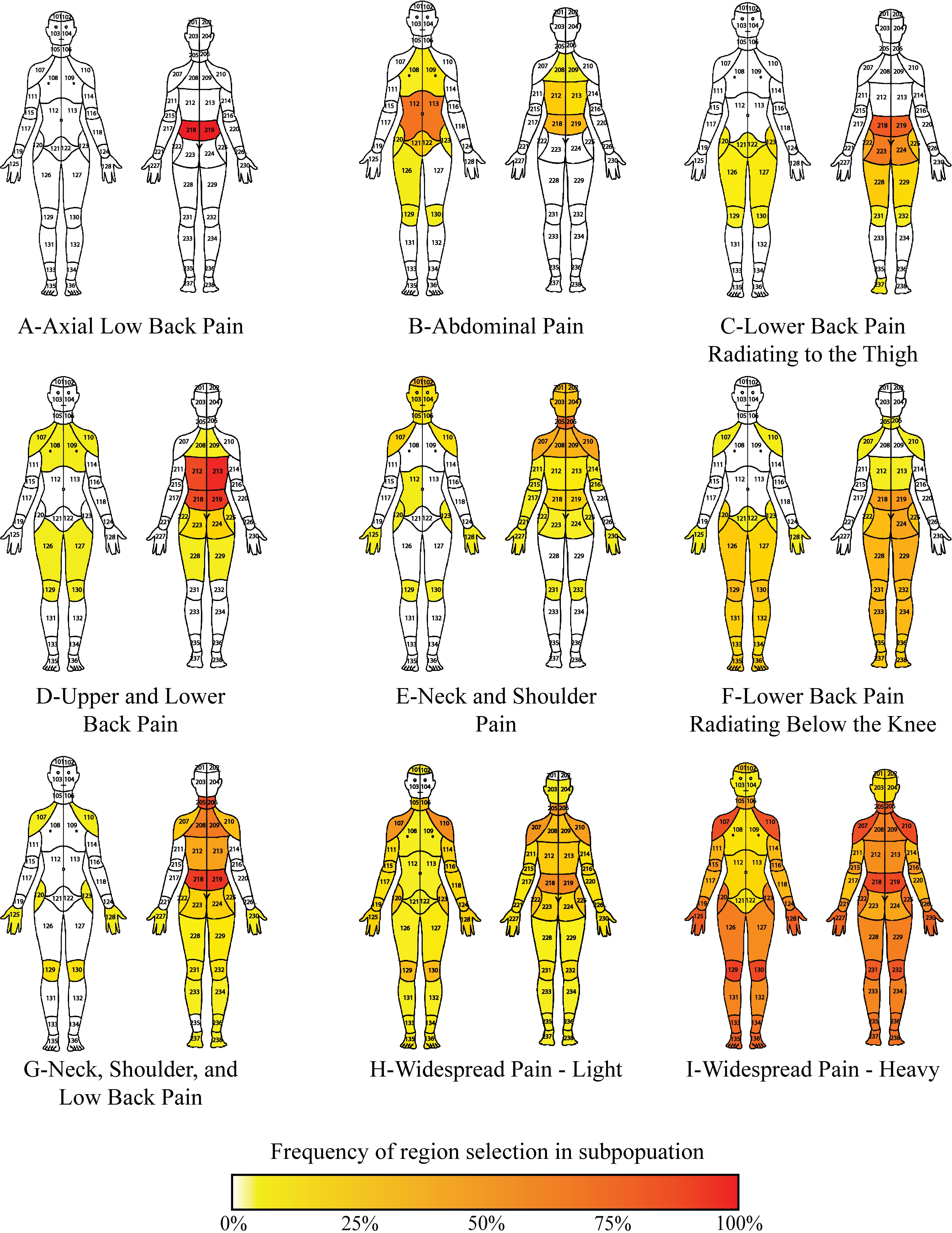
Body pain maps for each of the nine chronic pain clusters. with colored heat map indicating intensity of pain. ((Alter et al., PLOS One, 2021)

Above: Body pain maps for each of the nine identified chronic pain clusters, with colored heat scale indicating frequency of pain.

For example, while the group of patients experiencing lower back pain radiating below the knee (group F) had worse physical function difficulties than those experiencing neck and shoulder pain (E) or neck, shoulder and lower back pain (G), these patients reported less anxiety, depression, and sleep disturbance than the other two groups. 

A subset of over 7,000 patients completed a follow-up questionnaire, three months after filling out the initial body pain map and questionnaire. Patients experiencing abdominal pain (group B) showed the most progress, with almost half reporting significant improvement.

Those with neck, shoulder and lower back pain (group G), however, demonstrated the worst outcomes on follow-up, with only 37 percent reporting improvements. This group shared characteristics with the two widespread pain groups, causing the team to ponder if this subgroup may be an early stage in developing generalized, widespread chronic pain. The researchers recommend a long term study to monitor pain duration and stability over time within this group.

What's more, their findings that the more widespread the pain, the more persistent it is, are consistent with a recent MRI study in fibromyalgia patients that found the more widespread reported pain is on body maps, the more changes observed in brain connectivity around the pain-processing parts of the brain.

"A case can be made that reports of widespread pain collected with digital pain body maps are diagnostic of pathophysiological changes in pain processing," Alter and team suggest.

This ability for body pain maps to indicate likely patient outcomes could help identify patients at risk of poor outcomes even from their first pain clinic visit.
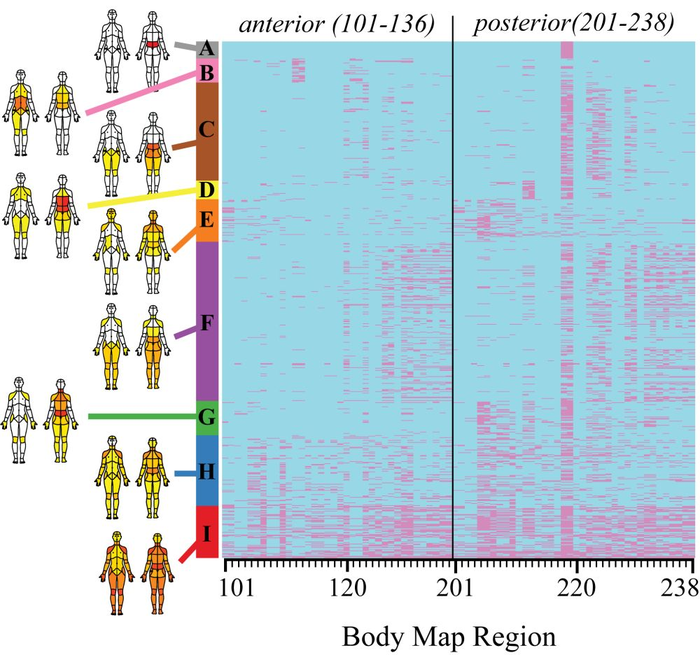
(Alter et al, Plos ONE, 2021)(Alter et al., PLOS One, 2021)

Above: each row on the vertical axis represents an individual patient out of the entire cohort (N = 21,658 unique patients) organized by pain body map cluster membership.

With up to 40 percent of adults in the US currently experiencing chronic pain - which is likely to increase with the potential impacts of long term COVID-19 - diagnostic tools such as this could make a massive difference in many people's lives.

There's still a lot of work to do to untangle all these relationships, and the researchers caution that this is an observational study so they cannot establish causation.

"Outcome data do not address specific therapies, and therefore, it remains unclear which specific treatment may be helpful for a particular body map cluster," they wrote.

However, Alter and team believe their study supports the idea that chronic pain is a disease process and these aspects of how its physical distribution manifests will be "important for future developments in diagnosis and personalized pain management".

This research was published in PLOS One.


Wednesday, 18 October 2017

Lower Back Pain And 6 Lesser Known Ways To Deal With It

Lower Back Pain And How To Deal With It


 I hope these tips help if you have lower back pain.


6 Lesser-Known Ways To Deal With Lower Back Pain

by DailyHealthPost

6-lesser-known-ways-to-deal-with-lower-back-painLower back pain can come from all sorts of sources, and there’s no one universal cure. Many people go through a process of trial and error when it comes to finding relief for their lower back pain, and medical approaches can be frustrating, focusing on addressing anatomical issues when there may be more at play.
A well-rounded, holistic approach is best when dealing with any kind of unexplained pain, especially lower back pain. Here are some lesser-known methods for dealing with this aggravation:

1. Release Endorphins


Endorphins are “feel-good” hormones produced naturally by your body, and their effect can be just as strong as that of any prescription pain medication(1). Endorphins help block pain signals and alleviate stress, anxiety and depression – all of which are associated with chronic back pain.
To release these feel-good messengers, try these time-tested methods:
  • Aerobic exercise
  • Massage therapy
  • Deep breathing
  • Meditation
  • Acupuncture
  • Laughing and smiling
  • Eating dark chocolate
  • Listening to music you love
  • Being social

2. Make Sure You Get Enough Sleep


Pain is the number one cause of insomnia when it comes to medical conditions – many patients with lower back pain also suffer from sleep disorders. But not getting enough sleep can aggravate back pain, creating a vicious cycle which makes treatment less effective and pain worse(2). When treating your chronic back pain, it’s important to get enough rest.
Read more: Got Back Pain When Sleeping? Here’s How to Fix It
Cutting back on caffeine can help you get a good night’s sleep, but it’s also important to practice good “sleep hygiene” – keeping a regular sleep schedule, not taking electronics like your laptop or phone to bed with you, and not eating immediately before bed. You can also try drinking tart cherry juice.

3. Build Your Muscles


The muscles in your back and abs have an important role to play in supporting your spine. If these muscles don’t get a regular workout, you’re at risk for developing back pain(3). Make sure you work out the muscles in your back and abs regularly.
Read more: 7 Easy Stretches For Better Flexibility And Complete Lower Back Pain Relief

4. Hamstring Stretches


This one is easy – gentle hamstring stretches are one of the simplest things you can do to help with lower back pain. Tight hamstrings can place stress on your lower back, placing you at risk for lower back pain(4). To avoid this, you should perform gentle hamstring stretches at least twice a day.

5. Keep Your Brain Active


Many pain specialists feel that pain is more complex than we may realize. Our brain’s activity can play a major role in how we interpret and process pain signals, as well as how we perceive our pain.
The good news is that mindfulness exercises have been shown to help significantly with pain management(5), indicating that there are things we can do to help our brain process pain better. Developing these skills can go a long way towards helping to manage chronic back pain.

Keeping A Balance


Chronic pain can wreak havoc on your daily life, so it’s important to maintain a healthy balance between work, rest and play even when you’re experiencing pain.
Maintaining relationships with people, staying active, and staying engaged with your life is crucial for living well with a chronic pain condition.
It is possible to live well with chronic back pain – many people manage this every day – but it takes commitment and effort. With these techniques, you can be on your way to a life less affected by regular pain.
sources:
[1]http://www.ncbi.nlm.nih.gov/pmc/articles/PMC3104618/
[2]http://www.ncbi.nlm.nih.gov/pubmed/15007400
[3]http://www.ncbi.nlm.nih.gov/pubmed/19467607
[4]http://www.ncbi.nlm.nih.gov/pubmed/11415594
[5]http://www.ncbi.nlm.nih.gov/pmc/articles/PMC2900099/
Originally posted 2015-09-11 14:27:25.


Share This Story on Facebook
ADS by Revcontent

Saturday, 23 January 2016

Help for Lower Back Pain

Lower Back Pain

 Many people complain of back pain so here is an article that may help ease this condition. 


  •  People who exercised had a 25 to 40 percent lower risk of having another back-pain episode than those who did no exercise
  • Motor control exercise led to reductions in pain and disability and improvements in perceived quality of life among people with back pain  
  • The type of exercise seems to be less important than the mere act of staying active, as virtually all forms of exercise seem to help most back pain