Showing posts with label infection. Show all posts

Tuesday, 7 September 2021

Covid: What’s the best way to top up our immunity?

Top Up Your Immune System 


James Gallagher


  • There are marked differences in your immune system after a natural infection with coronavirus and after vaccination.

    Which is better?

    Even asking the question bordered on heresy a year ago, when catching Covid for the first time could be deadly, especially for the elderly or people already in poor health.

    Now, we're no longer starting with zero immunity as the overwhelming majority of people have either been vaccinated or have already caught the virus.

    It is now a serious question that has implications for whether children should ever be vaccinated. And whether we use the virus or booster shots to top up immunity in adults. Both have become contentious issues.

    "We could be digging ourselves into a hole, for a very long time, where we think we can only keep Covid away by boosting every year," Prof Eleanor Riley, an immunologist from the University of Edinburgh, told me.

    Prof Adam Finn, a government vaccine adviser, said over-vaccinating people, when other parts of the world had none, was "a bit insane, it's not just inequitable, it's stupid".

    The anatomy of immunity

    We need to understand a little bit about the key building blocks of both our immune system and the virus it is attacking.

    The power-couple of the immune system that clears the body of infection are antibodies and T-cells. Antibodies stick to the surface of the virus and mark it for destruction. T-cells can spot which of our own cells have been hijacked by the virus and destroy them.

    For all the trouble the virus has caused, it is spectacularly simple. It has the famous spike protein, which is the key it uses to unlock the doorway into our body's cells. And 28 other proteins that it needs to hijack our cells and make thousands of copies of itself. (For comparison it takes about 20,000 proteins to run the human body).

    There are four key areas to compare vaccine and natural infection with the virus.

    Breadth

    How much of the virus the immune system learns to attack

    You get a broader immune response after being infected with the virus than vaccination.

    Whether you've had Moderna or Pfizer or Oxford-AstraZeneca, your body is learning to spot just one thing - the spike protein.

    This is the critical part of the virus to make antibodies to, and the results - by keeping most out of hospital - have been spectacular.

    But having the other 28 proteins to target too, would give T-cells far more to go at.

    "That means if you had a real humdinger of an infection, you may have better immunity to any new variants that pop up as you have immunity to more than just spike," said Prof Riley.

    Strength

    How well it stops infection or prevents severe disease

    We know there have been cases of people catching the virus twice (re-infection) and of being vaccinated and catching Covid (known as breakthrough infection).

    "Neither gives you complete protection versus infection, but the immunity you get from either seems to protect you pretty well from serious illness," said Prof Finn, from the University of Bristol.

    Antibody levels are, on average, higher about a month after vaccination than infection. However, there is a huge gulf in antibodies between those who are asymptomatic (who don't make very much) and those who get a severe bout of Covid.

    The biggest immune response comes from people who caught Covid and were then vaccinated. We're still waiting for data on what happens the other way round.

    Duration

    How long does protection last?

    Antibody levels have been shown to decline over time, although this may not be important for preventing severe disease.

    The immune system remembers viruses and vaccines so it can respond rapidly when an infection is encountered.

    There are "memory T-cells" that linger in the body, and B-cells remain primed to produce a new flood of antibodies on demand. There is evidence of immune responses more than a year after infection and vaccine trials have also showed lasting benefit.

    "In terms of durability, we're still waiting to see," said Prof Peter Openshaw, from Imperial College London.

    Location

    Where in the body is the immunity?

    This matters. There is a whole different suite of antibodies (known as immunoglobulin As) in the nose and lungs, compared with those (immunoglobulin Gs) that we measure in the blood.

    The former is more important as a barrier to infection. Natural infection, because it is in the nose rather than a jab in the arm, may be a better route to those antibodies, and nasal vaccines are being investigated too.

    Prof Paul Klenerman, who researches T-cells at the University of Oxford, said: "The location of an infection makes a difference even if it's the same virus, so we would expect important differences between natural infection and vaccines."
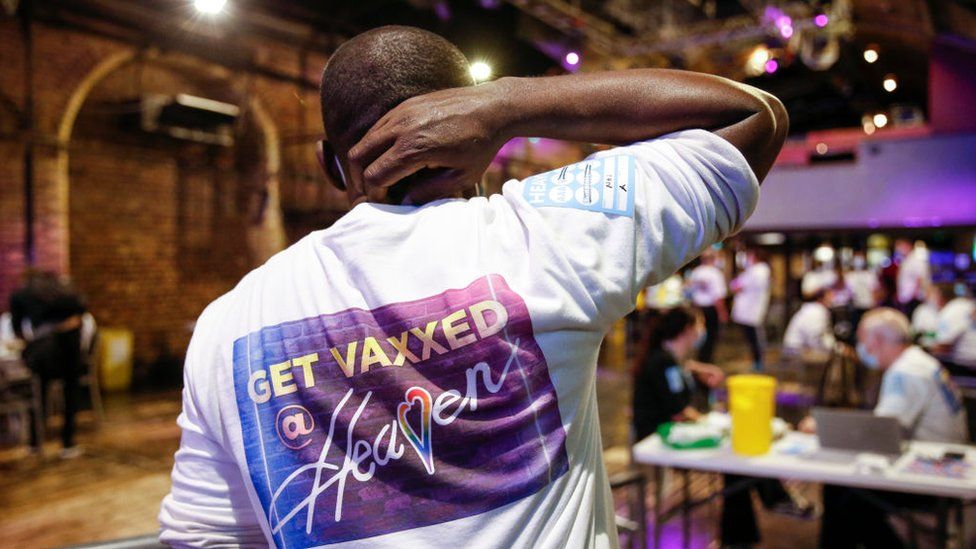
    Vaccination centreimage sourceGetty Images
    image captionVaccines have transformed Covid by dramatically reducing the chances of becoming severely ill.

    Where does this leave the balance between more vaccine and virus?

    There is clear evidence that adults who have not had any vaccine dose will have stronger immune defences if they do get vaccinated, even if they have caught Covid before.

    But there are two big questions:

    • do vaccinated adults need to be boosted, or is exposure to the virus enough?
    • do children need vaccinating at all, or does a lifetime of encountering build a good immune defence?

    The idea of regularly topping up immunity throughout life is not radical in other infections, such as RSV (respiratory syncytial virus) or the four other coronaviruses that infect people and cause common cold symptoms.

    Each time you're exposed, the immune system gets a little bit stronger, and this continues until old age, when the immune system starts to fail and the infections become a problem again.

    "This isn't proven, but it could be a lot cheaper and simpler to let that happen than spend the whole time immunising people," said Prof Finn, who warns we could end up "locked into a cycle of boosting" without seeing if it was necessary.

    However, he said the argument in children had "already been won" as "40-50% have already been infected and most weren't ill or particularly ill".

    There are counter-arguments. Prof Riley points to long-Covid in children, and Prof Openshaw to nervousness around the long-term effects of a virus that can affect many of the body's organs.

    But Prof Riley said there was potential in using vaccines to "take the edge off" Covid, followed by infection, to broaden the immune response.

    She said: "We really need to consider, are we just frightening people rather than giving them the confidence to get on with their lives? We're close to just worrying people now."

    Of course, with cases continuing to rumble on, there may not be much choice.

    "I'm wondering whether it's inevitable," said Prof Klenerman, as if the virus continues to spread then "there will be this ongoing boosting effect".

    Follow James on Twitter

Friday, 27 March 2020

Learning from the Recovered

Learning from the Recovered:

 Researchers at Harvard Medical School and at Brigham and Women’s Hospital are adapting an antibody-detection tool to study the aftermath of infections by the novel coronavirus that is causing the current global pandemic.


The tool, called VirScan, detects antibodies in people's blood that indicate active and past infections by viruses and bacteria. It was developed in 2015 by Stephen Elledge, the Gregor Mendel Professor of Genetics and of Medicine at HMS and Brigham and Women’s, and two PhD candidates in the lab, George Xu and Tomasz Kula.
Because it takes 5 to 10 days for a person to develop antibodies, Elledge emphasized that VirScan would not be used to provide real-time diagnoses of infection with SARS-CoV-2, the virus that causes COVID-19.
Rather, the goal is to analyze blood samples from people who recover from infection to learn about how the virus affects the immune system and the epidemiology of the disease.
Once underway, the effort will join others around the world attempting to study post-infection blood samples. The results could lead to better estimates of true infection and lethality rates by capturing cases that may have gone undetected and could inform the development of vaccines. They could also reveal new insights into the fundamentals of human immunity.
"The situation right now is extremely difficult, but it's great to be in a position to apply all these new methods to an important human health problem," said Elledge.
How does VirScan work? How is it different from diagnostic tests?
From a single drop of blood, VirScan tests for antibodies against more than 1,000 different strains of viruses and bacteria that may have infected a person, whether around the time of testing or decades earlier. This differs from typical blood tests known as ELISA assays, which look for one pathogen at a time.
It also differs from the tests currently used to diagnose COVID-19. Those tests rely on mucus swabs from the nose and throat and look for nucleic acids that signal that the SARS-CoV-2 virus is contained in the sample.
"The CDC and other testing facilities are looking for the presence of the virus, which is critical," said Elledge. "Our assay can detect whether someone's immune system has engaged the virus. We can tell when someone has harbored the virus but doesn't have it anymore."
To create VirScan, Elledge, Kula and Xu built a library of epitopes: short protein fragments derived from the surfaces of viruses. If a person has encountered a particular viral strain, their immune system has generated antibodies against it. Those antibodies will then recognize the epitope in the VirScan library and bind to it, giving a positive result.
Elledge's lab included epitopes from several different coronaviruses in the original VirScan collection. The team is now adding epitopes from the new coronavirus as well as all other known coronaviruses not already included.
Can VirScan be used to test whether people currently have COVID-19?
For several reasons, including the fact that it takes at least a week to generate results, VirScan can't be used as a real-time diagnostic test.
"It's not feasible as a point-of-care test," said Elledge. However, he added that his team might be able to use the information gained to generate a faster version of VirScan.
When the project gets up and running, it will be critical to ensure that blood samples are taken only from people who have recovered fully from SARS-CoV-2 infections, so that vials do not contain active coronavirus particles when they enter the lab.
"We don't want to infect our researchers," said Elledge.
How can the work improve estimates of infection and fatality rates?
So far, limited testing has meant that an unknown number of people in the U.S. and beyond have been infected with SARS-CoV-2 but remain uncounted. Some may not have had symptoms. Some symptoms may have been attributed to other causes. This not only leaves individuals wondering about their infection and immunity status but also obscures the true infection rate across the population. And without knowing how many people have been infected, it's impossible to calculate the fatality rate—how likely the new coronavirus is to kill a person it infects.
Running VirScan analyses on blood, or serum, from a sizeable segment of the population can provide "a reliable estimate" of how many people were infected in a given geographic area, said Elledge. Cross-referenced with medical records of those who tested positive and died, that information can illuminate the virus's true lethality rate.
"Because right now they say, 'this many people came in and tested positive,' and 'this many died,' but if there are a lot of people who are not sick enough to go to the hospital and who don't get tested, it makes the virus look more lethal than it might be," said Elledge.
How can VirScan inform vaccine development?
VirScan promises to help Elledge and colleagues identify which parts of the virus the immune system responds to.
Recent work from his group suggests that people all over world infected with a particular virus make antibodies against the same proteins—"even the same amino acids"—on that virus, Elledge said.
That's surprising, considering how many epitopes viruses have and how many antibodies are in the body's arsenal, said Elledge. The findings led him to suspect that some epitopes are, in effect, decoys, and therefore, that not all antibodies have the desired neutralizing effect.
"The immune system may be sending out all these antibodies like shooting a shotgun and hoping some of the spray will hit the target, neutralizing some critical part of the virus," he said.
In principle, said Elledge, VirScan could indicate which epitopes are useful targets against the  new coronavirus and which are just noise. Then researchers could eliminate the useless ones from vaccines they're developing.
How else is the lab working to assist vaccine efforts?
Antibodies aren't the only objects in the body that attack invaders. Immune cells called T cells also react to specific epitopes—not on viruses, but on the surfaces of infected cells. Alerted to danger by these epitopes, T cells can kill virus-infected cells and limit the number of viruses made in the body.
In 2005, Elledge's lab built a tool, T-Scan, that can detect these epitopes. He would now like to teach T-Scan to detect the epitopes made when cells are infected by the new coronavirus. But since cells infected by different viruses and bacteria sprout different epitopes, he first needs to know what the epitopes look like for infections with this coronavirus. That would require obtaining not only blood but also T cells from people who recover from SARS-CoV-2 infection, he said.
The goal: to identify the epitopes that trigger T-cell attacks so researchers laboring to develop COVID-19 vaccines can include them in the mix.
"T-cell epitopes are often important players in vaccines and in preventing viral infections," said Elledge. "You want to encourage T cells to kill the infected cells."
How can VirScan illuminate what SARS-CoV-2 does to the immune system?
Last year, the team used VirScan to help reveal how measles infection wipes out the immune system's memory of past infections by other viruses and bacteria. VirScan could similarly illuminate whether people develop immunity to the new coronavirus, how long they remain immune and whether infection causes more widespread damage to the immune system like measles does.
Or the virus may have other surprises in store, said Elledge.
What about the likelihood that there are different strains of the new coronavirus?
Although many mutations in the virus have been documented around the world to date, these variations "wouldn't affect antibodies much," so VirScan's results should still apply, said Elledge.
Whose samples would be analyzed?
For the initial study, Elledge envisions collecting samples from about 100 volunteers who've recovered from COVID-19. The best-case scenario would be having samples from people before and after infection, he said, although he recognizes that that would be hard to arrange.
"Many people in the lab have given samples in the past, so if anyone gets sick, we'll have a before and after, but of course we hope that doesn't happen," he said.
When will all of this be ready?
Most HMS labs have transitioned to remote work following institutional guidance aimed at containing the spread of the virus, but some have been granted permission to continue on-site work for COVID-19-related projects, including a portion of Elledge's lab.
Elledge anticipates that VirScan could be deployed to analyze samples in mid-April. Then it would be a matter of obtaining institutional review board approvals for human research and arranging the logistics of collecting the samples. Elledge is currently in talks with contacts across the HMS and broader Boston communities.
What else is in the works?
At the same time, Elledge's team is working to detect antibodies against the new coronavirus with even greater sensitivity using a tool they developed in 2014 called PLATO. Whereas VirScan uses short, linear protein fragments, PLATO uses full-length proteins known as open reading frames, or ORFs, which have a more developed 3D structure. (PLATO stands for ParalleL Analysis of Translated ORFs.)
Who is funding this work?
Elledge is an investigator of the Howard Hughes Medical Institute.
MEDIA CONTACT
AddThis Sharing Buttons
PrintShare to LinkedInLinkedInShare to More

Medical News

227812_web.jpg

Tuesday, 1 November 2016

Sepsis – the Silent, Unknown Killer

Sepsis – the Silent, Unknown Killer


Last year I met up with an old friend.  It was great to catch up.  The post about Sepsis below reminds me of that reunion. 


One dark night in October or November 2014, my friend, who lives alone  went out to collect the Refuse Bin from the roadside and picked up litter from the ground.  She did not notice that among the litter was some broken glass and she must have cut herself lightly on the forefinger of the right hand without noticing.  The cut was bleeding only a little so my friend washed her hands and thought no more about it.  Later that night she felt a pain in her arm and on checking, noticed the famous and very visible blue vene running up her arm which indicates Sepsis.


At two in the morning, she was really alarmed and woke her neighbor who is a Nurse.  This lady knew the signs and severity of the situation and rang the Ambulance.  It was by then high time that measures were taken and Antibiotics were given intravenously.


My friend is left with a stiff forefinger that she will never be able to bend again.  She was lucky as the outcome could have been fatal as the article describes. 

It is alarming that Sepsis kills more people every year than prostate cancer, breast cancer and AIDS combined, a staggering 250.000 people. 


Thinking back, my childhood was spent catching one infection after another and I cannot count how often I had those visible blue lines either on my arms or my legs.  Come to think of it I am lucky to have survived.


Friday, 6 May 2016

Yeast Infection Linked to Mental Illness

Yeast Infection Linked to Mental Illness

Read the entire article by clicking the link above.

Yeast Infection Linked to Mental Illness

Candida infections also more common among those with memory loss

Released: 3-May-2016 10:50 AM EDT
Embargo expired: 4-May-2016 10:30 AM EDT
Source Newsroom: Johns Hopkins Medicine
Add to Favorites
Contact Information Available for logged-in reporters only
Citations npj Schizophrenia; MH-94268
Newswise — In a study prompted in part by suggestions from people with mental illness, Johns Hopkins researchers found that a history of Candida yeast infections was more common in a group of men with schizophrenia or bipolar disorder than in those without these disorders, and that women with schizophrenia or bipolar disorder who tested positive for Candida performed worse on a standard memory test than women with schizophrenia or bipolar disorder who had no evidence of past infection.