Showing posts with label empowering women. Show all posts

Sunday, 6 December 2020

How encouraging women entrepreneurs can help to revive the economy

Women Entrepreneurs 


 Suraj Shakya

In India, when you say ‘business’, an image of a man in a suit sitting behind a desk comes to mind. Is it not worrisome that women are always either on the sidelines of the boardroom or not present at all?

As per the latest government Census records, 48% of India’s population is female. Ideally, they should make up about half of our entrepreneurs. However, only 14% of the country’s entrepreneurs are women, as per an Economic Times report. There is huge untapped potential that needs to be actively encouraged if we are to achieve significant economic progress, especially in a year like 2020.

Do women indeed make better leaders?

Amitabh Kant, CEO of Niti Aayog, says, “High growth rates of 9-10% year-after-year are not possible for India till women don’t become key entrepreneurs”.

As per a Center of Entrepreneurship report published by Forbes, women make better business leaders due to 5 factors:

1. They are better at taking calculated risks.
2. They are less likely to be overconfident.
3. They are more ambitious.
4. They are better at foreseeing in the long run.
5. They are used to fighting it out more and have acquired resilience.

Here is a brief idea of what drives women towards entrepreneurship in India.

Image source: Women’s Web Women & Entrepreneurship in India 2019 Survey

How can we help India’s businesswomen rise to the occasion in 2020?

With the Coronavirus scare still looming large, Moody’s has forecasted a 10.6% contraction for fiscal 2020. While the government tries to revive India financially, here are a few things that can be done to help the women of India in helping India.

1. Government initiatives: These include a number of entrepreneurship promotion initiatives such as Stand-Up India, National Skill Development Policy, AIM (Atal Innovation Mission), etc. There’s an initiative of the Niti Aayog called Women Entrepreneurship Platform (WEP) which acts as a knowledge base and mentorship source for women entrepreneurs. What is now important is that the government encourages more women to partake in the benefits of these schemes by improving the levels of awareness about them.

2. Mentorship programs: In June 2019, the UNDP (United Nations Development Program)’s Disha project took a minivan around India’s villages that conducted entrepreneurship awareness programs for rural women. But this was just one small scale effort. Women need mentorship more than men do since they mostly don’t have that wide an entrepreneurial network or equal opportunities for funding.

What we need is a network of veteran female leaders such as Indra Nooyi, Vandana Luthra, Ritu Kumar, and the like. These women will inspire the next generation, and provide them with valuable insights.

3. Empowering women techies: Girls are 25% less likely than boys to know how to elevate their lifestyles by learning technology. Girls are encouraged lesser towards tech right from their childhood. In the age of Digital India and a digital world steering towards AI and whatnot, women should not be suffering from a skill gap. We need programs that make women tech-savvy and normalize for the society that women are as tech-ready as men.

Image source: Inc42

4. Organizing the unorganized sector: 94% of women in India are employed in the unorganized sector. A lot of them lack adequate wages, dignity, and safety at work. On the other hand, there are scores of women involved in small businesses such as preparing and selling food items, tailoring, etc. out of their homes. Until these women are freed of their struggles for basic needs and made to realize their entrepreneurial potential, they won’t be able to identify themselves as businesswomen.

5. Higher educational initiatives: 2020 saw a considerable rise in the number of female students at the IIMs, with women making 33.5% of the class of ‘21 at the top 6 IIMs as compared to 25% last year. At the same time, enrollment of women in higher education, in general, has been increasing in the past decade.

Image source: Financial Express
These are good signs because higher education not only imparts skills but also validates them for you. It throws open a lot of doors for employment and higher incomes, which are all essential to kickstart your business dreams.

6. Public-private partnership for initiatives: The government cannot promote women’s entrepreneurship and revive the economy all alone. This kind of large-scale reform — or revolution, if you will — needs the contribution of all sections of society. All the above-mentioned ways of encouraging female entrepreneurship need a public-private partnership for optimum results.

Image source: Inc42

Secondly, the private sector needs to work on grave issues like the pay gap, blatant everyday sexism, lack of role models to follow, sexual harassment, and much more. In the absence of these issues, men have much better scope to focus on their entrepreneurial pursuits than women do.

Conclusion
These are just six broad areas of improvement for us to become a nation better suited for women entrepreneurs. We still seem to have a long way to go, but the way doesn’t have to be long, and women don’t have to continue giving in to the role of second fiddle.


Thursday, 27 December 2018

This Soap Does More Than Clean Your Skin! It Empowers Women.

Empowering Women


 This Soap Does More Than Clean Your Skin! It Empowers Women.
Tweet This
Nokware sells their soaps and body butters in all natural packaging. This jar is made from bamboo!Photo Credit: @nokwareskincare on Instagram
They say the most successful entrepreneurs are the ones who solve problems that they themselves face. When Tutuwa Ahwoi left her native Ghana to study in Paris, she started suffering from serious skin issues. The climate was new to her body and the products she had access to were not natural. “My skin was just like, No!”, Ahwoi remembers. She missed her local skin products. Pure shea butter and black soap, staples across West Africa, were near impossible to find in Western Europe.

It was in Paris that Ahwoi met Thato Tau of Botswana. She was also having skin trouble, but being from Southern Africa, she had never heard of black soap and had never used shea. They started sharing products and when they returned back home after school, Tau kept asking Ahwoi to send her products to Botswana. At first, this side hustle was just to help out a friend (and her friends!), but before she knew it, Ahwoi was working full time on Nokware, a natural skincare line.

In the crowded personal care space, Nokware stands out because of a strong environmental and social mission. This mission was not a conscious choice at first. “It’s not like we sat down and decided to not use plastic. We were just like, ‘Why import plastic from China just to have it end up in a gutter in Africa? Why take it out of its original packaging?’”, recalls Ahwoi. Nokware sells its products in containers made of calabash (dried gourds) and bamboo, just like it’s always been stored in Ghana. Ahwoi will be the first to admit that they are not all the way to their goal of ‘zero plastic’. Their bamboo packaging has a thin layer of plastic coating on the inside to protect the product, but their team is constantly working to eliminate it. The honesty and transparency are refreshing in a world of brands built on a highly curated image of perfection.


Nokware employs 7 people, all women. This was not a conscious choice either, but Ahwoi and Tau have embraced it. “The patriarchy here runs very deep”, said Ahwoi. She loves that they are creating jobs for women typically left behind. Their first employee could neither read nor write. By helping women earn an income, they are giving them a voice and power in their homes and communities. Women, who are often responsible for taking care of children, husbands, and a small garden, don’t think of work as a 9-to-5 endeavor. Ahwoi shared, “If there is work to do on a Saturday, they work!”. Even as a successful and educated woman, Ahwoi cannot always escape society’s tiring expectations. When she drives a pick-up to do deliveries, men often shout at her to return her car to her boyfriend. She’s not discouraged. She believes that if you change only a few minds, that new mindset can spread virally.
Nokware's inclusive beauty campaign featured diverse, smiling young women to show that 'beautiful' comes in all shades and sizes.Photo Credit: @Phloshop via @Nokwareskincare on Instagram

Friday, 19 October 2018

Eileen Fisher: Fashion designer gives us the exclusive on empowering women

Fashion Designer Empowers Women


Dressed all in black — a long cardigan and velvet scarf over wide-leg pants and boots — and sporting her signature white bob and dark-rimmed glasses, designer Eileen Fisher looked as if a model from one of the ads for her eponymous brand had come to life.

She floated around the room filled with women with a luminous smile before taking the stage.
“What’s happening with the patriarchy these days? It’s a very difficult moment, isn’t it?,” said Fisher, 68. “I’ve been struggling for a couple of years now. So we know November is a really important time.”
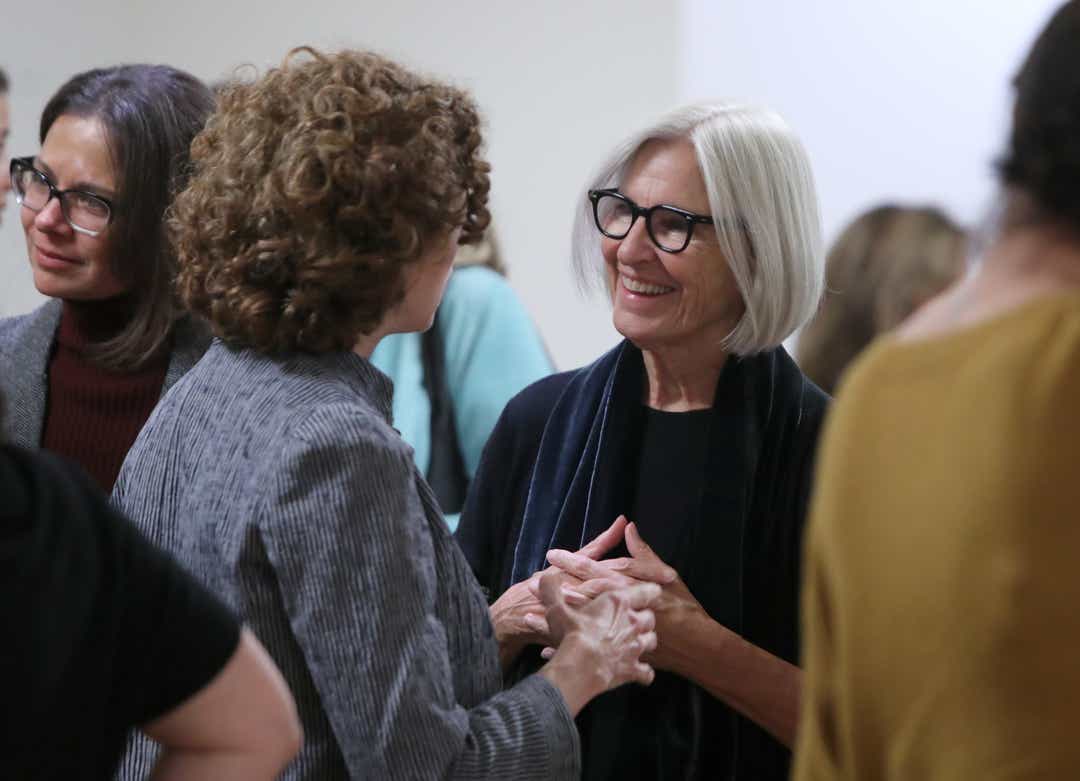
Eileen Fisher talks with guests at the Rivertowns Women's Networking event at the Eileen Fisher Learning Lab in Irvington Oct. 15, 2018. 
Peter Carr/The Journal News
Held on Monday evening at the Eileen Fisher Learning Lab, an event space and studio in Irvington, it was not a typical women’s networking event for the Rivertowns Chamber of Commerce.
MADAME WALKER: First female self-made millionaire

ALICE WALKER: On black lives, Spielberg, Trump and writing in New Rochelle
EDITH WINDSOR: Love story and landmark lawsuit of gay rights heroine comes to Nyack
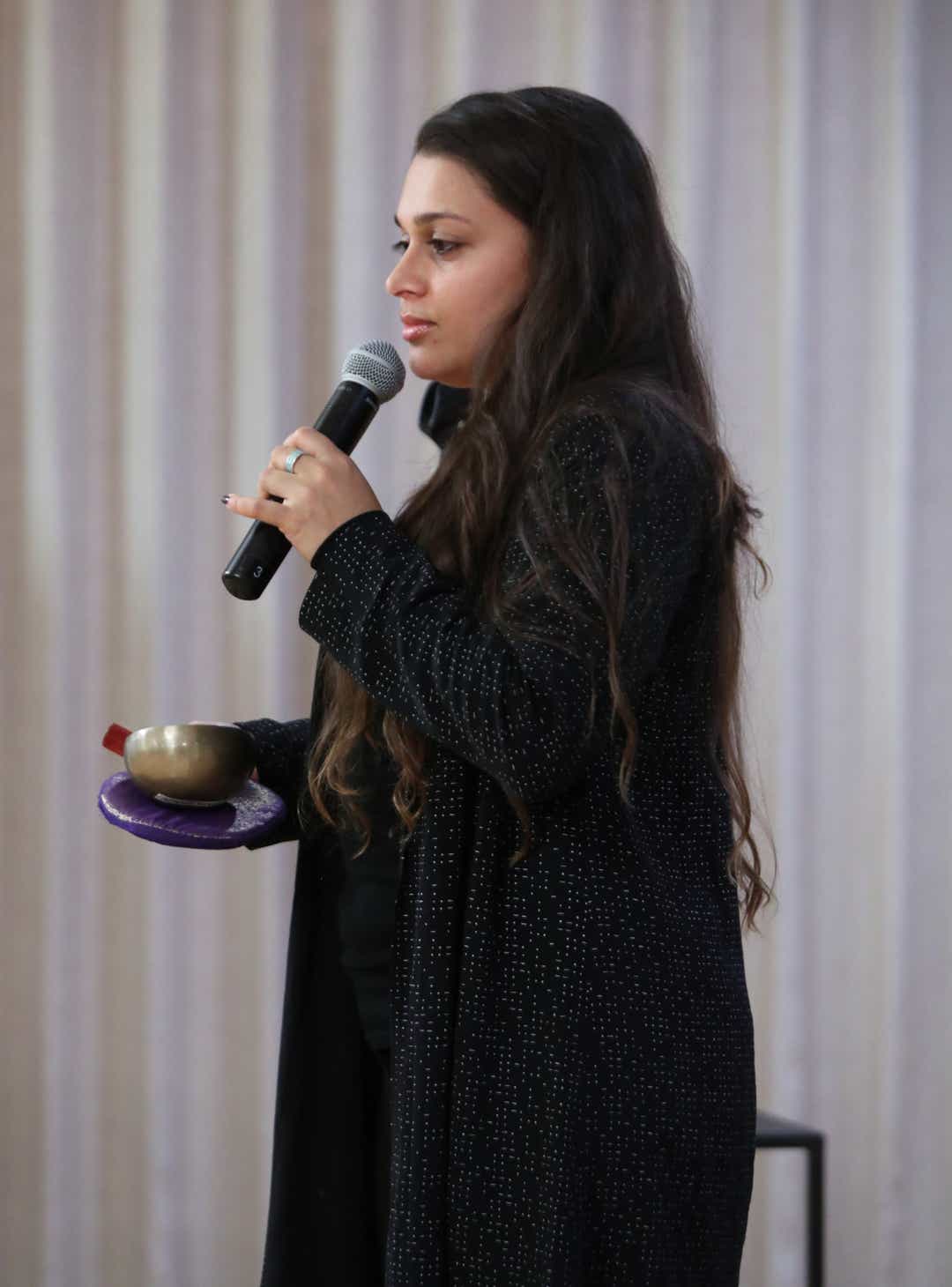
Antoinette Klatzky, executive director of the Eileen Fisher Leadership Institute, speaks at the Rivertowns Women's Networking event at the Eileen Fisher Learning Lab in Irvington Oct. 15, 2018.
Peter Carr/The Journal News 
The evening started with mindfulness exercises led by Antoinette Klatzky, the executive director of the Eileen Fisher Leadership Institute, during which she encouraged audience members to find a partner, chat and get to know each other at a deeper level.

It was a continuation of a conversation Fisher had with her mindfulness partner earlier at the event that got her ruminating about the state of patriarchy in the country
.
And it dovetailed perfectly with a new initiative her company’s educational arm, LifeWork, had launched to bring women together on work-life balance issues called “We The Change Women Together.”

“We believe it is time for women to show up and create the change this world needs. It’s not that we are better but that we have been left out of too many things,” said Fisher, the business powerhouse known for her simple, sophisticated and timeless designs of women's clothing, shoes, accessories and bed linens and other home goods.

“We’ve been left out of business. It’s only 1 percent of women’s business that make it past a million dollars. It’s crazy how many women don’t get loans, don’t get venture capital.”
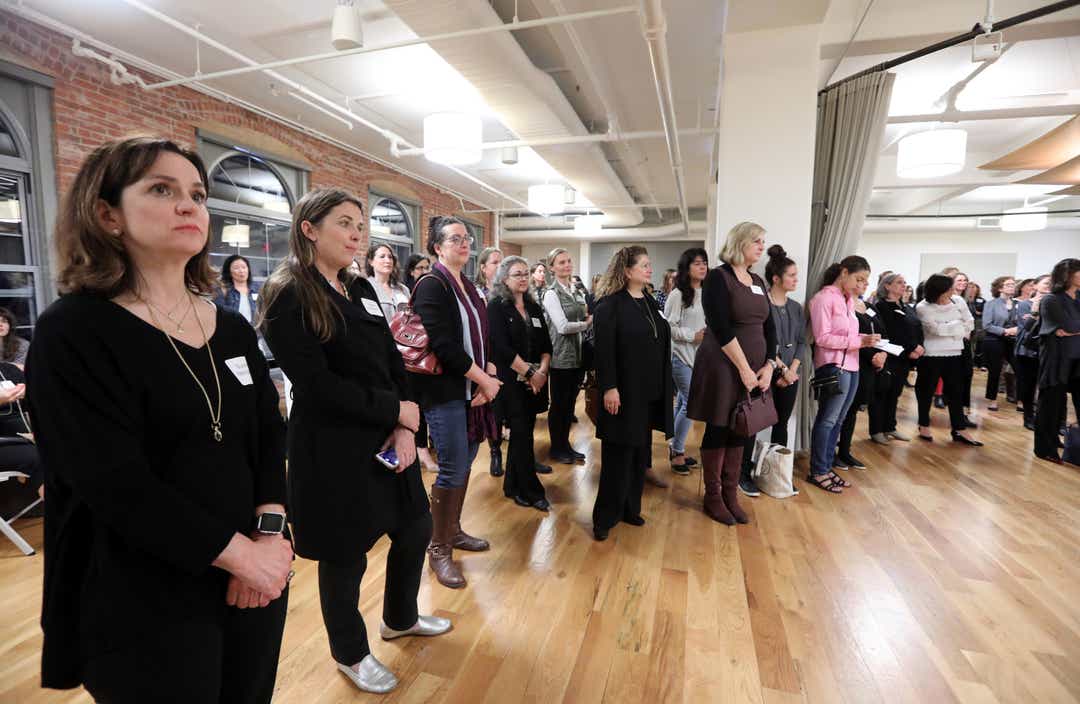
Guests attend the Rivertowns Women's Networking event at the Eileen Fisher Learning Lab in Irvington Oct. 15, 2018. 
Peter Carr/The Journal News 
She talked about attending Fortune 500 CEO forums and the dismal female representation.
“It's disturbing. Look at our Senate, look at our Congress. It’s not good enough. We know it's our time,” she said. “So we are trying to do what we can to help women come together.”
She credits her own career to female camaraderie.

A native of Des Plains, Illinois, Fisher attended the University of Illinois as a math major. She ended up sharing a dorm room with a high school friend, who happened to be design major.
“So I would hang out with her on the floor playing with colors and fabrics and one day I said, ‘Wow, if I study design, I might actually get through college,” said Fisher, who graduated with a degree in interior design and later found her way into designing clothes.

“Thanks to my friend … I found myself on a path that I never would have gone on. So I think the surprise of what can happen when you meet someone, when you share what you are working on or struggling with or just life in general, you don’t know what kind of magic can happen. Just anytime women get together, there’s some magic that happens.”

That’s a mantra Fisher seems to have taken to heart.
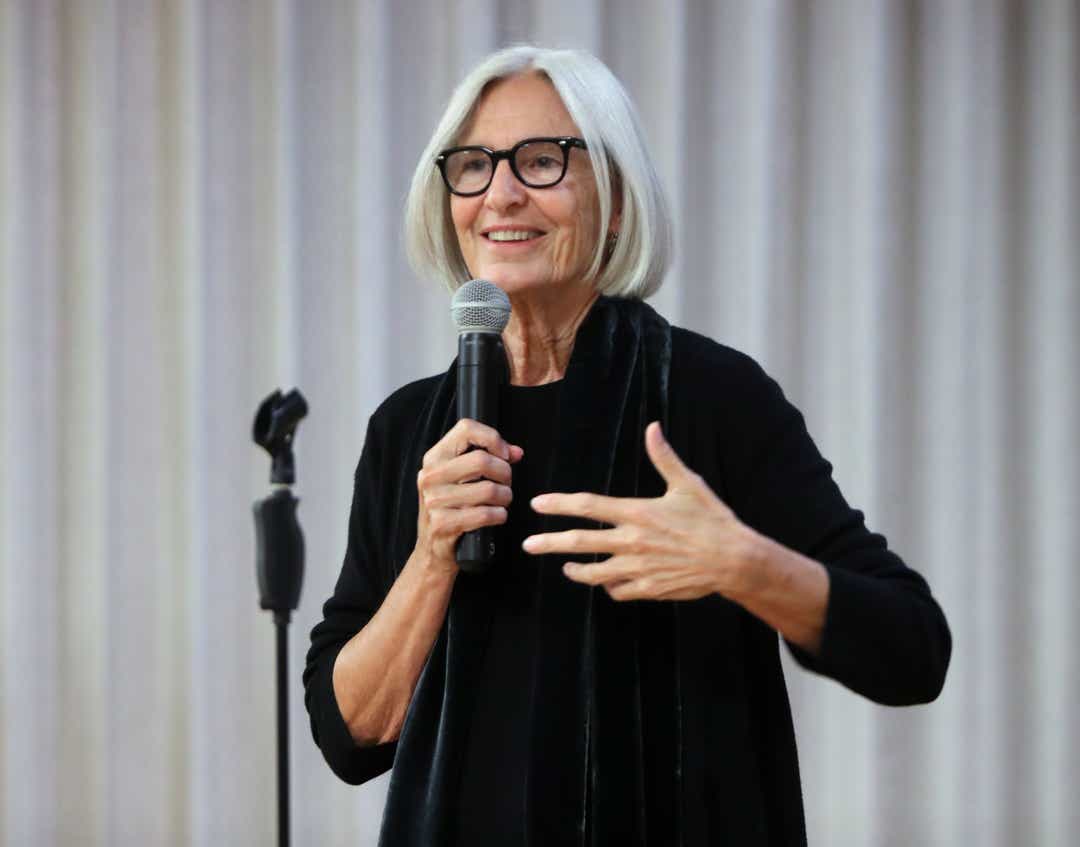
Eileen Fisher speaks at the Rivertowns Women's Networking event at the Eileen Fisher Learning Lab in Irvington Oct. 15, 2018.
Peter Carr/The Journal News 
More than 80 percent of the employees of Eileen Fisher, which employs about 1,200 people, are women.

Over the years, the company has also provided grants to women-owned business and sought to develop the leadership potential of girls through the Eileen Fisher Leadership Institute.
In an exclusive interview with The Journal News at the event, Fisher spoke about her company’s philosophy.

“About 12 years ago, we gave a $10,000 grant to a woman who started a company called Happy Family (which sold organic baby food) and it became bigger than Eileen Fisher,” Fisher told the Journal News/lohud.com. “She said it was one of the important grants that got her going. It’s inspiring to think that you give a little bit of money to someone and they can make a big business.”
At a time when fast fashion has taken over the industry, Fisher has bucked the trend by continuing to invest in sustainable and recycled fashion. It comes at a price: At the high end of her line, an organic cotton chenille long cardigan retails for $388; a pair of satin wide-leg pants retails for $458.
The average person buys 60 percent more items of clothing every year and keeps them for about half as long as 15 years ago, producing immense volumes of textile waste, according to a 2016 study by environmental organization Greenpeace International.

"We create simple, timeless clothes that last. We encourage our customers to bring back their clothing. We resell them, we make them into other things, we are all about thinking holistically about clothing and helping women get dressed with simple things and things that last over time," Fisher said.

In 2015, the company became a certified B Corp, or benefit corporation, which means it has a legal commitment to work toward positive social and environmental impact, in addition to profit.
“There are certain standards we have to measure up to — and it’s our own standards — but it’s great to be a part of a community of other companies that are trying to do things differently and take full responsibility for the things we make and the environment along the way,” said Fisher.
For instance, in 2017, 95 percent of the cotton the company used was recycled or organic. The company has set a goal to make that 100 percent in 2020.

What’s the best business advice she has received?

“It’s about being confident in my own style. I’m a slow processor. I am not real decisive like ‘do this, do that’ kind of person. A consultant once told me, it’s really OK to tell the group ‘let me think about it. I’ll get back to you.’ You shouldn’t feel like you must decide before you are ready.”

Swapna Venugopal Ramaswamy is the new audience strategist and a member of the Editorial Board for The Journal News/lohud, part of the USA Today Network.


Tuesday, 19 December 2017

Empowering Women

Empowering Women

There are such wonderful schemes for empowering women out there and each time I see a story about such a scheme I want to share it to show women that there is always hope to better their lives.


The Women's Resource Center and the Women's Lighthouse Recovery Center have teamed up to help more women in need.

Started nearly 15 years ago, the Lighthouse, a residential treatment facility for those dealing with addiction, can house 17 to 24 women at their women's facility on Main Street and 40 to 45 men at the men’s facility just outside of town.

Recently the women's facility, located at 311 E. Main, recently received an associate or level IV status through the Indiana Affiliation of Recovery Residences or INARR
.
Level IV recovery residences, like the Lighthouse, are the most structured recovery residences and those facilities are licensed by the state. These residences are operated by a licensed treatment provider and include an organizational hierarchy with licensed and credentialed staff who are located on-site. Clinical services are provided on-site or in conjunction with the treatment facility operating the residence.


"I'm so excited about this," Beth Riley, the director for the Women's Lighthouse, said. "I think it is going to affect the women coming by allowing more women to be able to attend the lighthouse."
Over the years, the facility has seen a success rate as high as 89 percent.

"This is a safe place for women to get free of drug addiction and dysfunctional lifestyles," Riley said. "We empower these women to change their lives and teach the steps to do this."
Riley sees the changes as the women learn and grow.

"I see women come in hopeless and helpless," Riley said. "They don't think they can quit. They can now live dreams they never imagined because of the Lighthouse."

The Lighthouse also recently bought the building next door where the Women's Resource Center is located. The resource center helps teach women basic skills.

"We teach women life skills and provide resources to help them get back on their feet," Jo Hyatt, director of the Women's Resource Center, said. "We help prepare them for life."
They offer classes like cooking, nutrition and budgeting as well as sewing and crafts.
One woman in the sewing and crafting classes learned how to hem her own pants with the help of Floreen McKinley, the volunteer sewing and crafts instructor.

"I have a pair of jeans that are too long and she said 'I can help with that,'" Amber Sparks, 38, from Bloomington said. "Today was my first class and my first time using a sewing machine."
The Women's Resource Center is also looking into a new program to encourage women to participate in the classes.

"It will be the Earn While You Learn program," Hyatt said. "Every time they attend a class, they will get budgeting bucks. They can then spend the money in a store which offers items they might need in their home."

Those items include feminine products, deodorant, hair dryers, curling irons, shampoo and conditioner, shaving cream and razors.

The center is hoping donations of these items and more can help fill the shelves of the store.
"We are just out to help people who are hurting and give them hope," Hyatt said.

Video coverage

To watch video coverage and learn more about the Women's Lighthouse Recovery Center and the Women's Resource Center go to www.washtimesherald.com.

Friday, 21 October 2016

How This Founder Is Helping Women Around The World

How This Founder Is Helping Women

Here is an article after my heart that helps women get empowered.   


I write actionable career advice as a millennial with a side hustle.
Jane Mosbacher Morris has always valued making a positive impact on others. Mosbacher Morris started her career working in counterterrorism at the U.S. Department of State, followed by the Secretary’s Office for Global Women’s Issues and the McCain Institute for International Leadership. As she traveled the world, she witnessed the overwhelming impact of female inequality and knew she wanted to find a way to help women have financial independence. On a business trip to Kolkata, India, Mosbacher Morris had an epiphany — she could provide economic empowerment for communities by creating a marketplace that connects local artisans with people who wish to buy social impact goods.


Tuesday, 11 October 2016

How Mentors And Sponsors Help Women Succeed In Business

How Mentors And Sponsors Help Women In Business

 This post shows yet again how important it is to stop gender discrimination when it comes to business.  It always pleases me to find that women contribute on a monumental scale to just about every section of business.........................


Christine Lagarde, managing director of the International Monetary Fund (IMF), says that “ if women were employed at the same rate as men, GDP would increase by 5 percent in the United States, by 9 percent in Japan, and by 27 percent in India.”

I spoke with Martine Liautaud, founder of the Women Initiative Foundation(WIF) and author of " Breaking Through: Stories and Best Practices From Companies That help Women Succeed , " about empowering women in the workplace.

Saturday, 25 June 2016

Women Helping Women

Women Helping Women

This is a great initiative especially as some well-known women have signed up to help empower and inspire other women.  Together we can achieve so much more.

Friday, 20 May 2016

How The Global Fund For Women Technology Can Help Empower Women Worldwide

Empowering Women

Reading the above article I was struck by the scheme to empower women.  It is always so good to learn about these organisations that give opportunities to better the lives of women who would otherwise struggle to make a living.


Having spent the last six years of my career at eBay, in the heart of Silicon Valley, I’ve seen firsthand how digital technologies can have a strong impact on people in the farthest corners of the world. Greater connectivity can foster learning, increase economic growth and provide life-changing information for women and girls that can promote their health, education and wellbeing. - See more at: http://www.blogjnj.com/2016/05/global-fund-women-technology-initiative-can-help-empower-women-worldwide/#sthash.jxbGTWEn.dpuf

Monday, 27 January 2014

Local workshop helps to empower women - WRCBtv.com | Chattanooga News, Weather & Sports

 I hope these workshops spread to other parts as helping empower women a great way to encourage business and give confidence to women whose talents would otherwise be so wasted.  Every person has some valuable input to contribute.


Local workshop helps to empower women - WRCBtv.com | Chattanooga News, Weather & Sports


Very best wishes,


Adele Bantle

International Style Coach