Showing posts with label Vaccines. Show all posts

Monday, 15 March 2021

The Pandemic Is Ending

The End of The Pandemic 

 Dare we hope for an end to this Pandemic soon?

The deadliest virus in history was variola. For thousands of years, it stalked humanity, causing smallpox, a horrific fate. An infected person’s skin would suddenly erupt in blisters, papules, and vesicles. These would sometimes cover the eyes, and could grow together until the skin fell off, or fill with blood, or turn gray as the person bled internally. In the 20th century alone, the disease killed some 300 million people. Many survivors were scarred or blinded.


Before the invention of vaccines, some people would go to extreme lengths to gain immunity.“Variolation” involved purposely infecting a person with a small amount of a mild version of the smallpox virus, in the hopes that they would develop immunity. It was risky: Unlike today’s vaccines against COVID-19—which contain no living coronavirus—variolation was not predictably effective, and it caused some people to become gravely ill with smallpox.

For obvious reasons, the practice was controversial. Was protection from this plague worth the small chance of dying? In 1760, the renowned physiologist Daniel Bernoulli attempted to put the matter to rest. He was well known for his work predicting the movement of fluids in closed systems—to this day, high-school students learn of the physics principle that bears his name—and he sought to create a model for how life expectancies would differ if variolation were taken up widely. How would the damage compare with that of letting smallpox continue to spread?

The problem proved far more complex than Bernoulli’s mathematical model could even begin to account for. For one example, susceptibility to smallpox tended to vary greatly among different populations. For another, if the rates of disease were driven down by mass variolation, everyone’s risk of contracting smallpox would then fall. That would, subsequently, change an individual’s calculus as to whether variolation was worthwhile. In other words, the situation was dynamic. And people are complicated.

Bernoulli’s model wasn’t bad, but it was implausibly simplistic. In the centuries since, though, it has been credited with giving rise to the field of infectious-disease modeling. Mathematicians and scientists have sought to hone the process of risk assessment; to inform public-health predictions and recommendations; to give answers based on clear, objective statistics and calculations. Still, actual events never match up to even the most sophisticated models. As pathogenic microbes spread, they evolve, and human immune systems adapt in different ways, to different degrees, on different timescales. Human behavior and immunity contain far more variables than any projection could ever fully account for.

Predicting the course of SARS-CoV-2 has been especially difficult: This particular virus causes a disease that varies dramatically in both the nature and severity of symptoms, and basic preventive measures have been overtly politicized. Even though case numbers are improving, forecasting is more complex than ever before. What started out as one new virus is now many distinct strains, infecting populations that have different degrees of immunity and different levels of vaccination. As Anthony Fauci told me last week, pandemics themselves change depending on how we react to them. “It really is an evolution, in real time, of understanding something that you never experienced before,” he said. This is why he hates being asked about the future. “There are too many moving targets.” Despite the snippets that make it into headlines and sound bites, America’s most famous pandemic expert is extremely reluctant to make predictions about “returning to normal” at any specific time.

“The answer is, actually, we don’t know,” he said, calling from his car between TV appearances. But interviewers, he added, are rarely satisfied by that. He recounted a typical conversation: “But what’s your best guess? It’s dangerous to guess. But let’s say everything falls into place. When do you think that would be? Fall? Winter? You have variants. You have stumbling blocks. All right, give me the best-case scenario. I’ll give you the best-case scenario. But very often the best-case scenario doesn’t come out. Well, let’s say you do get people vaccinated. When do you think we could get back to some form of normality? Well, what do you think ‘form of normality’ is? I mean, normality is the way it was back in October of 2019? Well, who knows how long that’s going to take. We may need to be wearing masks in 2022 if the variants come in and they sort of thwart our vaccination efforts to get everything under control.”

Despite his consistent dodging and hedging, Fauci said, the human demand for certainty seems to drown out his actual answers. He imagines the headlines: “‘Fauci Says We’ll Have to Be Wearing Masks in 2022.’ No, I didn’t say that. ‘Fauci Says We’ll Be Back to Normal by the End of the Year.’ No, I didn’t say that either.” He sounded weary when we talked. “It’s dangerous to predict.”

We all want concise, concrete predictions. Attempting to minimize uncertainty is a universal human instinct, and the explicit mission of journalistic institutions. Yet efforts to eliminate uncertainty are bound to create more of it. Perhaps the most vexing lesson in epidemiology is that predictions themselves change the future. Bold forecasts have unintended consequences. When experts say that cases of COVID-19 are trending downward and the outlook for summer is rosy, for example, states start declaring victory and eliminating precautions. Even if you turn out to be exactly right about the capacity of a virus, people will react as it spreads, changing their behavior and altering prior patterns of transmission. Then, if you adjust your models and predictions accordingly, you are susceptible to criticism about “flip-flopping” or “changing your story.” Pandemic analysis is not a line of work for those afraid to update their conclusions as new evidence becomes available. It requires speaking despite uncertainty about the future, based on a keen eye for certainty in the present.

Last winter, the Harvard professor Marc Lipsitch became one of the first epidemiologists to speak on the record about what was actually going on. The novel coronavirus was being detected in multiple countries, and it clearly had properties with enormously destructive capacities. Few other experts seemed willing to take the leap and sound the alarm. They didn’t want to be wrong, or they didn’t want to cause panic, or some mix of both. The medical community had not forgotten the negative effects of the media’s attention on isolated cases of SARS, MERS, and Ebola, which had fueled racism and xenophobia, and caused fear of widespread illness that simply never came to pass in the United States. This time around, many scientists’ default position was to be calm and reassuring, telling people they didn’t yet have the evidence to say this coronavirus would become a pandemic.

Lipsitch and I first spoke on February 14, 2020, when the U.S. had 15 reported cases of COVID-19. At that point, he cautiously posited that the coronavirus would infect 40 to 70 percent of the U.S. population and likely become endemic. On February 24, when the U.S. had 52 confirmed cases, I included Lipsitch’s comments in a story with the headline “You’re Likely to Get the Coronavirus.” I tried to introduce them with as much context as possible. I deliberately buried the lede in the middle of a lengthy explanation of why I thought he was right. I spoke with vaccinologists who said that developing a vaccine would take at least a year. The virus had spread all around the world so quickly and stealthily that we already knew it was very different from SARS and MERS. America was doing very little testing, so case numbers were likely much higher than reported. And, crucially, we knew people could be asymptomatic. Taken together, the picture fit the bill for what Fauci had described to me in 2015 as “the perfect storm.”

The article was met with skepticism. The Associated Press called the headline “sensational” and insinuated that I had written the piece out of an interest in earning “a segment on Morning Joe.” Lipsitch himself received a torrent of concern that his estimate was premature or overly pessimistic. He later worried that his comments could be interpreted to mean that widespread infection was unavoidable, when what he meant to say was that this spread would happen unless we took drastic measures. Lipsitch was confident in his model and what he had told me, but mindful that if people thought this pandemic was inevitable, they would not even try to stop it, and would lose sight of how many lives could be saved by taking precautions and fortifying social and medical systems. “I still don’t know that there’s enough evidence to say that this was inevitable,” Lipsitch told me recently. “But by the time I started mouthing off to you, I thought it was very likely.”

A year later, “I have no illusion that I had the exact right calibration,” Lipsitch said, although he did have, essentially, the exact right calibration: The virus has now infected roughly 40 percent of Americans, killed more than 500,000, and is likely to become endemic. “But I think as early as I was able to put together the evidence, I said what I thought it meant. And I don’t know how to do better than that.”

Part of the reason Lipsitch was ultimately so correct is that he underestimated two major things. First was the extent to which, he told me last month, “bad leadership can screw up a response.” Meanwhile, he said, “the more positive surprise is the story of the vaccines, and the fact that, thanks to super-insightful planning, we had the infrastructure to build vaccines that work.” Ultimately, the extraordinary vaccine development may offset some of the Trump administration’s damage, and leave the world close to the worst-case scenario Lipsitch depicted a year ago.

In response to critics, Lipsitch has cited the work of the immunologist Peter Medawar, who warns in his book, Advice to a Young Scientist, of people who “affect the possession of a mind so finely critical that no evidence is ever quite good enough.” This position is always rhetorically defensible, because no hypothesis or scientific theory ever achieves certainty, by definition. Being proved wrong is hard if you say that you’d like to wait for more evidence before commenting. But that is, at some point, dishonest. Taken to its extreme, the insistence on waiting for more evidence can be malignant: climate denialism, anti-vaccination campaigns. It can also be paralyzing, which is especially dangerous in moments of crisis.

“You don’t ever want to let your desire not to panic people hold you back from something that you definitely know,” Fauci told me. “But when you just don’t know, you’ve got to walk a delicate balance.” You say and act on what you know, and you accept that some people will accuse you of flip-flopping when you later know more. “When people want to stick it to you, they say, ‘Oh, you said in the beginning that there isn’t anything that you do any different,’” Fauci said. “Tell me what you would have thought if we said, when you had the first case here, that we should absolutely shut the country down? They would have thrown me in jail.”

The Biden administration is much easier to work with than the Trump administration was, Fauci said. But last February, when the official line was that the virus was going to “disappear,” he was in an impossible situation. The people who could speak freely and also had the expertise to do so credibly were few. Today, the experts I trust most are those who seem to have grown less certain over the course of the pandemic, and have learned the humility it should force upon us all. Even last year, Lipsitch’s hesitation and hedging signaled to me that he knew what he was talking about. In July, he told me he was “out of the business” of prediction. Though if anyone should be in it, it’s him.

COVID-19 modeling is growing more sophisticated, but also more challenging. As scientists attempt to incorporate variables such as the many variants and the spectrum of immune responses around the world, messaging is also becoming more complex, defying the false binary of “lockdown” or “back to normal.” Perceptions of what should be done are now suffused with bias. The nature of that bias has changed radically in the past year. If, last February, journalists and experts were worried about panicking people, many of us now have a new default assumption: entertaining the worst possible scenarios.

The virus is evolving. Vaccines are never perfect. Things could still go very wrong. All of this is true. Our judgments tend to weigh recent experiences far more heavily than ones further back. Like a person recently in a car crash, we’re driving extra cautiously right now. Combine this with our short and ever-shortening memories, and our nature is to cycle between anxiety and complacency. Given the complexity of predictions, I have no illusion that I can accurately guess how people will react to my reporting or analysis. Focusing on potential risks may be useful, or it may lead to panic and pandemic fatigue. Erring toward optimism and away from undue alarm is what landed us here. Depicting a clear end point may relieve some stresses but worsen others. In a piece last month, the Atlantic contributor Zeynep Tufekci wrote: “Hope will get us through this. And one day soon, you’ll be able to hop off the subway on your way to a concert, pick up a newspaper, and find the triumphant headline: ‘COVID Routed!’” I would love for this to be true. I wish people still bought newspapers.

If anything can be said of what lies ahead, it’s that pandemics end in whimpers, not headlines. This one will end in many small ways, day by day, with concrete instances of triumph and progress to pull us forward. In other ways, this pandemic is going to drag on and on, and the virus will be with us indefinitely. The question is only to what degree. We don’t need to choose between urging caution and giving hope, between offering certainty and embracing ambiguity. Pandemics demand all of these things.

This is up to us. Disease modeling is complex, but the virus isn’t. As Lipsitch put it, “Epidemiology of infectious disease is, basically, one case becomes two. It’s not rocket science.” The virus itself is so simple as to not even qualify as a life-form. It’s a string of nucleic acid in a rudimentary shell. Its behavior is absolutely predictable—almost mechanical, like gravity. The complicating factor is us. And unlike the days of variolation, we now have many extremely safe and effective vaccines. We have modern technology to produce extremely effective masks and indoor ventilation systems. What must be done to save lives is just as clear as the mechanics of the virus itself. The path before us should involve extremely straightforward decisions. All we have to do is decide to make them. I have no certainty that we will.

James Hamblin, M.D., is a staff writer at The Atlantic. He is also a lecturer at Yale School of Public Health, co-host of Social Distance, and author of Clean: The New Science of Skin.
Connect

Friday, 12 March 2021

5 Pandemic Mistakes We Keep Repeating

Learning from the Pandemic 


Click the link above to read the full article:

Saturday, 19 December 2020

The Medical Minute: Debunking vaccine myths

The Medical Minute: Debunking vaccine myths: 

Vaccines are in the news again – along with misinformation about their safety. We replace the common myths with truths about the safety and benefits of vaccin

Thursday, 26 November 2020

When Christmas was cancelled: a lesson from history

Christmas 


Give a shoutout to Jonathan Borba on social or copy the text below to attribute.

The prospect of a Christmas without large-scale celebrations is preying on minds. After the widespread cancellation of pantomimes, festive light “switch-ons” and other community activities, it seems likely that 2020’s festivities will be much more intimate affairs, potentially with households banned from mixing indoors.

But what if families ignore distancing rules, should they remain in place, and celebrate together rather than on Zoom? Politicians seeking to come down hard on rule-breakers might wish to recall a previously restricted yuletide.

Back in 1647, Christmas was banned in the kingdoms of England (which at the time included Wales), Scotland and Ireland and it didn’t work out very well. Following a total ban on everything festive, from decorations to gatherings, rebellions broke out across the country. While some activity took the form of hanging holly in defiance, other action was far more radical and went on to have historical consequences.

Christmas is cancelled

In 1647, parliament had won the civil war in England, Scotland and Ireland and King Charles was held in captivity at Hampton Court. The Church of England had been abolished and replaced by a Presbyterian system.

Painting of Oliver Cromwell in armour.
Oliver Cromwell, the original Grinch who stole Christmas. Cromwell Museum, CC BY

The protestant reformation had restructured churches across the British Isles, and holy days, Christmas included, were abolished.

The usual festivities during the 12 days of Christmas (December 25 to January 5) were deemed unacceptable. Shops had to stay open throughout Christmastide, including Christmas Day. Displays of Christmas decorations – holly, ivy and other evergreens – were banned. Other traditions, such as feasting and the celebratory consumption of alcohol, consumed in large quantities then as now, were likewise restricted.

Christmas Day, however, didn’t pass quietly. People across England, Scotland and Ireland flouted the rules. In Norwich, the mayor had already been presented with a petition calling for a celebration of a traditional Christmas. He could not allow this publicly, but ignored illegal celebrations across the city.

In Canterbury, the usual Christmas football game was played and festive holly bushes were stood outside house doors. Over the 12 days of Christmas, the partying spread across all of Kent and armed force had to be used to break up the fun.

Christmas Day was celebrated in the very heart of Westminster and the churchwardens of St Margaret’s church (which is part of Westminster Abbey) were arrested for failing to stop the party. The London streets were decked with holly and ivy and the shops were closed. The mayor of London was verbally assaulted as he tried to rip down the Christmas decorations with the help of the city’s own battle-hardened veteran regiments.

Ipswich and Bury St Edmunds in Suffolk also celebrated Christmas rowdily. Young men armed with spiked clubs patrolled the streets persuading the shopkeepers to stay shut.

Taking up arms and breaking the rules weren’t just about experiencing the fun of the season. Fighting against the prohibition of Christmas was a political act. Things had changed and the Christmas rebellion was as much a protest against the “new normal” as it was against the banning of fun. People were fed up with a range of restrictions and financial difficulties that came with the Presbyterian system and the fallout of the civil war.

The worst Christmas hangover

The aftermath of the Norwich Christmas riots was the most dramatic. The mayor was summoned to London in April 1648 to explain his failure to prohibit the Christmas parties, but a crowd closed the city gates to prevent him from being taken away. Armed forces were again deployed, and in the ensuing riots, the city ammunition magazine exploded, killing at least 40 people.

Norwich was not alone. In Kent, the grand jury decided that the Christmas party-going rioters had no choice but to answer to the law and the county went into exuberant rebellion against parliament. Royalists capitalised on the popular discontent and began organising the rioters.


Read more: Why lockdowns don't necessarily infringe on freedom


Successively in 1647 and 1648, parties led to riots, these riots led to rebellions, which, in turn, caused the Second Civil War that summer. King Charles was put on trial after his defeat in the war and was executed. This resulted in a revolution and Britain and Ireland became a republic – all because of Christmas.

This Christmas, police across the country are ready to enforce COVID regulations and break up gatherings. While the pandemic does make things different, with rule breaking a matter of safety as much as anything else, politicians could learn from the fallout of the last time Christmas was cancelled.

Like in 1647, many people today are fed up with the government’s restrictions. Many have also suffered financial difficulties as a result of the COVID regulations. Some may rail against the idea of ending a miserable year under what they may regard as contradictory restrictions on family fun.

Such a situation will have to be handled gingerly. There has already been civil disorder over lockdowns. Vaccines are apparently coming in the new year but the last thing the country needs is further unrest. Once again, government will need to balance the health risk against other societal challenges this pandemic has presented.

Democratic norms are being stress-tested all over the world, and the past few years have thrown up all kinds of questions we didn't know needed clarifying – how long is too long for a parliamentary prorogation? How far should politicians be allowed to intervene in court cases? To monitor these issues as closely as we have in the past we need your support, so please consider donating to The Conversation.

Laura Hood

Politics Editor


Sunday, 8 November 2020

The strange ingredients found in vaccines

Contents of Vaccines 


Scientists add some bizarre things to vaccines, such as aluminium and extracts from shark livers. Many vaccines simply don’t work without them – but no one knows why.

In 1925, Gaston Ramon embarked upon an experiment that even he described as… “interesting”.

A few years earlier, the French veterinarian had been trying out a new diphtheria vaccine on horses, when he made an accidental discovery: some animals reacted by developing nasty abscesses at the injection site, and these ones also tended to develop stronger immune responses. This got him thinking – what else could he add to the vaccine, to encourage this to happen?

Over the next year, Ramon tested a bizarre smorgasbord of ingredients, seemingly based on what he happened to have in his kitchen cupboards. Together with the diphtheria vaccine, his unfortunate patients were injected with tapioca, starch, agar, lecithin – an emulsion of oil, commonly found in chocolate – and even breadcrumbs.

The experiments were a success. Animals which had been given vaccines that included Ramon’s concoctions produced significantly more antibodies than those which didn’t, suggesting that they would be better protected against diphtheria.

And thus the field of “adjuvants” was born. Named after the Latin word “adjuvare”, meaning “to help” or “aid”, these are substances which can be added to vaccines to make them more effective. They’re widely used to this day – and they’re no less weird than they were to begin with.

You might also like:

The most commonly used adjuvant on the planet is aluminium. The chemical is found in the majority of vaccines, including the diphtheria, tetanus, and whooping cough (DTP) vaccine, as well as those that protect against hepatitis A, hepatitis B, HPV, Japanese encephalitis, meningitis B, anthrax, pneumococcus, and Haemophilus influenzae type b.

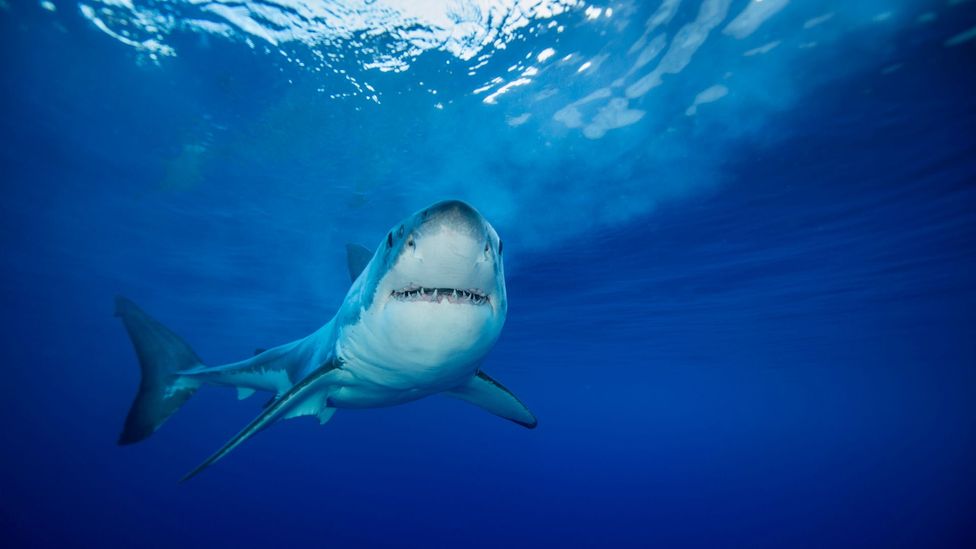
Other popular adjuvants include squalene, an oily substance made from shark livers, and extracts from the bark of the quillaja tree, which has traditionally been used by the Andean Mapuche people to make soap as its bark can be powdered and mixed with water to form a lather. The newest additions – which haven’t yet been licensed – are perhaps the strangest of all, such as the disembodied tails of bacteria and “bacterial ghosts”, made from their empty skins.  

It’s been estimated that vaccines save two to three million lives per year, as well as preventing lifelong disabilities. No one has quantified exactly what proportion of these triumphs are down to adjuvants. But by encouraging the body to respond to vaccines more vigorously, they can make them more effective and protect people for longer than they otherwise would. In some demographics, such as the elderly, certain vaccines simply wouldn’t work without them.

French vet Gaston Ramon used household staples in his early experiments on adjuvants in the 1920s – including breadcrumbs (Credit: Burcu Atalay Tankut/Getty Images)

French vet Gaston Ramon used household staples in his early experiments on adjuvants in the 1920s – including breadcrumbs (Credit: Burcu Atalay Tankut/Getty Images)

“Without an adjuvant, antibodies will generally disappear, maybe after a few weeks or months. But with adjuvants they might last for a few years.” says Bingbing Sun, a chemical engineer at Dalian University of Technology, in the Chinese city of Dalian. He gives the example of certain types of hepatitis B vaccine. “If they don't include adjuvants, antibody production will be very, super low. They don't really have the ability to induce antibody production,” he says.

For over a century, why these apparently random ingredients are so essential to vaccines has remained a total mystery. Now scientists are racing to unravel their secrets.

A mistaken scandal

First up, though the concept of additives in vaccines might sound alarming, they’re included in microscopic quantities. There is as little as 0.2mg of aluminium in a typical vaccine dose, which is equivalent to less than the weight of a single poppy seed. The weight of evidence is that adjuvants do not lead to serious side-effects.

In fact, safety is the reason adjuvants were popularised in the first place.

The scandal spurred scientists to look for new ways to make vaccines

Back in the 1970s, a paediatric neurologist gave a speech at the Royal Society of Medicine which caused controversy that lasted a decade. John Wilson claimed that 36 children had acquired brain damage – and erroneously blamed it on the vaccine for pertussis.

The story was picked up by journalists, and before long it was a full scandal – complete with prime-time specials and front page headlines. Over the coming years, the rates of pertussis vaccination plummeted by more than half in the UK, while in some countries it stopped altogether.

Although some initial studies appeared to indicate there was a link, their validity has been questioned and a number of large scale studies have subsequently failed to find sufficient evidence to support it. But the vaccine did produce some mild immediate side-effects, such as a fever, and this was easy to confuse with something more sinister. More serious side effects were considered to be extremely rare.

What the pertussis scandal did achieve, however, was to spur scientists to look for new ways to make vaccines.

Previously, most vaccines had been made using live microorganisms, which had been weakened in some way to make them less infectious or harmful – while still helping the body to recognise them – or killed and included whole. The latter was the case for the pertussis vaccine, which was administered along with tetanus and diphtheria (DTwP).

The aluminium in vaccines is always in the form of salts such as aluminium hydroxide (Credit: Kwhisky/Getty Images)

The aluminium in vaccines is always in the form of salts such as aluminium hydroxide (Credit: Kwhisky/Getty Images)

These vaccines were sometimes accompanied by temporary symptoms because they mimicked natural infections. And just like natural infections, they were highly effective at generating immunity – often giving rise to potent responses which would last decades. Many vaccines containing live microorganisms also provided a kind of accidental bonus protection against unrelated infections, which continues to benefit people to this day (Read more about the mystery of why some vaccines are doubly beneficial).

The new system was different. After the pertussis scare, scientists started to favour just including certain parts of microorganisms, such as the toxins they produce or fragments from their outer surfaces. These new vaccines were just as safe and much more comfortable to receive. But there was a catch.

Making vaccines this way means they are less “immunogenic” – the protection they provide isn’t as robust and it doesn’t last as long. To overcome this, scientists turned to adjuvants.

The aluminium paradox

Aluminium is not only the most common adjuvant, but one of the oldest.

Shortly after Ramon discovered that his horses responded better to vaccines with added culinary ingredients, the British immunologist Alexander Glenny made another accidental finding. In 1926, his team was trying to purify the toxin produced by the diphtheria bacteria, to make it dissolve less rapidly in the body. The hope was that this would mean it lingered for longer at the injection site, and produced a stronger immune response.

To achieve this, Glenny tried using aluminium salts which, legend has it, just so happened to be the first thing he saw in his chemical shelf – who knows, perhaps it was alphabetised. But when he vaccinated guinea pigs with his freshly-prepared diphtheria toxin, something unexpected happened. Those which had been injected with the toxin plus aluminium salts developed much stronger immunity than those which were only injected with the toxin, and not because it was more pure. They were responding to the aluminium itself.

Genny himself believed that aluminium salts help by binding to the vaccine’s main ingredient, the part resembling the pathogen

To this day, the aluminium in vaccines is always in the form of salts. These include aluminium hydroxide (commonly used as an antacid to relieve indigestion and heartburn), aluminium phosphate (often used in dental cement) and potassium aluminium sulphate, which is sometimes found in baking powder.

Genny himself believed that aluminium salts help by binding to the vaccine’s main ingredient, the part resembling the pathogen, presenting it to the immune system more slowly. This might give the immune system longer to respond, and therefore lead to stronger immunity.

But this idea has gone out of fashion – and the truth has proven to be a lot more complicated.

One theory is that the toxicity of aluminium salts is, paradoxically, the reason they work. They lead distressed cells to release uric acid, which activates an immune reaction normally associated with damage. Immune cells flock to the site, and start producing antibodies – and voila, the vaccine has worked.

Another idea is that a receptor called “Nalp3” is likely to play a central role. For a 2008 study led by Richard Flavell from Yale University, Connecticut, mice which had been genetically engineered without it were injected with a vaccine containing aluminium. Their immune response was almost non-existent. However, when they tried a vaccine using a different adjuvant – one containing an emulsion of mineral oil – the animals produced antibodies as usual.

Aqualene, an oil made from shark livers, is is a key ingredient in one leading squalene (Credit: Wildstanimal/Getty Images)

Aqualene, an oil made from shark livers, is is a key ingredient in one leading squalene (Credit: Wildstanimal/Getty Images)

This suggests that in ordinary mice (and humans), the aluminium in vaccines works by activating the Nalp3 receptor, which acts as a kind of danger switch alerting the rest of the immune system. Once the immune cavalry has arrived, they help to generate a stronger response and the vaccine has more of an impact.

In fact, though there are many different types of adjuvant, and many different potential mechanisms, this seems to be at the core of how they work – they attract the attention of the immune system, and this leads to a stronger memory of the pathogen the vaccine resembles. 

Take squalene, an oil made from shark livers and a key ingredient in the adjuvant “MF59”. It’s already added to vaccines for the seasonal flu and is currently being investigated for use in vaccines against Covid-19. (This has caused some controversy, after reports that, if such a vaccine were mass produced so that the entire global population could receive a dose, around 250,000 endangered sharks would need to be slaughtered – however this estimate is up for debate.)

Scientists are starting to wonder whether they can come up with something better than those accidental adjuvants

One way MF59 is thought to work is by triggering the release of chemokines – signalling chemicals – by nearby cells, which then encourage other cells to produce yet more chemokines. Eventually, this cascade attracts immune cells, which ingest the vaccine – including recognisable parts of the pathogen it protects against – and transport the lot to the lymph nodes, which filter pathogens out of the body and help to identify infections.

The next generation

“In the vaccine industry, people are very conservative,” says Sun. “So whenever they try to find an adjuvant for a new type of vaccine, most of the ones under investigation are the traditional ones, which we know are safe and effective.”

However, scientists are starting to wonder whether they can come up with something better than those accidental adjuvants from the 1920s and 1950s, discovered before the structure of DNA was known, or man had set foot on the Moon, when computers either didn’t exist or were the size of a house.

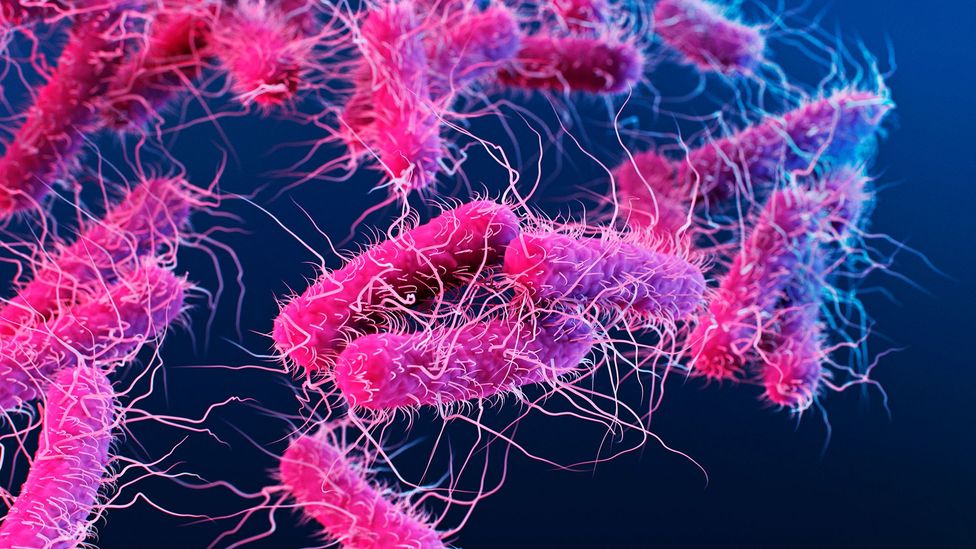
Vaccines could be made using parts of bacteria such as salmonella (Credit: Alissa Eckert/Science Photo Library/Getty Images)

Vaccines could be made using parts of bacteria such as salmonella (Credit: Alissa Eckert/Science Photo Library/Getty Images)

This is particularly important, because of a tragic irony: people who are the most vulnerable to infections also tend to have the weakest responses to vaccines. For example, one flu vaccine was 58% effective at preventing hospitalisation in “frail” people over the age of 65, but 77.6% effective in those who were not.

There are already fears that this could be the case for vaccines against Covid-19, which is hundreds of times more likely to kill a person over the age of 80 than those under the age of 50. (Learn more about why older people are harder to vaccinate.)

As the global population of septuagenarians, octogenarians, nonagenarians and centenarians creeps up, these problems are only set to get worse. Enter the next generation of adjuvants, which promise to make modern vaccines even more effective.

One candidate is the protein flagellin. It’s found in bacteria such as Salmonella, which use it in their tails, or flagella, to propel themselves around. Sometimes it’s made by detaching the tails from bacteria – though more recently it’s become common to grow it in genetically modified cells.

The development of adjuvants is tedious work – Bingbing Sun

Flagellin isn’t yet licensed for use in any human vaccine, but it’s shown promising results in trials.

During a natural infection with bacteria, the protein binds to receptors on the surface of immune cells. This acts like a danger signal and encourages them to tell other immune cells to flock to the site – leading to a protective response. In theory, this is also what happens when it’s included in vaccines. As with other adjuvants, it gets the attention of the immune system, so that the vaccine can do its job.

So-called bacterial ghosts are another possibility, composed of the empty skins of bacteria. These are made by splitting open bacterial cells, such as those belonging to E. coli, so that you are left with the cell membrane and nothing else. Like squalene-based adjuvants, they lead to the production of chemical signals, which call for help from immune cells and maximise the chances of them finding the vaccine.

“The development of adjuvants is tedious work,” says Sun. “I mean, you have to make sure of the safety as well as the efficacy – and this takes time. For a traditional vaccine, it usually takes about 10-12 years for us to licence the vaccine.”

Who knows, nearly a century after Gaston Ramon experimented with breadcrumbs, the world of adjuvants might be about to get a modern makeover – and the next generation looks set to be just as bizarre as they were to begin with.

The paragraph about adjuvants and possible side effects has been amended for clarification. Additional detail about the link between the pertussis vaccine and encephalopathy has also been added for clarity and to correct a statement that the vaccine had been administered for decades without incident.

--


Wednesday, 25 September 2019

2019 Vaccine Awareness Week Update

Vaccine Awareness


 Analysis by Dr. Joseph Mercola

Story at-a-glance

  • More than 500 vaccine-related bills were introduced in U.S. state legislatures in 2019, many of which proposed to restrict or eliminate vaccine exemptions
  • Only 2% of children attend public or private schools with vaccine exemptions for any reason — medical, religious, philosophical or conscience — in the U.S.
  • Fear mongering about measles outbreaks in the U.S. and around the world resulted in the forced vaccination lobby persuading legislators to eliminate the religious and conscience exemption in Maine and the religious exemption in New York.
  • In Washington state, the conscience exemption for measles, mumps, rubella (MMR) vaccine was eliminated.
  • In California, the legal right of private doctors to grant a medical exemption to vaccination was essentially eliminated.
  • Harmful vaccine bills restricting or eliminating vaccine choice were stopped in Alabama, Arizona, Colorado, Connecticut, Iowa, Illinois, Minnesota, Missouri, Vermont, Washington, Oregon and Texas, thanks to thousands of people participating in the vaccine lawmaking process, who personally contacted their state legislators and showed up for public hearings to defend their informed consent rights
  • The online NVIC Advocacy Portal was a major catalyst for that success. Registration is free, and puts you in direct electronic contact with your own state and federal legislators. You also receive action alerts with talking points via email when vaccine bills are moving in your state or in Congress so you can take action. Sign up today and consider making a donation to support NVIC’s important work to prevent vaccine injuries and deaths and protect your informed consent rights
Barbara Loe Fisher, cofounder and president of the National Vaccine Information Center (NVIC), a nonprofit educational charity, has been a tireless human rights advocate for vaccine safety and informed consent for over 35 years.
In this interview, we discuss measles outbreaks and how the ever-intensifying pressure by the forced vaccination lobby in 2019 to eliminate vaccine exemptions, not only in California but in many other states as well, is affecting the public conversation about vaccination and informed consent rights.

"It's been an unprecedented year in this country," she says. "The assault on vaccine exemptions has covered the whole country. The NVIC has monitored more than 500 vaccine-related bills that have been introduced in the states this year.
We have actively reported on and issued action alerts, in many cases, on more than 200 vaccine-related bills. What has happened this year as a result of the World Health Organization declaring that vaccine hesitancy is one of the top 10 global threats to health in this world, [it] was immediately followed by — and I don't think coincidentally — reports of outbreaks of measles, just like in 2015."

Fear Mongering Eliminated Personal Belief Exemptions

As Fisher notes, it was déjà vu all over again. In 2015, there was an outbreak of measles at Disneyland in California. The same thing that happened in 2015 happened again this year.
After the World Health Organization (WHO) declared "vaccine hesitancy" as one of the top 10 global threats to public health in January 2019,1 there were highly publicized reports of measles outbreaks in Washington, California and New York and children attending school with vaccine exemptions became the scapegoats.2
Just like in 2015, in 2019 the fear mongering about measles outbreaks was turned into a national media campaign to blame parents whose children were attending day care and school with vaccine exemptions, despite the fact that nationally only 2% of children in the U.S. attend public or private schools with vaccine exemptions for any reason — medical, religious, philosophical or conscience.3
In 2015, the same kind of exaggerated media hype stampeded the California legislature into removing the personal belief vaccine exemption, which included religious and philosophical beliefs.4
This year, the fear mongering resulted in the elimination of the religious and conscience exemption in Maine and the religious belief exemption in New York.5 In Washington state, the conscience exemption for measles, mumps, rubella (MMR) vaccine was eliminated.
In California, the legislature passed a bill that essentially eliminates the medical exemption by legally prohibiting doctors from granting a child a medical exemption unless it strictly conforms to narrow vaccine contraindications approved by the CDC Advisory Committee on Immunization Practices (ACIP). 

Widespread Assault on Informed Consent to Vaccination Rights

So far in 2019, 18 states have proposed to eliminate or restrict vaccine exemptions, but only Maine and New York actually went through with it, and Washington state only restricted the conscience exemption for MMR vaccine, leaving the religious, conscience and medical exemptions in place for all other vaccines mandated for school attendance.
The good news is that vaccine exemptions were successfully protected in 15 other states where bills have been introduced to restrict or remove vaccine exemptions.
"Parents and enlightened health care professionals stood up this year, contacted their legislators [like] we have asked them to do for 10 years now, and showed up by the thousands at public hearings on these bills.
We were able to stop bad bills in Alabama, Arizona, Colorado, Connecticut, Iowa, Illinois, Minnesota, Missouri, Vermont, Washington, Oregon and Texas. We were able to hold the line on some of these vaccine bills, especially to take away exemptions," Fisher says.
The NVIC Advocacy Portal — an online communications and advocacy network created 10 years ago — was a major catalyst for that success.6 Registration is free, and puts you in direct electronic contact with your own state and federal legislators.
You also receive action alerts with talking points via email when bills are moving in your state so you can take action to support good vaccine bills that protect your right to make voluntary vaccine decisions for yourself and your children, or to oppose bills that take that right away from you.

How to Stay in the Know

"What we've done is made it easy for you to become a vaccine choice activist," Fisher says. And, the strategy is clearly working. So, if you've not yet signed up, please take a moment to register to be a user of the NVIC Advocacy Portal today.
"We encourage everyone to sign up because what is happening in this country is, like I said, unprecedented," Fisher says. "It's going to be worse next year. There are three states — New Jersey, Pennsylvania and Wisconsin — that still have bills pending to take away vaccine exemptions.
Already, two states — Florida and Massachusetts — have prefiled bills for 2020 to take away religious exemptions. Florida [also wants to] restrict the medical exemption to only CDC contraindications. They're going to create a medical board that's going to review all medical exemptions.
We're predicting that Colorado, Michigan, New Jersey, Ohio, Oregon and Wisconsin are going to be particularly vulnerable in 2020. There are bills pending in D.C. and New Jersey [and] we expect more to be introduced next year that will allow minor children to give consent to vaccination without their parents' knowledge or consent.
The pattern we're seeing is that there is a move in this country to eliminate all vaccine exemptions, effectively, because the medical [exemption] has become so restrictive, it's almost a nonexemption …
Signing up for the NVIC Advocacy Portal really empowers you to be part of the process in protecting your informed consent rights when it comes to vaccination."

Vaccinated Can Still Get Infected With, Transmit Disease

The main reason mandatory vaccination proponents give for removing all personal belief exemptions and severely restricting the medical vaccine exemption is that unvaccinated children (and adults) pose a threat to herd immunity, also described by public health officials as "community immunity."
The concept of herd immunity is based on the idea that if a large enough percentage of individuals in a population are immune to being infected with and transmitting a viral or bacterial disease, they serve as a barrier to protect individuals who are not immune.
The theory of vaccine-acquired herd immunity maintains that if a certain percentage of individuals in a population are vaccinated, a viral or bacterial disease will not be transmitted in the population and make vaccinated or unvaccinated people sick.
Estimates made by public health officials for how high the vaccination rate must be in a population in order to prevent infection and transmission of measles, mumps, pertussis or other diseases varies, depending upon the microbe causing the disease.
For measles virus, current estimates range from 93% to 95%.7 Nationally, more than 94% of school children in the U.S. have received two doses of MMR vaccine and, in some states, the MMR vaccination rate is over 98%,8 yet measles outbreaks still occur. According to the vaccine-acquired herd immunity theory, this should not happen. As noted by Fisher:
"One of the biggest myths out there is that when you get vaccinated, you are guaranteed to not get the disease for which you've been vaccinated against. What people don't understand is you can get vaccinated and be infected subclinically. That means you have no symptoms or very few symptoms.9,10,11
But you can still transmit that infection to other people. When you have subclinical infections or atypically presenting infections in vaccinated people, those people are not being diagnosed and reported.
Who is being diagnosed and reported? The people who are fully expressing the symptoms. Many times, those are unvaccinated people. They're fully expressing, where the vaccinated are atypically or subclinically presenting. They're never diagnosed and reported.12
So, it looks as if all of the disease is occurring in unvaccinated people. It's not. With pertussis, the medical literature is clear that both the whole-cell DPT vaccine and acellular vaccine do not always block infection. You have subclinical infections and transmissions.13,14
The same with measles vaccine, mumps vaccine and influenza vaccine … 15,16,17 What's happening is people think that only unvaccinated people are actually spreading disease, when that is not true."
What's more, measles outbreaks occurred not just in the U.S. this year, but around the world.18 Unfortunately, there's no data showing the prevalence of how many vaccinated people are being asymptomatically infected with and transmitting the wild-type measles virus in the U.S. or other countries.19,20 If such surveillance is in fact being done, health authorities are not talking about it.
"There's no public acknowledgment that they're doing it. I'd like them to answer the question, 'How many people in this country are getting subclinically infected and are transmitting after being vaccinated?' That's a big question that should be answered," Fisher says.

Can You Trust the Vaccine Rule Makers?

Certainly, the technology exists to provide an answer to that question. But chances are the answer likely would conflict with current national vaccine policy and the endgame of maximizing vaccine manufacturers' profits by aggressively promoting a 100% vaccination rate with all government recommended vaccines, so it's not a priority.
This is part and parcel of the problem, as many of the most basic questions about vaccine safety and effectiveness simply are not addressed with high quality scientific research and data collection.
"There needs to be more transparency with regard to a lot of things with vaccine science policy and law," Fisher says. "There is not enough transparency on the part of the government, which develops vaccines in partnership with the drug companies, that licenses vaccines and that makes national policy for vaccines.
As I mentioned, they're trying to codify into state law the recommendations by the Advisory Committee on Immunization Practices (ACIP) at the CDC.21 That's an appointed body by the CDC.22
They're trying to make that body a de facto lawmaking body in this country. They're unelected people who were appointed by the CDC. Why should a handful of people be allowed to effectively be lawmakers?"
What's more, individuals appointed to federal vaccine advisory committees can be given conflict of interest waivers.
So, sitting on these vaccine policymaking committees there are individuals who may have gotten grants from the CDC or another federal agency involved in vaccine development, regulation, policymaking or promotion, or may have financial relationships with drug companies selling vaccines, like being paid to conduct clinical trials, and they are voting on whether a new vaccine should be licensed or recommended for universal use by everyone.23
"A lot of people who are considered vaccine experts definitely have financial relationships with the government, in terms of government grants and also the manufacturers for testing or running clinical trials or otherwise being involved with the vaccine manufacturers.
These public-private partnerships between the federal health agencies and the pharmaceutical companies that have been allowed by Congress to develop over the last 30 years are very problematic.24
Because if you have a business partnership with someone and you're supposed to be regulating that industry, like the FDA is supposed to be regulating these companies, how are you going to regulate your business partner? You're not."

Freedom of Choice Does Not Infringe on Pro-Vaccine Beliefs

The massive collusion between the pharmaceutical industry and federal regulatory agencies that are supposed to monitor and regulate them is really at the core of the problem, as these unholy alliances end up putting profits before safety.
There is a revolving door between people who work for U.S. federal health agencies and then go to work for the pharmaceutical industry and the other way around.25,26 This means that Big Pharma, which over the past decade has spent $2.5 billion lobbying the federal government, is having a tremendous influence on vaccine regulation, policymaking and law.27
In recent times, we've seen vicious public attacks against anyone who questions vaccine safety, policy and law, or vaccine science. There have been extreme calls for public shaming, identification, criminal prosecution, quarantine and imprisonment, and demonization of those criticizing vaccine safety and refusing to get government recommended vaccines.
A doctor developing vaccines who lobbies for "no exceptions" forced vaccination laws has referred to parents of vaccine injured children as a "hate group," and one prominent newspaper suggested vaccine critics should be physically harmed.28,29,30,31
Most providers of vaccine information on the internet are also now being censored by Google, effectively preventing people from finding what could be life-saving information.32
As a result of that suppression, it's incumbent upon you, if you know the truth, to protect the future of our country by fighting for freedom of choice and freedom of information gathering. As noted by Fisher:
"These attacks on freedom of speech, the right to dissent, the right to criticize government and ask them to do a better job in protecting the public's health is symptomatic of the close financial partnerships between the pharmaceutical industry, the government and the medical trade …
I think even people — especially people who want to use vaccines — who want to follow the CDC's vaccine schedule need to understand that the work we're doing is actually helping to protect them as well, because what we're advocating for is proper licensing standards at the FDA and wise vaccine policy-making at the CDC.
We defend your right to be able to make vaccine choices and use a few vaccines, all the vaccines or no vaccines. It's your right and responsibility to make that decision. If your freedom is taken away from you and you can't make that decision anymore, what you need to understand is that there are many more vaccines coming."33

The Lies Spun About Measles

Fisher has written an excellent and in-depth commentary on the history of measles, "What's Going on With Measles? The Science and Politics of Eradicating Measles," published May 25, 2019.34 If you're worried about measles, it's highly recommended reading. Fisher explains:
"I grew up in the '50s and '60s. I had measles, mumps, rubella, chicken pox, and so did all of my friends and my family. There wasn't the fear of these childhood diseases that there is today … In the early 1960s, you had very influential, powerful public health officials and physicians in this country acknowledging that measles was really a moderate illness.
It did not cause widespread injury and death. They didn't just say it once. They said it multiple times, including before they decided to bring out the first measles vaccine. This is in the literature. It is contemporary descriptions in the '50s and '60s of what measles was like.
How did we go from that description to what we have today, which characterizes measles as one of the biggest threats to humanity? It's irresponsible. When public health officials and doctors don't tell the truth, people eventually find out [about it].
And then what happens? They lose trust in what doctors and public health officials say. Well, they should because they've been lied to. I know from personal experience. I came from a medical family. I trusted doctors and science. I believed what I was told. I didn't question vaccines. My son had a reaction to his fourth DPT shot. I was shocked that I hadn't been told the truth.
When I did this research on the history of measles and measles vaccine, I was blown away again by the fact that there was no transparency now about the real facts about this disease and the real facts about the risks associated with the vaccines, and also the effectiveness.
They knew from the very beginning, with the first killed and live virus measles vaccines, that the measles vaccines were not always blocking infection and that you could get atypical measles or have no symptoms and still transmit. They knew this …
They are only digging the hole deeper for people to not trust what they say. All along the way, they kept moving the goalpost in terms of how many people would have to be vaccinated in order for there to be herd immunity."

How Unvaccinated Individuals Strengthen Herd Immunity

Originally, the idea was to eliminate the measles virus entirely. Yet the concept of herd immunity has always involved a combination of temporary vaccine-acquired immunity and naturally acquired immunity.
When you're vaccinated, you can get asymptomatically boosted by coming in contact with the wild-type virus via people who are actively infected, and this is actually the best type of booster. But as noted by Fisher, we've chosen instead to manipulate the immune system of our children in an atypical way, through the administration of vaccines and vaccine booster shots, doing everything possible to prevent natural infection.
Can we honestly say that it has resulted in better public health? "I would argue it has not," Fisher says. By virtually eliminating the longer-lasting natural immunity offered by natural infection with wild-type measles virus, we now have a population that is more vulnerable to infection — not less. Fisher explains:
"What the medical literature shows is that baby boomers and the generation before us acquired natural immunity, which is qualitatively superior. It's longer lasting than vaccine-acquired immunity. We have been helping what looks like vaccine-acquired herd immunity.
We never were vaccinated, but we are contributing to the concept of what looks like vaccine-acquired herd immunity. When we die, you won't have that barrier anymore. They know that.35,36
Vaccine-acquired immunity is not the same as naturally acquired immunity. That has been the problem from the very beginning with the creation of these vaccines. They have never understood how to make vaccines mimic naturally acquired immunity exactly.37
I think the most shocking part, whenever I go into the medical literature, is understanding how much they do not know about the functioning of the immune system, about how infections confer immunity and how vaccines stimulate artificial immunity."38

Vaccine Makers Have No Liability

The vaccine industry is a significant profit center, making tens of billions of dollars each year — certainly enough incentive to continue the suppression of critics. But the real driver is the fact that in the U.S. today, vaccine makers have no financial liability for the harm caused by their products.
In any business, you have to balance financial threats and opportunities. In the case of vaccines, virtually all threats to the business have already been eliminated — with the exception of open public discussion about potential risks and failures of the product as well as the ability of the consumer to refuse to buy and use the product.
Financially, the federal government recommends and state governments mandate use of vaccines and, as of 2011 when the U.S. Supreme Court majority ruled that FDA licensed vaccines are "unavoidably unsafe," giant pharmaceutical companies marketing mandated vaccines in the U.S. have faced no risk whatsoever when their products cause injury or death.
"When the National Childhood Vaccine Injury Act of 1986 was passed … the companies still had liability," Fisher says. "They had liability for design defect, [meaning] failure to make a vaccine safer. Also, the doctors had liability in 1986. Companies and doctors could be liable in civil court.
People could also choose to go to the Vaccine Injury Compensation Program (VCIP) run by the federal government. We also got safety provisions in that law — the Vaccine Adverse Event Reporting System (VAERS) system, the vaccine information statements, the duty to write down vaccine names and manufacturers' names and lot numbers in the medical record.
There were a lot of things that happened in that law, not the least of which was government acknowledgment that vaccines can injure and kill. But what happened after that law was passed?
In 1987, the medical trade associations very quietly, without us knowing about it, got an amendment attached to a budget bill. At the end of 1987, they gave the doctors liability protection.
Then, over the succeeding decades, Congress looked the other way while federal agencies and rulemaking authorities gutted that law — gutted the compensation provisions, gutted the safety provisions — and Congress itself added amendments at the behest of the [vaccine] companies and the medical trade associations.39
This law that is in place today isn't recognizable to the law that we worked on in the 1980s. It's been a huge betrayal of the public trust. It's a lesson learned. It's very difficult to get justice or to get a fair law over the long term when you're dealing with politicians who get great sums of money from the pharmaceutical industry."40

Do You Agree Your Child Is Expendable for the Greater Good?

As noted by Fisher, protecting civil liberties, freedom of thought, speech, conscience and religious belief are foundational to the founding and government of the United States. These are fundamental human rights that we must protect.
"I do believe that if people will wake up and stop being apathetic and will get involved in the legislative process and elect people of integrity who will not be bought out, we can turn this around..." Fisher says.
"I think we can have a revolution, but have it be a renewal, a rebirth of this country by good people because I do believe that most people are good and that most people want to help other people; they don't want injustice or cruelty. They want compassionate laws, not like the kind we're seeing with vaccines, which are not compassionate.
The [vaccine] laws we're seeing are based on a utilitarian rationale, which is immoral … That is that some people can be sacrificed for the rest. That a minority of people can be sacrificed for the majority ... Once you decide some people are expendable, the question becomes, 'How many are expendable for the greater good?' …
When you devalue the health of the individual, you, by extension, eventually devalue public health. This is what is being lost. We all are valuable. All of our lives are valuable and to be respected and to be protected. Not just, what the government says, 'some people.'
I look at this whole issue of how we're all supposed to get vaccinated to protect the immunocompromised who are undergoing chemotherapy or recently have had an organ transplant. But what about the people who can't get through the process of vaccination without being injured or dying?
Why are their lives less important that the lives of people going through chemotherapy or having an organ transplant? This is why the narrowing of these vaccine exemptions and the elimination of the vaccine exemptions is so dangerous for people who can't get through the process of vaccination without being harmed. There are many more of those people than people realize."

Some Good News as We Move Forward

The once-open internet is now anything but, thanks to Google becoming an unassailable monopoly aligned with the drug and chemical industries, both of which are major revenue sources. As a result, educational platforms are being censored and eliminated. But there's hope.
I recently met with about 500 other individuals in San Diego for a gathering to discuss the future of the internet, and there's now a plan in place for the creation of an alternative platform for uncensored health information. Between us, we have connections with hundreds of thousands, maybe upwards of half a million to a million health care clinicians who are sensitive to the censorship issue.
They in turn have connections with thousands of patients in their practice. Together, I have no doubt we will be able to drive people to this new search engine. I'm quite certain it will spread like wildfire. This platform will be every bit as viable and every bit as known throughout the United States and the world as Google, Facebook, Amazon and Wikipedia.
People will know that if you want the truth about health — we're not going to focus on anything else — this is the place. Because conventional media, the internet through Google, Facebook, YouTube and all the rest are going to be under strict control.

Support NVIC Today!

Ten years ago, I listened to an audiotape of a vaccine conference where Barbara Loe Fisher was speaking. Her dedication and passion inspired me to get involved and to support the NVIC on an ongoing basis. As a Health Liberty partner, the issues facing NVIC are highlighted for an entire week each year, during which we ask for your support.
We hope you'll help us fight this tyranny because, clearly, the tip of the spear of the oppression of vaccine information is aimed at the NVIC and others who are trying to present the truth and are concerned about vaccine safety.
During this Vaccine Awareness Week, I will match your donation to the NVIC dollar for dollar, to help this invaluable organization receive the funds they need to continue this important public service work.

When I first reached out to her a decade ago, the organization was nearly at the point of having to shut down. Thanks to your combined support, the NVIC has been able to stay afloat all these years.
"That's true," Fisher says. "You made a very big difference at a critical point in our history. I will always be grateful to the many followers you have who have supported NVIC and our mission. It's made all the difference.
I know that a lot of people count on NVIC because we've been here for 37 years. We've never wavered in our message. Our message has always been about preventing vaccine injuries and deaths and defending informed consent, and I look forward to another 30 years of working with you."