Showing posts with label Resilience. Show all posts

Sunday, 30 May 2021

How to be resilient: This practical guide to dealing with setbacks is essential reading

Resilience 


 Ensure you're making practical self-care steps to avoid becoming overwhelmed by the 'new normal'.


Photo by David Wirzba on Unsplash


Life might be getting back to normal but many of us are still feeling the effect of the pandemic on our mental health. In fact, you might not even realise the full impact the past year has had on your mental health until you're back in 'the real world'. Indeed, recent ONS figures show cases of depression are on the rise despite lockdown lifting. From the period of 27th January to 7th March 2021, around 1 in 5 (21%) adults in the UK experienced some form of depression, an increase since November 2020 (when the figure stood at 19%) and more than double that observed before the Coronavirus pandemic (10%).

That's why it's so important to take heed of your own mental health and ensure you're making practical self-care steps to avoid becoming overwhelmed by the 'new normal'.

"Mental health is a huge part of all of our lives and for too many of us it’s a mystery, but if we understand our minds we can put ourselves in control so we can really live," says Daniel Howell, a mental health activist and author of You Will Get Through This Night. 

Inspired by Dan’s own mental health journey shared with millions of his fans on stage and screen, along with his work as an ambassador for mental health charity Young Minds, his new book promises to be a practical guide to understanding and taking control of your mental health, written in an entertaining and personal way from someone who has been through it all.

Written in consultation with psychologist Dr. Heather Bolton and spilt over three sections; This Night, Tomorrow and The Day After, the book provides a refreshing, realistic approach to looking after your mental wellbeing the way we all experience it - whether you are in a crisis, just looking to make a change or want to know how to look after yourself every day.

One key aspect of his book is how to be resilient and deal with setbacks, which we are adamant will prove extremely useful for anyone struggling as we come out of lockdown....

"We all know that life can throw a curveball when we least expect it, so it’s important to know how to cope with these surprises, and not let them throw you off your positive momentum.

Life is a rollercoaster, or more like the graph shape of a llama rolling down a hill and climbing up again. We can’t predict the chaos. Despite our best efforts and intentions, it’s normal to have ups and downs. Remember that mental health is not a straight line, we can do what we can to raise the floor level, but it will always wave with the happenings of the world.

It doesn’t have to be a sudden shocking event, such as a… lightning strike! (sorry?) Life is naturally full of moments of change that we need to be able to handle. Breakups, moving, changing jobs – things that are very common can throw us off our track and we should all know how to keep ourselves on the rails.

Resilience

Training your resilience can help you to keep going in the face of adversity. It’s more than just bouncing back, it’s the act of moving forward as we grow from our experiences. Being resilient can look like:

  • Viewing challenges as opportunities
  • Focusing on the things you can control
  • Adapting your response to challenging situations
  • Maintaining a sense of purpose and drive
  • Asking for support when needed

Training your resilience can help you to keep going in the face of adversity.

Resilience is about being realistically optimistic. It’s not wishful thinking, it’s just being aware of what you can actually achieve and allowing yourself to be hopeful that you will succeed. Don’t be cynical about your own abilities, planting a seed of doubt that can self-sabotage. If you second guess yourself, it could be a self- fulfilling prophecy. Be realistic, but be fair to yourself and go into situations wanting to win!

It’s not something that’s fixed, it fluctuates through life and is something we can develop. It’s partly about our mindset, but also about how we respond in the face of stressful situations.

Most importantly, it’s not about pushing through the pain, telling yourself you’re being brave (don’t hide the pain, Harold), it’s about honestly accepting what you can handle and being practical.

Don’t overwork or exhaust yourself; it’s unrealistic to expect to cope with literally everything all the time!

Think about the attitude you have when you approach situations. Let’s imagine two different people being rejected after a particularly awkward first date:

They both have similar first thoughts: ‘Well that’s disappointing’ and ‘will I ever love again?’

But then how they make sense of that situation is different:
– Akachi starts to accept that not everyone will love her, their date wasn’t right for her anyway, and decides to take control by getting back out there and finding another fish in the sea.

– Fernando doesn’t accept it, but gets stuck on the idea that they’ll always be rejected, they’ll never meet anyone and be lonely forever to live as a spectre haunting the local lighthouse.

Both people are in the same situation but approach it with very different attitudes, which affects how they respond. To build up your own resilience to setbacks, it’s important to understand ‘adaptive coping’ (see opposite).

Self-care service station

During stressful and challenging times, self-care is essential to maintain your overall resilience, so don’t forget the basics – eating, sleep and hygiene, and staying hydrated.

It may sound simple, but if you let these slip it can chip away at your hard work and your mindset.

Try to keep your positive routine and stay on top of necessary stuff – having routine and structure gives you a strong foundation for coping.
Take time for yourself – literally remember to breathe, be mindful if you need a moment and take time to do things you enjoy to recover.


Reading the signals right

Psychological theory says we tend to see stressful situations in one of three broad ways: a challenge, a threat, or a loss.

Seeing it as a challenge → having hope, a fighting spirit and putting energy into finding a solution.

Seeing it as a threat → assuming the worst, feeling anxious and deflated.

Seeing it as a loss → acting like the damage has already been done, there’s nothing you can do, and feeling helpless. 

 Try to look for aspects of your situation that you can see as a challenge to overcome – this will help you adopt a positive approach and channel your energy into solving the problem, known as adaptive coping. Of course, this might not always be possible and you can’t keep fighting forever, but there will always be an opportunity for learning from the situation.
Feeling threatened is absolutely normal, but try to notice whether you’re getting caught up with catastrophic thinking. Break the problem down and focus on what you can control, even if it’s a small piece of the 10,000 piece 1-colour jigsaw.

If you’re feeling helpless because of things you’ve lost, allow yourself to feel that – resilience involves connecting honestly with feelings, not shutting them off. It’s a healthy part of processing what’s going on for you. The key is balance.

  • Channel your energy into what you can change.
  • Evaluate any aspects bringing up anxiety.
  • Allow time to deal with your feelings.
  • Being flexible between these three approaches will help you deal with the fun of life’s many suddenly surprising challenges."

You Will Get Through This Night by Daniel Howell is available now in hardback, eBook and audio download (HQ)


Tuesday, 23 March 2021

Use these handy coping mechanisms to help you return to normal life

Coping 


Just know that “it’s possible that life will never fully return to normal.”


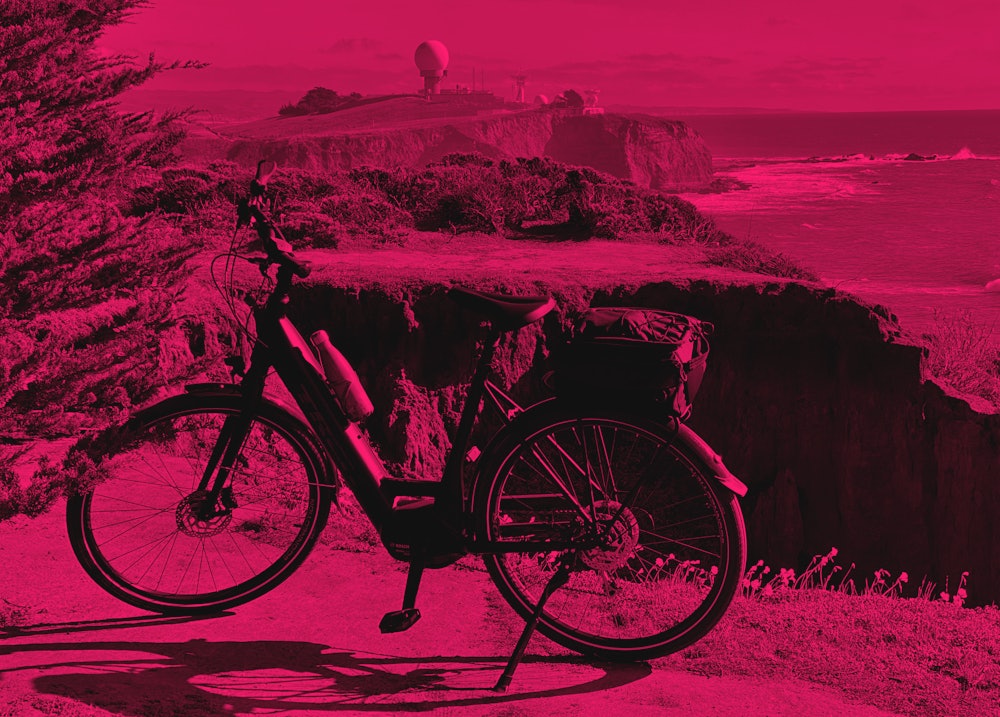
 Photo by Raja Sen on Unsplash


She’s loved cycling her whole life, and after some experimentation with an old mountain bike, she invested in an e-bike.

Now, she masks up and glides along the bluffs near her home in Half Moon Bay, California. Rae-Dupree especially loves a sunset ride. When she faces an incline, she bumps the pedal assist to “turbo.”

“Getting outdoors, enjoying plenty of exercise, and feeling like a kid on my new toy all lift my spirits any time the pandemic starts to wear them down,” she says.

Using the e-bike is what Rae-Dupree describes as her pandemic coping mechanism.

She’s one of a group of 30 Inverse readers who told us about their coping mechanisms in the face of phenomenal stress the Covid-19 pandemic created. They might just help you face what’s ahead.

The healthy coping strategies people use are as idiosyncratic as they are familiar. While what steers us to choose differs — guided by bias, randomness, and preference — it’s easy to empathize with why someone would, for example, embrace puzzling or birding. Those activities sound nice. You might just be more of a cook.

Dr. Melanie Badali, a registered psychologist, tells Inverse this pandemic will likely have significant psychological effects long after something like herd immunity is achieved.

“Although we can’t be certain of the repercussions because we are still ‘in it,’ experts and preliminary research suggest that there will be mental health repercussions,” Badali says, adding:

“We need to act now to prevent an ‘echo pandemic’ of mental health problems and help people who have been negatively affected.” 

e-bike


Rae-Dupree’s e-bike and view.Janet Rae-Dupree

This “echo pandemic,” also referred to as the “second pandemic,” will affect us even after vaccines roll out, Dr. Vaile Wright tells Inverse.

Wright, the senior director of health care innovation at the American Psychological Association, points to the new APA Stress in America Survey, released one year after the World Health Organization declared Covid-19 a global pandemic.

The report echoes concurrent messaging from other organizations tracking mental health, and the truth is clear. More Americans are reporting high levels of:

  • Anxiety
  • Depression
  • Substance use
  • Suicidal ideation

There are four groups in particular that have demonstrated additional vulnerability, Wright says:

  1. Younger adults
  2. Parents with children under the age of 18
  3. Individuals from communities of color
  4. Essential workers

Flickering through all of this, like froth on a wave, is an intuitive response hard-wired in human beings: resilience.

Resilience is an innate capacity to navigate challenges. Being resilient doesn’t mean problems will disappear, but it can mean that you’ve found a way to make a sticky situation more manageable.

When an international team of researchers tracked Google trends from January to June 2020, they found, at the start, most searches had to do with Covid-19 and practicalities like furloughs.

Over time, the Google queries with the most growth were no longer related to Covid-19 as the initial panic faded. Topics associated with coping and resilience, like exercise and learning new skills, remained constant though.

“The pandemic has taught me to look inward; re-tool some of my life skills,” Inverse reader Alan Hetherington says. “I truly believe our next step as human beings is to become more present while dealing with what is in the moment.”

Finding a healthy coping mechanism — Wright, the APA psychologist, emphasizes the need for a balance between healthy and not-so-healthy coping mechanisms. (A glass of wine at the end of a long day is fine.)

Badali agrees: “Coping strategies are not one size fits all.”

Sometimes a strategy that is helpful in one situation can be harmful in another. Badali encourages her patients to develop a “coping toolbox” — a repertoire of skills that match the moment.

“Walking 3 to 5 miles while listening to music and breathing fresh air, especially delicious in a light rain.” — Inverse reader Mark Wilson

For example, after Covid-19 hit, Inverse reader Todd Stewart decided to become healthier, starting a rigorous exercise regimen and intermittent fasting. “It helped with anxiety by simple attrition,” Stewart says. “By making me physically tired, more chill, and by cutting 40 pounds, which puts me in better shape than I have been since college.”

While it may seem obvious that there are different types of coping mechanisms — some lean into exercise, while others may read more — coping is divided categorically as well.

There’s problem-focused coping and emotion-focused coping.

Problem-focused means engaging with the outside world. To cope, “people can learn steps for solving problems and then routinely go through them when problems arise,” Badali says.

Emotion-focused coping is directed inward. There are a handful of strategies we can develop into healthy habits that regulate our emotions, Badali explains. These include good nutrition, regular exercise, healthy thinking, and meaningful actions.

“If the weather allows, I go for walks with our little dog Cognac.” — Inverse reader Angela Bird

New coping strategies can, in turn, improve our resilience, she says.

“I think it’s important to keep in mind that it’s not just about making things a habit, but using the best tool for the task at hand,” Badali says.

And the task at hand will be different for various people. Take Arthur Bieker, another reader we interviewed. He plays fiddle and mandolin and has taken to playing his instruments on the front porch or back patio, weather permitting.

“People are so hungry for community, they listen,” Bieker tells Inverse.

“I don’t play all that well, but it seems a treat for them as well as an outlet for me, since the social jams that I usually attend are locked down,” Bieker says. “The wife takes the dog on walks around the neighborhood, and if the neighbors don’t know who we are, they at least know ‘that’s the house where the fiddler lives.’”

“If the neighbors don’t know who we are, they at least know ‘that’s the house where the fiddler lives.’”

To get out of the house, Laura Connealy explores historical places of interest, cemeteries, and generally “lovely places.” She’s found herself at sites in and around Portland, Oregon: River View Cemetery, Peninsula Park; Mount Angel seminary.

“My partner and I have enjoyed these outings with very few problems with social distancing, while being amazed by how relevant the past is to the present,” Connealy tells Inverse.

Meanwhile, Virginia Carpio explores a different way — she looks at maps online. She selects a place somewhere in the world and absorbs information about temples, fortresses, seaports, and mountain passes. She looks at historical maps, at countries she never knew once existed. Sometimes she looks at maps of the universe.

“I have traveled a lot and hope to resume visiting interesting locations all over the planet next year, so maps are naturally interesting to me anyway,” Carpio tells Inverse. “They absorb my attention and before I know it, an hour or even an afternoon has passed by.”

“We’ve adjusted to this way, and now we have to readjust.”

The next chapter — What remains to be seen is what we’ll do with the skills we’ve learned in the pandemic. Wright points out that, in the APA’s Stress in America survey, almost 50 percent of adults said they’re uncomfortable or concerned about returning to pre-pandemic life.

“I think that’s in part because change is hard, right?” Wright says. “We’ve adjusted to this way, and now we have to readjust. It takes a lot of effort.”

“There’s also still a lot of uncertainty, and you’re still left with asking yourself what is safe? I think it’s absolutely normal to feel some trepidation and some anxiety about what things will look like going forward.”

“It’s possible that life will never fully return to ‘normal,’” Badali says. Some risk-averse people, for example, may continue to withdraw from the outside world.

The key to making the transition to whatever comes next, Wright says, is not judging yourself too harshly. There’s space to grieve, and there’s space to have some gratitude for the good you’ve encountered in the past 12 months.

There’s space for loss, and there’s space to reflect on what’s been gained.

“Feeling like a cog in the wheel of a tectonic shift,” as Inverse reader Alan Hetherington puts it, can give you solace. It can also just be nice to make some mail art, which Megan Miller tells Inverse she’s “ramped up significantly” in pandemic times.

“It’s calming to make art and send it off into the world,” Miller says, “and it has made the postal carrier someone to look forward to again.”

Something to look forward to is sometimes all that’s necessary. The first step is engaging with an action that makes your life healthier. The future will take it from there.


Wednesday, 24 February 2021

Want To Be Happier and More Successful? Learn To Like Other People

Happy and Successful 


Research suggests that the best self-help advice may have very little to do with yourself.

Fast Company


Self-help advice isn’t exactly in short supply. There are research-backed tips out there for boosting confidence, resilience, risk taking, and adaptability. The message is pretty clear: Feel better about yourself or change your beliefs about what you’re capable of, and you’ll excel. Indeed, ample scientific evidence supports each of these claims.

Nevertheless, most self-improvement strategies focus too much on the person who’s trying to do the improving. Much of the time, the same outcomes you’re trying to achieve by changing your own habits, attitudes, and behaviors depend on how you view other people.

It sounds paradoxical, but according to University of Georgia researcher Jason Colquitt and his colleagues, people who tend to trust others at work score higher on a range of measure than those who don’t, from job performance to commitment to the team. And since we know that it’s our relationships—particularly with our bosses and colleagues—that determine how happy and successful we are as our careers progress, it may be worth asking some new questions. Instead of, “How can I improve?” the better question might be, “How can I start seeing more of the good in people, more often?”

Why The Benefit Of The Doubt Is So Hard To Give

It can be difficult to believe that others generally have the best intentions; that just isn’t many people’s default assumption. We’re socialized from a young age to be critical of others’ motives, if not downright suspicious. Parents tell their children for their own protection to beware of strangers. And it’s not hard to find evidence in daily life that expressions like “the road to hell is paved with good intentions” has some truth to it. In an era of fake news, taking anything at face value seems potentially foolhardy.

But these societal impulses may actually arise from deeper cognitive ones. Negative past events loom larger in our memories than positive experiences. As psychologist Roy Baumeister famously put it, “Bad is stronger than good.” This makes adaptive sense: To survive in a treacherous environment (especially social ones), early humans needed to recall the times their trust was ill-placed, when they were betrayed or misled and wound up getting hurt. By comparison, all the times when their trust led to good outcomes weren’t as critical to hang onto.

In addition, people have an unyielding desire to see themselves in a positive light. This can cause us to develop less favorable views of others. Research shows that we tend to think we’re better than average at almost everything, meaning that others are worse—including less trustworthy. As part of this process, Stanford behavioral scientist Chip Heath found that we tend to think our own motivations are intrinsic (“I work hard because I love my job”) whereas others’ are extrinsic (“They work hard only because they’re getting paid to do so”).

Finally, while research on optimism—including assuming the best of others—almost universally shows its benefits for success and satisfaction in both work and life, people tend to fear being seen as an unrealistic “Pollyanna.” Just think of how many words there are in English to describe the experience of too-readily trusting others: gullible, ingenuous, credulous, unwary; imbecile, dimwit, stooge, dunderhead, idiot, fool; beguiled, duped, tricked, betrayed, fleeced, deceived, defrauded, double-crossed, deluded, swindled, conned, rooked, cozened, hoodwinked, bamboozled, flimflammed . . . you get the idea.

Research suggests when we perceive someone as innocent and nice, we tend to view them as less competent, a label we ourselves avoid at all costs. As the novelist Laurell K. Hamilton has said, “Never trust people who smile constantly, they’re either selling something or not very bright.”

The Self-Help Approach That’s Not About You

To be sure, there are risks to assuming the best in others, but the benefits may far outweigh the potential costs, especially in the workplace.

Conflict is a difficult but often inevitable part of our work lives. According to Harvard Business School professor Chris Argyris, a top cause of workplace discord is the “ladder of inference” (basically what he sees as a more precise metaphor than “jumping to conclusions”). Climbing up the ladder means that a person takes in neutral information but assumes bad intentions, which results in less favorable beliefs and bad behavior.

For example, when you receive an ambiguous email from a coworker you have a turbulent relationship with, you’re more likely than not to react defensively. In fact, there’s research to suggest that we interpret all emails more negatively than their writer meant them to be. So perhaps it’s no surprise that PepsiCo CEO Indra Nooyi says the best piece of career advice she’s ever gotten is “assume positive intent.”

One of the biggest opportunities for growth at work comes from the way you solicit feedback and what you do with it afterward. Research demonstrates that while employees who speak up tend to improve how well teams function, many tend to be afraid to do so, worrying that their input won’t be well-received. Simply assuming the best in others can lay the foundation for managers and their team members alike to learn and improve without wounding egos.

It’s also no secret that the ability to influence others is a crucial job skill. Research shows that when we think others are capable of changing their attitudes, we’re more likely to advance our own views. But when we think others’ beliefs are fixed, we don’t try too hard to persuade them—what would be the point? This can have personal costs, though, since it limits our own potential sphere of influence.

And that, in turn, creates a self-fulfilling prophecy: Assume the worst in other people, and they’ll prove it every time (“confirmation bias,” anyone?), closing off one opportunity after the next to shore up those crucial relationships that your own happiness and success depend on. Sure, self-help books are a great way to better your work life. But their typical focus on you may have the unintended result of limiting your ability to wring more value out of the social world around you, which is teeming with people, while you’re just one of them.

David Mayer is associate professor of management and organizations at the University of Michigan's Stephen M. Ross School of Business.


Thursday, 3 December 2020

How resilience became the quality we all crave

Resilience 

Click the link above to read the article: 


During the pandemic it has become a buzzword for successfully steering through adversity. But what exactly is resilience - and can you cultivate more of it?


Wednesday, 25 November 2020

3 Seccrets of Resilient People

Courage 


Give a shoutout to Resilience CBD on social or copy the text below to attribute. 


Everyone experiences loss, but how do you cope with the tough moments that follow? Resilience researcher Lucy Hone shares three hard-won strategies for developing the capacity to brave adversity, overcome struggle and face whatever may come head-on with fortitude and grace.

This talk was presented to a local audience at TEDxChristchurch, an independent event. TED's editors chose to feature it for you.

About the speaker
Lucy Hone · Resilience expert and researcher

Dr. Lucy Hone builds resilience among individuals, communities and organizations.

Thursday, 16 January 2020

Self-Reflection


In this deeply charming and humorous talk, DJ and self-professed pirate Tom Nash meditates on how facing adversity due to disability invited patience, ambition and pragmatism into his life in enlightening, unexpected ways. "We all have unique weaknesses," he says. "If we're honest about what they are, we can learn how to best take advantage of them." This talk was presented to a local audience at TEDxSydney, an independent event. TED's editors chose to feature it for you. 

About the speaker Tom Nash · Storyteller, DJ Tom Nash engages audiences about self-reflection and realization, encouraging people to take a fresh look at their human experience. 

Entertaining and profound!

Thursday, 15 February 2018

9 Basic Principals For Mental Strength

Basic Principals For Mental Strength


Mental strength serves you well in so many situation that life throws at your!


9 Basic Principles to Develop Mental Strength


The mental strength is one of the most important qualities to achieve and to maintain your success (whatever is your definition of success). Without the mental strength, it gets more difficult at work, in sports, in the study and in general in every other aspect of life.
However, can you develop your mental strength? Well, you can definitely strengthen it by following a few tips listed below.

1. Find the Bright Side of Situation

Even if something goes wrong, do not lose your heart. Look at it as an opportunity to learn something new. After every failure, analyze the causes of failure and improve yourself or your business, product and so on.
So, always find the bright side. Even in the midst of all the negative things that can happen to you in the life. Of course, it is not always easy, but with a little commitment, you can do it for sure. Being mentally strong, you will live happier life as well.

2. Considers the Failure as a Necessity for Success

As the saying goes, “No One is Perfect.” Everybody makes mistakes and everyone fails before victory. Rest assured that in your life, you will fail many times.
Consider the failure not as the end but as a step often required to achieve your goals. When something goes wrong, analyze the reasons for the failure, learn from the mistakes and then go forward. History is full of successful people who have changed from many failures before achieving their goals.

3. Learn to Live Fully in the Present Movement

What does it mean to live fully in the present moment? It means that your awareness is completely centered on the here and now. You are not worried about the future or thinking about the past. When you live in the present, you are living where life is happening. The past and future are illusions. They don’t exist because time is always now.
Therefore, learn to live in the present movement, focus on what you’re doing and on the sensations of that moment. You’ll see that you can reach your goals easily.

4. Take Responsibility for What Happens to You

How many of us are always ready to blame others when something goes wrong? Let’s face it. We do it many times and often. You tend to look away when something goes wrong. You blame another person, politics, the economy, or to the system.
One of the basic steps to become mentally stronger is to take responsibility for any of our outcome. Do not blame it on someone else or something else, think of your actions and think about what you could have done differently. Learn from this and take better decisions in the future. External influences are always there, but the effects of these influences depend on our actions and decisions.

5. Realize that You Can Always Learn Something New

No matter where you come from in life, what is your social position, your qualifications and your experience, realize that you can always learn something new. Looking to meet new people, ask questions, discuss and learn from them. Try to look at the world from other points of view, always be open to new perspectives. You have to never stop learning, it says and that’s true. This also will help you to be stronger.

6. Read a Lot of Books

No matter how much stress you have at work, in your personal relationships, or countless other issues faced in daily life, it all just slips away when you lose yourself in a great story. A well-written book can transport you to other realms.
The experience is a greatest teacher. But you can also learn lessons from others who have had experience before you. For this reason, you have to read many books, read all you can, even these will also help you get stronger.

7. Do Not Amplify Your Problems

Sometimes we tend to transform situations of little importance in actual disasters or see small problems as insurmountable.
Always try to see everything in perspective, do not make problems or incidents worse than they actually are. Analyze them in a broader context, also in terms of time. So, most of the times we think that problem is really big. However, the real picture is completely different.

8. Make Physical Activities and Eat Well

“A healthy mind in a healthy body” is the famous Latin phrase. And it is true; the state of your physical body reflects what is in your mind (and vice versa). If you exercise regularly and eat well, your body will get benefits and your brain will work better. In addition, the regular practice of sport helps you to have a stronger mind and stronger body.

9. Learn Resilience

Resilience is the process of adapting well in the face of adversity, family & relationship problems, health problems or workplace and financial stress. It means “bouncing back” from difficult experiences.
Thus, Resilience is closely related to mental strength. Learn to be resilient, not to get discouraged by adversity and failures. Remember that these steps are almost essential for success.
So try to use these tips in your daily life and become mentally strong to achieve the SUCCESS.


Friday, 2 October 2015

Depression - A Few Alarming Facts

 I just had to share this as I am always interested  on how medication helps depression.  The article makes interesting reading.


Different levels of brain respond to sham treatment could predict resilience in the face of depression, help lead to new treatments.

The fake drugs that seem to give the most help show us a little how make-believe happens.

 Placebo Power: Depressed People Who Respond to Fake Drugs Get the Most Help From Real Ones