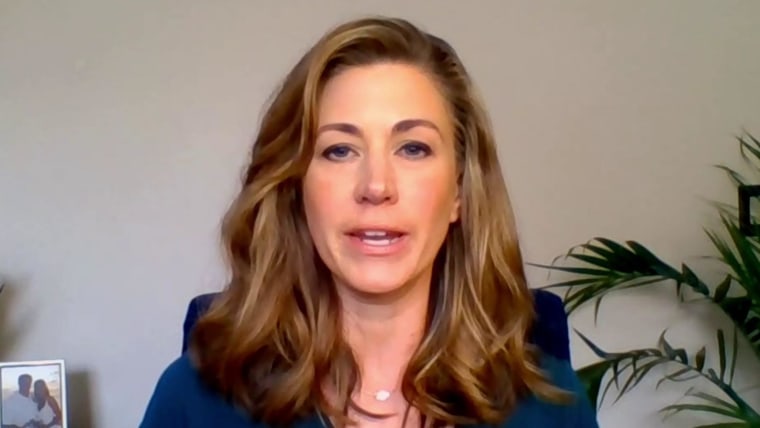
When the polio vaccine was declared safe and effective, the news was met with jubilant celebration. Church bells rang across the nation, and factories blew their whistles. “Polio routed!” newspaper headlines exclaimed. “An historic victory,” “monumental,” “sensational,” newscasters declared. People erupted with joy across the United States. Some danced in the streets; others wept. Kids were sent home from school to celebrate.
Your guide to life on a warming planet
Discover Atlantic Planet, a new section devoted to climate change and the ways it will reshape our world
One
might have expected the initial approval of the coronavirus vaccines to
spark similar jubilation—especially after a brutal pandemic year. But
that didn’t happen. Instead, the steady drumbeat of good news about the
vaccines has been met with a chorus of relentless pessimism.
The
problem is not that the good news isn’t being reported, or that we
should throw caution to the wind just yet. It’s that neither the
reporting nor the public-health messaging has reflected the truly
amazing reality of these vaccines. There is nothing wrong with realism
and caution, but effective communication requires a sense of
proportion—distinguishing between due alarm and alarmism; warranted,
measured caution and doombait;
worst-case scenarios and claims of impending catastrophe. We need to be
able to celebrate profoundly positive news while noting the work that
still lies ahead. However, instead of balanced optimism since the launch
of the vaccines, the public has been offered a lot of misguided
fretting over new virus variants, subjected to misleading debates about the inferiority of certain vaccines, and presented with long lists of things vaccinated people still cannot do, while media outlets wonder whether the pandemic will ever end.
After nine months of social distancing, masking and quarantining, many people are experiencing pandemic fatigue.
Newswise
— The sharp rise in COVID-19 cases throughout Pennsylvania and across
the United States makes continued vigilance with established safety
efforts essential to helping slow the virus’s spread. Yet after nine
months of social distancing, masking and quarantining, many are
experiencing pandemic fatigue. Whether it manifests as anxiety,
exhaustion or defiance, it’s important to recognize and address it for
the sake of our physical and emotional health.
A long and uncertain pandemic
Health
care providers on the frontlines of the COVID battle have seen how
approaches to treatment and prevention have evolved, sometimes seemingly
overnight, often resulting in a sense of uncertainty, anxiety or even
doubt with the public.
One
of the most significant evolutions he has witnessed — one that may have
played a role in some people’s continued unwillingness to mask properly
— is guidance on face coverings for the general public.
“At
first, we were told that only health care workers needed to wear a
mask,” Nunez said. “But since those early days, there's been a lot of
evidence overall that wearing masks may definitely slow the spread of
the virus and help people from transmitting it to others, especially if
they’re asymptomatic.”
Another theory from early in the pandemic
was that the warmer weather over the summer would potentially halt the
virus, as it does with other seasonal respiratory diseases. “Super
spreader events in the form of outdoor gatherings showed that this
unfortunately wasn’t the case for COVID,” Nunez said.
Nunez
advises that anyone considering in-person activities like dining out or
shopping make sure that everyone in the establishment is abiding by the
rules. “Are they wearing masks, covering the whole face, sitting six
feet apart?” he asked, adding that even with these measures, “there is
no absolute decreased risk.” He prefers creative solutions to social
gatherings. “Most of my inspiration has come from the internal medicine
residents. They've been able to continue their game nights — virtually.”
Minding your mental health
The
relentless pace of the pandemic and the resulting social distancing
restrictions have been exhausting and stressful, explains Dr. Julie Graziane,
a psychiatrist at the Milton S. Hershey Medical Center. “But there are
things that we can do to help mitigate a lot of those stressful
emotions,” she said.
Graziane suggests an emotional reframing of
quarantines and social distancing restrictions. “Don’t think of them as
things we’re being forced to follow, but rather as actions we're freely
choosing to do to help others,” she said. “We shift it into an
altruistic action as we do these things to help our loved one, our
neighbor, even the stranger in the community that we care about.”
The colder weather and fewer hours of daylight can add to the emotional burden of that COVID causes.
“We’ve
been watchful with mental health as individuals experience significant
emotional stress during the pandemic,” Graziane said. “And we’re
especially concerned as we head into the winter months that play a role
in some people’s depression.”
One significant stressor from COVID
that Graziane points to is the disruption to routines, such as getting
the kids on the bus in the mornings or driving to work. She recommends
establishing new routines.
“Have a regular awake time or regular
sleep time, and regular meal times,” Graziane said. “Then take some time
during the day to check in with yourself, how you're feeling about the
day, the situation. Incorporating healthy activities like exercise and
mindfulness, and then pleasurable activities.”
Reflecting on what
was important to them and provided meaning to their lives prior to the
pandemic can help people find strength and purpose as quarantines
continue, Graziane said. “And don’t be afraid to reach out for help. If
you feel like you're struggling with getting through this, talk to
someone such as a loved one, a physician, a counselor or a friend.”
Nunez
stresses that we take the time to check in with others. “Maybe someone
you know is struggling and just because you don’t ask, they don’t
mention it,” he said. “We’re all going through this. We are not alone.”
Hopeful while remaining vigilant
While
recent news that an effective vaccine is expected to come to market
soon points to an eventual end to the pandemic and its social
restrictions, both Graziane and Nunez stress that the general population
is still perhaps months away from being able to receive the two-part
vaccination.
“For now, we must remain ever vigilant,” Graziane said.
“I
think what’s important this holiday season is remembering that we’re
trying to stay healthy and we’re also really trying to keep others
healthy,” said Nunez, “especially our patients who are vulnerable and at
risk for severe complications of the disease.”
The Medical Minute is
a weekly health news feature produced by Penn State Health. Articles
feature the expertise of faculty, physicians and staff, and are designed
to offer timely, relevant health information of interest to a broad
audience.
So what do you need to know about other things you may catch in the coming months?
Does a fever mean I have coronavirus?
Media captionA cold, flu or coronavirus - which one do I have?
A high temperature is 37.8C or above. A fever like this can
happen when the body is fighting off any infection - not just
coronavirus.
It is best to use a thermometer to take a measure.
But if you don't have one, check if you, or the person you are worried
about, feels hot to the touch on the chest or back.
Although fever is a key coronavirus symptom, it could be flu or a different infection.
If you have a cold or flu you may well have a cough, along with other symptoms.
Flu
usually comes on suddenly and sufferers will often experience muscle
aches, chills, headaches, tiredness, a sore throat and a runny or
stuffed nose, along with the cough. It feels worse than a heavy cold.
Colds
tend to develop more gradually and are less severe, although they do
still make you feel unwell. Along with a cough, there may be sneezing
and a sore throat and runny nose. Fever, chills, muscle aches and
headaches are rare.
A coronavirus cough means coughing a lot for more than an hour, or three or more coughing fits or "episodes" in 24 hours.
If you usually have a cough because of a long-standing medical condition like COPD, it may be worse than usual.
You should get tested for coronavirus if you develop a new, continuous cough.
What do loss or change to smell or taste mean?
These are key symptoms of coronavirus and mean you should get a test.
It
could still be that you have a simple cold. But you need to check, even
if you don't feel unwell, to avoid the risk of spreading the virus.
Newswise — A study by scientists from
the University of Southampton has examined the chances of catching
COVID-19 in a train carriage carrying an infectious person.
Based
on high-speed routes in China, researchers from WorldPop found that for
train passengers sitting within three rows (widthwise) and five columns
(lengthwise) of an infected person (index patient) between zero and ten
percent (10.3) caught the disease. The average rate of transmission for
these 'close contact' travellers was 0.32 percent.
The study, in
collaboration with the Chinese Academy of Sciences, China Academy of
Electronics and Information Technology, and Chinese Centre for Disease
Control and Prevention, also showed that passengers travelling in seats
directly adjacent to an index patient suffered the highest level of
transmission, with an average of 3.5 percent contracting the disease.
For those sitting on the same row, the figure was 1.5 percent.
The
'attack rate' for each seat - the number of passengers in a given seat
diagnosed with COVID-19, divided by the total number of passengers
travelling in the same seat - increased by 0.15 percent for every hour
that a person travelled with an index patient. For those in adjacent
seats, this rate of increase was higher at 1.3 percent per hour.
Interestingly,
the researchers found that only 0.075 percent of people who used a seat
previously occupied by an index patient went on to contract the
disease.
Details are published in the journal Clinical Infectious Diseases.
The
WorldPop team, experts in population mapping, used sophisticated
modelling to analyse anonymised itinerary and infection data relating to
train passengers on China's high-speed G train network. This included
those who had COVID-19 at the time of travel and their close contacts
(who showed symptoms within 14 days of travel). The data, covering a
period between 19 December 2019 and 6 March 2020, included 2,334 index
patients and 72,093 close contacts. Their travel times ranged from
between less than an hour to eight hours.
Lead investigator, Dr
Shengjie Lai, comments: "Our study shows that although there is an
increased risk of COVID-19 transmission on trains, a person's seat
location and travel time in relation to an infectious person can make a
big difference as to whether it is passed on. The findings suggest that
during the COVID-19 epidemic it is important to reduce the density of
passengers and promote personal hygiene measures, the use of face
coverings and possibly carry-out temperature checks before boarding."
The
researchers conclude that given the attack rates estimated for
passengers in the same row as an index patient, a safe social distance
of more than one metre is required for one hour spent travelling
together. After two hours of contact, they consider a distance of less
than 2.5 metres may be insufficient to prevent transmission.
Director
of WorldPop, Professor Andy Tatem adds: "Our research is the first to
quantify the individual risk of COVID-19 transmission on public
transport based on data from epidemiological investigations of disease
cases and their close contacts on high-speed trains.
"It shows
that the transmission risk not only relates to the distance from an
infected person, but also the time in their presence. We hope it can
help to inform authorities globally about measures needed to guard
against the virus and in-turn help to reduce its spread."
It looks like the virus is here for the long haul!
“‘Gaslighting’
is the word I’ve been using repeatedly,” one COVID-19 survivor said.
“I’m so ill and some people are telling me this is a figment of my
imagination."
Ailsa
Court loved to be active before she fell ill in March. Now a walk in
the woods leaves her panting, but doctors have dismissed her concerns.Courtesy Ailsa Court
By Elizabeth Chuck
The
frightening symptoms began in early March, when Ailsa Court of
Portland, Oregon, suspects she caught the coronavirus from someone at
work. More than four months later, she still has shortness of breath,
achiness in her lungs, and a strange tingling in her calves.
But
doctors have downplayed Court’s concerns as her health problems have
dragged on. At one point, her primary care doctor suggested that perhaps
she was just “stressed because of the economy,” she said.
And
during a visit to an urgent care center in May — when she feared she
might be having a stroke or other neurological problem because she was
having memory loss and a crippling migraine, in addition to chest
tightness and numbness in her legs — a physician rolled his eyes at her,
Court, 35, said. Her issues were nothing more than acid reflux, he told
her in a dismissive tone, plus maybe a vitamin deficiency.
The
doctor’s diagnosis infuriated Court, a commercial makeup artist, who
felt a male patient who went to urgent care with the same set of health
concerns would have been taken more seriously.
“‘Gaslighting’
is the word I’ve been using repeatedly,” she said, referring to the
psychological tactic of making a person second-guess whether something
they know to be true is real. “I’m so ill and some people are telling me
this is a figment of my imagination. It truly feels like a nightmare.”
Court
is not alone. Across the country, many coronavirus survivors with
long-lasting symptoms, particularly women, are dealing with dual
frustrations: debilitating health conditions that won’t go away, and
doctors who tell them the issue might be all in their heads.
Despite
their oath to do no harm, medical professionals’ judgment can be
inadvertently altered by deeply ingrained unconscious biases, experts
say, and the “hysterical female” patient has long been a dangerous stereotype in medicine.
While there are no studies on how female coronavirus patients are treated compared to male ones, past research reveals a disturbing pattern. Women who are in pain are more likely than men to receive sedatives instead of pain medication; women with the same type of pain as men who go to an emergency department have to wait longer to be seen; and women are up to three times more likely to die after a heart attack than men as a result of unequal care.
In addition to gender, race and ethnicity are major contributors in the type of medical care people receive: Data show
that Black patients in acute pain are 40 percent less likely than white
patients to receive medication, and Latino patients are 25 percent less
likely than white patients.
And while
income, education and other socioeconomic factors explain some
differences in health outcomes for minorities, experts believe those
alone don’t account for all disparities — including the significantly higher rate of maternal mortality among Black women in the United States. They point to implicit biases on the part of health care providers as one explanation.
Alisa
Valdés, 51, an Albuquerque, New Mexico, novelist who, along with her
19-year-old son, Alexander, has been sick since mid-March, has been told
by doctors that her problems were a “mental issue,” despite what she
says are very real physical complications of her illness, including
emergency surgery to remove her gallbladder. The doctors, she said, have
been “minimizing me as a woman, minimizing me as a Latina.”
Alisa Valdés.Courtesy Alisa Valdés
“Nobody
is going to come right out and say that they’re discriminating against
you for those reasons,” she said. “So what do I have to go by?
Intuition, instinct, past experience. The attitude of certain providers.
The way they look at you. The way they don’t look at you. The way they
shrug you off.”
Valdés’ symptoms have
included extreme burning in her digestive tract, unbearable pain in her
sternum and upper back, and a loss of appetite. She feels doctors’
biases have influenced the way they treat her son, too: When she took
him into the emergency room two months ago because his heart was racing,
she said she was stunned when doctors automatically assumed his heart
rate must be elevated because he was on drugs, which he has never taken.
Other
coronavirus survivors say it is hard to parse out whether their gender
or race factored into the response they got from doctors. All they know
is they have had their symptoms written off.
“Nobody is going to come right out and say that they’re discriminating against you for those reasons.”
Adrienne
Crenshaw, 38, of Houston, who is Black, says she has not witnessed
explicit racism or sexism during the multiple trips to the emergency
room that she has made since she got the coronavirus in mid-June. She
has had shooting pains around her heart, skyrocketing blood pressure and
tingling in her arms and legs, and has gone to the hospital several
times worried she might be having a heart attack.
Doctors
have prescribed anti-anxiety medications to Crenshaw, a bartender and
former fitness competitor, despite her insistence that her symptoms are
not a result of anxiety. Her father died of the coronavirus July 10 —
but she has learned not to mention that to her medical providers, since
it usually prompts them to suggest her problems are a manifestation of
grief and stress.
Adrienne
Crenshaw, far right, seen with her children and parents. Her father,
Jerry Crenshaw, died of the coronavirus, but she has learned not to tell
doctors that, because they blame her lasting symptoms on grief and
stress.Courtesy Adrienne Crenshaw
On one trip earlier this month, she overheard a doctor talking about her to his team with disdain, but she didn’t know why.
“He
said, ‘The girl’s perfectly normal, there’s nothing wrong with her,’”
she said. “And in my head, I’m like, ‘I’m not perfectly fine. I don’t
just go in the ER to take a room up.’”
The
medical community as a whole has not ignored these so-called
coronavirus long-haulers. Health care providers throughout the United
States have been working to figure out why they are not getting better, and a handful of post-COVID clinics
have sprung up across the country for patients who are having
neurological and physical difficulties months after they first got sick.
And
in recent weeks, to the relief of long-haulers, top public health
officials have recognized that COVID-19 symptoms can last for lengthy
periods of time. On Friday, the Centers for Disease Control and
Prevention acknowledged in a report
that as many as a third of individuals who were never sick enough to be
hospitalized are not entirely better up to three weeks after their
diagnosis. Meanwhile, Dr. Anthony Fauci, the nation’s top infectious
diseases doctor, has said more research is needed on individuals who appear to be suffering from a post-viral syndrome.
We know a lot about the dangers of COVID-19 by now but this is an interesting revelation and sounds absolutely in line with the terrible havoc this disease has caused on so many patients.
Many of the infection’s bizarre symptoms have one thing in common
In April, blood clots
emerged as one of the many mysterious symptoms attributed to Covid-19, a
disease that had initially been thought to largely affect the lungs in
the form of pneumonia. Quickly after came reports of young people dying
due to coronavirus-related strokes. Next it was Covid toes — painful red
or purple digits.
What do all of these symptoms have in common? An impairment in blood circulation. Add in the fact that 40% of deaths
from Covid-19 are related to cardiovascular complications, and the
disease starts to look like a vascular infection instead of a purely
respiratory one.
Months
into the pandemic, there is now a growing body of evidence to support
the theory that the novel coronavirus can infect blood vessels, which
could explain not only the high prevalence of blood clots, strokes, and
heart attacks, but also provide an answer for the diverse set of head-to-toe symptoms that have emerged.
“All
these Covid-associated complications were a mystery. We see blood
clotting, we see kidney damage, we see inflammation of the heart, we see
stroke, we see encephalitis [swelling of the brain],” says William Li,
MD, president of the Angiogenesis Foundation. “A whole myriad of
seemingly unconnected phenomena that you do not normally see with SARS
or H1N1 or, frankly, most infectious diseases.”
“If
you start to put all of the data together that’s emerging, it turns out
that this virus is probably a vasculotropic virus, meaning that it
affects the [blood vessels],” says Mandeep Mehra, MD, medical director
of the Brigham and Women’s Hospital Heart and Vascular Center.
In a paper published in April in the scientific journal The Lancet,
Mehra and a team of scientists discovered that the SARS-CoV-2 virus can
infect the endothelial cells that line the inside of blood vessels.
Endothelial cells protect the cardiovascular system, and they release
proteins that influence everything from blood clotting to the immune
response. In the paper, the scientists showed damage to endothelial
cells in the lungs, heart, kidneys, liver, and intestines in people with
Covid-19.
“The
concept that’s emerging is that this is not a respiratory illness
alone, this is a respiratory illness to start with, but it is actually a
vascular illness that kills people through its involvement of the
vasculature,” says Mehra.
A respiratory virus infecting blood cells and circulating through the body is virtually unheard of.
A one-of-a-kind respiratory virus
SARS-CoV-2
is thought to enter the body through ACE2 receptors present on the
surface of cells that line the respiratory tract in the nose and throat.
Once in the lungs, the virus appears to move from the alveoli, the air
sacs in the lung, into the blood vessels, which are also rich in ACE2
receptors.
“[The
virus] enters the lung, it destroys the lung tissue, and people start
coughing. The destruction of the lung tissue breaks open some blood
vessels,” Mehra explains. “Then it starts to infect endothelial cell
after endothelial cell, creates a local immune response, and inflames
the endothelium.”
A
respiratory virus infecting blood vessel cells and circulating through
the body is virtually unheard of. Influenza viruses like H1N1 are not
known to do this, and the original SARS virus, a sister coronavirus to
the current infection, did not spread past the lung. Other types of
viruses, such as Ebola or Dengue, can damage endothelial cells, but they
are very different from viruses that typically infect the lungs.
Benhur
Lee, MD, a professor of microbiology at the Icahn School of Medicine at
Mount Sinai, says the difference between SARS and SARS-CoV-2 likely
stems from an extra protein each of the viruses requires to activate and
spread. Although both viruses dock onto cells through ACE2 receptors,
another protein is needed to crack open the virus so its genetic
material can get into the infected cell. The additional protein the
original SARS virus requires is only present in lung tissue, but the
protein for SARS-CoV-2 to activate is present in all cells, especially
endothelial cells.
“In
SARS1, the protein that’s required to cleave it is likely present only
in the lung environment, so that’s where it can replicate. To my
knowledge, it doesn’t really go systemic,” Lee says. “[SARS-CoV-2] is
cleaved by a protein called furin, and that’s a big danger because furin
is present in all our cells, it’s ubiquitous.”
Endothelial damage could explain the virus’ weird symptoms
An
infection of the blood vessels would explain many of the weird
tendencies of the novel coronavirus, like the high rates of blood clots.
Endothelial cells help regulate clot formation by sending out proteins
that turn the coagulation system on or off. The cells also help ensure
that blood flows smoothly and doesn’t get caught on any rough edges on
the blood vessel walls.
“The
endothelial cell layer is in part responsible for [clot] regulation, it
inhibits clot formation through a variety of ways,” says Sanjum Sethi,
MD, MPH, an interventional cardiologist at Columbia University Irving
Medical Center. “If that’s disrupted, you could see why that may
potentially promote clot formation.”
Endothelial
damage might account for the high rates of cardiovascular damage and
seemingly spontaneous heart attacks in people with Covid-19, too. Damage
to endothelial cells causes inflammation in the blood vessels, and that
can cause any plaque that’s accumulated to rupture, causing a heart
attack. This means anyone who has plaque in their blood vessels that
might normally have remained stable or been controlled with medication
is suddenly at a much higher risk for a heart attack.
“Inflammation
and endothelial dysfunction promote plaque rupture,” Sethi says.
“Endothelial dysfunction is linked towards worse heart outcomes, in
particular myocardial infarction or heart attack.”
Blood
vessel damage could also explain why people with pre-existing
conditions like high blood pressure, high cholesterol, diabetes, and
heart disease are at a higher risk for severe complications from a virus
that’s supposed to just infect the lungs. All of those diseases cause
endothelial cell dysfunction, and the additional damage and inflammation
in the blood vessels caused by the infection could push them over the
edge and cause serious problems.
The
theory could even solve the mystery of why ventilation often isn’t
enough to help many Covid-19 patients breathe better. Moving air into
the lungs, which ventilators help with, is only one part of the
equation. The exchange of oxygen and carbon dioxide in the blood is just
as important to provide the rest of the body with oxygen, and that
process relies on functioning blood vessels in the lungs.
“If
you have blood clots within the blood vessels that are required for
complete oxygen exchange, even if you’re moving air in and out of the
airways, [if] the circulation is blocked, the full benefits of
mechanical ventilatory support are somewhat thwarted,” says Li.
A new paper published last week in the New England Journal of Medicine,
on which Li is a co-author, found widespread evidence of blood clots
and infection in the endothelial cells in the lungs of people who died
from Covid-19. This was in stark contrast to people who died from H1N1,
who had nine times fewer blood clots in the lungs. Even the structure of
the blood vessels was different in the Covid-19 lungs, with many more
new branches that likely formed after the original blood vessels were
damaged.
“We
saw blood clots everywhere,” Li says. “We were observing virus
particles filling up the endothelial cell like filling up a gumball
machine. The endothelial cell swells and the cell membrane starts to
break down, and now you have a layer of injured endothelium.”
Finally,
infection of the blood vessels may be how the virus travels through the
body and infects other organs — something that’s atypical of
respiratory infections.
“Endothelial
cells connect the entire circulation [system], 60,000 miles worth of
blood vessels throughout our body,” says Li. “Is this one way that
Covid-19 can impact the brain, the heart, the Covid toe? Does SARS-CoV-2
traffic itself through the endothelial cells or get into the
bloodstream this way? We don’t know the answer to that.”
In
another paper that looked at nearly 9,000 people with Covid-19, Mehra
showed that the use of statins and ACE inhibitors were linked to higher
rates of survival.
If Covid-19 is a vascular disease, the best antiviral therapy might not be antiviral therapy
An
alternative theory is that the blood clotting and symptoms in other
organs are caused by inflammation in the body due to an over-reactive
immune response — the so-called cytokine storm. This inflammatory
reaction can occur in other respiratory illnesses and severe cases of
pneumonia, which is why the initial reports of blood clots, heart
complications, and neurological symptoms didn’t sound the alarm bells.
However, the magnitude of the problems seen with Covid-19 appear to go
beyond the inflammation experienced in other respiratory infections.
“There
is some increased propensity, we think, of clotting happening with
these [other] viruses. I think inflammation in general promotes that,”
Sethi says. “Is this over and above or unique for SARS-CoV-2, or is that
just because [the infection] is just that much more severe? I think
those are all really good questions that unfortunately we don’t have the
answer to yet.”
Anecdotally,
Sethi says the number of requests he received as the director of the
pulmonary embolism response team, which deals with blood clots in the
lungs, in April 2020 was two to three times the number in April 2019.
The question he’s now trying to answer is whether that’s because there
were simply more patients at the hospital during that month, the peak of
the pandemic, or if Covid-19 patients really do have a higher risk for
blood clots.
“I
suspect from what we see and what our preliminary data show is that
this virus has an additional risk factor for blood clots, but I can’t
prove that yet,” Sethi says.
The
good news is that if Covid-19 is a vascular disease, there are existing
drugs that can help protect against endothelial cell damage. In another
New England Journal of Medicine
paper that looked at nearly 9,000 people with Covid-19, Mehra showed
that the use of statins and ACE inhibitors were linked to higher rates
of survival. Statins reduce the risk of heart attacks not only by
lowering cholesterol or preventing plaque, they also stabilize existing
plaque, meaning they’re less likely to rupture if someone is on the
drugs.
“It
turns out that both statins and ACE inhibitors are extremely protective
on vascular dysfunction,” Mehra says. “Most of their benefit in the
continuum of cardiovascular illness — be it high blood pressure, be it
stroke, be it heart attack, be it arrhythmia, be it heart failure — in
any situation the mechanism by which they protect the cardiovascular
system starts with their ability to stabilize the endothelial cells.”
Mehra
continues, “What we’re saying is that maybe the best antiviral therapy
is not actually an antiviral therapy. The best therapy might actually be
a drug that stabilizes the vascular endothelial. We’re building a
drastically different concept.”
Update:
The New England Journal of Medicine paper investigating the effect of
statins and ACE inhibitors on Covid-19 mortality rates has been retracted because of concerns over the quality of the data.
Newswise — Currently, there are no specific
guidelines on the most effective materials and designs for facemasks to
minimize the spread of droplets from coughs or sneezes to mitigate the
transmission of COVID-19. While there have been prior studies on how
medical-grade masks perform, data on cloth-based coverings used by the
vast majority of the general public are sparse.
Research from Florida Atlantic University’s College of Engineering and Computer Science, just published in the journal Physics of Fluids,
demonstrates through visualization of emulated coughs and sneezes, a
method to assess the effectiveness of facemasks in obstructing droplets.
The rationale behind the recommendation for using masks or other face
coverings is to reduce the risk of cross-infection via the transmission
of respiratory droplets from infected to healthy individuals.
Researchers
employed flow visualization in a laboratory setting using a laser light
sheet and a mixture of distilled water and glycerin to generate the
synthetic fog that made up the content of a cough-jet. They visualized
droplets expelled from a mannequin’s mouth while simulating coughing and
sneezing. They tested masks that are readily available to the general
public, which do not draw away from the supply of medical-grade masks
and respirators for healthcare workers. They tested a single-layer
bandana-style covering, a homemade mask that was stitched using
two-layers of cotton quilting fabric consisting of 70 threads per inch,
and a non-sterile cone-style mask that is available in most pharmacies.
By placing these various masks on the mannequin, they were able to map
out the paths of droplets and demonstrate how differently they perform.
Results
showed that loosely folded facemasks and bandana-style coverings stop
aerosolized respiratory droplets to some degree. However, well-fitted
homemade masks with multiple layers of quilting fabric, and
off-the-shelf cone style masks, proved to be the most effective in
reducing droplet dispersal. These masks were able to curtail the speed
and range of the respiratory jets significantly, albeit with some
leakage through the mask material and from small gaps along the edges.
Importantly,
uncovered emulated coughs were able to travel noticeably farther than
the currently recommended 6-foot distancing guideline. Without a mask,
droplets traveled more than 8 feet; with a bandana, they traveled 3
feet, 7 inches; with a folded cotton handkerchief, they traveled 1 foot,
3 inches; with the stitched quilted cotton mask, they traveled 2.5
inches; and with the cone-style mask, droplets traveled about 8 inches.
“In
addition to providing an initial indication of the effectiveness of
protective equipment, the visuals used in our study can help convey to
the general public the rationale behind social-distancing guidelines and
recommendations for using facemasks,” said Siddhartha Verma, Ph.D., lead author and an assistant professor who co-authored the paper with Manhar Dhanak, Ph.D., department chair, professor, and director of SeaTech; and John Frakenfeld, technical paraprofessional, all within FAU’s Department of Ocean and Mechanical Engineering.
“Promoting widespread awareness of effective preventive measures is
crucial at this time as we are observing significant spikes in cases of
COVID-19 infections in many states, especially Florida.”
When the
mannequin was not fitted with a mask, they projected droplets much
farther than the 6-foot distancing guidelines currently recommended by
the United States Centers for Disease Control and Prevention. The
researchers observed droplets traveling up to 12 feet within
approximately 50 seconds. Moreover, the tracer droplets remained
suspended midair for up to three minutes in the quiescent environment.
These observations, in combination with other recent studies, suggest
that current social-distancing guidelines may need to be updated to
account for aerosol-based transmission of pathogens.
“We found
that although the unobstructed turbulent jets were observed to travel up
to 12 feet, a large majority of the ejected droplets fell to the ground
by this point,” said Dhanak. “Importantly, both the number and
concentration of the droplets will decrease with increasing distance,
which is the fundamental rationale behind social-distancing.”
The
pathogen responsible for COVID-19 is found primarily in respiratory
droplets that are expelled by infected individuals during coughing,
sneezing, or even talking and breathing. Apart from COVID-19,
respiratory droplets also are the primary means of transmission for
various other viral and bacterial illnesses, such as the common cold,
influenza, tuberculosis, SARS (Severe Acute Respiratory Syndrome), and
MERS (Middle East Respiratory Syndrome), to name a few. These pathogens
are enveloped within respiratory droplets, which may land on healthy
individuals and result in direct transmission, or on inanimate objects,
which can lead to infection when a healthy individual comes in contact
with them.
“Our researchers have demonstrated how masks are able
to significantly curtail the speed and range of the respiratory droplets
and jets. Moreover, they have uncovered how emulated coughs can travel
noticeably farther than the currently recommended six-foot distancing
guideline,” said Stella Batalama,
Ph.D., dean of FAU’s College of Engineering and Computer Science.
“Their research outlines the procedure for setting up simple
visualization experiments using easily available materials, which may
help healthcare professionals, medical researchers, and manufacturers in
assessing the effectiveness of face masks and other personal protective
equipment qualitatively.” - FAU -
About FAU’s College of Engineering and Computer Science: The
FAU College of Engineering and Computer Science is internationally
recognized for cutting edge research and education in the areas of
computer science and artificial intelligence (AI), computer engineering,
electrical engineering, bioengineering, civil, environmental and
geomatics engineering, mechanical engineering, and ocean engineering.
Research conducted by the faculty and their teams expose students to
technology innovations that push the current state-of-the art of the
disciplines. The College research efforts are supported by the National
Science Foundation (NSF), the National Institutes of Health (NIH), the
Department of Defense (DOD), the Department of Transportation (DOT), the
Department of Education (DOEd), the State of Florida, and industry. The
FAU College of Engineering and Computer Science offers degrees with a
modern twist that bear specializations in areas of national priority
such as AI, cybersecurity, internet-of-things, transportation and supply
chain management, and data science. New degree programs include Masters
of Science in AI (first in Florida), Masters of Science in Data Science
and Analytics, and the new Professional Masters of Science degree in
computer science for working professionals. For more information about
the College, please visit eng.fau.edu.
About Florida Atlantic University:
Florida Atlantic University, established in 1961, officially opened its
doors in 1964 as the fifth public university in Florida. Today, the
University, with an annual economic impact of $6.3 billion, serves more
than 30,000 undergraduate and graduate students at sites throughout its
six-county service region in southeast Florida. FAU’s world-class
teaching and research faculty serves students through 10 colleges: the
Dorothy F. Schmidt College of Arts and Letters, the College of Business,
the College for Design and Social Inquiry, the College of Education,
the College of Engineering and Computer Science, the Graduate College,
the Harriet L. Wilkes Honors College, the Charles E. Schmidt College of
Medicine, the Christine E. Lynn College of Nursing and the Charles E.
Schmidt College of Science. FAU is ranked as a High Research Activity
institution by the Carnegie Foundation for the Advancement of Teaching.
The University is placing special focus on the rapid development of
critical areas that form the basis of its strategic plan: Healthy aging,
biotech, coastal and marine issues, neuroscience, regenerative
medicine, informatics, lifespan and the environment. These areas provide
opportunities for faculty and students to build upon FAU’s existing
strengths in research and scholarship. For more information, visit
fau.edu.