But
beyond talking about the latest allegations and wondering who might be
next, I was struck by a sense of how women seem to be feeling more
empowered in ways big and small.
Alisyn Camerota, co-host
of CNN's morning show "New Day," told me she finds herself, even in her
personal life, saying "let me finish" in conversations. "I've ceded the
floor out of courtesy in the past. And I will continue to be courteous
... as soon as I'm finished making my point," she said.
I
remarked that I'm aware of how I'm asserting my physical space on the
New York City subways more than ever before, especially when a man is
guilty of "manspreading," sitting with their legs wide apart and taking
up more than one seat. Now, instead of holding in my frustration every
time I see a man doing it, I sit right next to him and claim my space.
In
conversations with women across the country via email, I saw several
examples of how women are asserting their power after the wave of sexual
harassment allegations that have rocked media, Hollywood, politics and
many other industries.
Lori Day, board president of the
Jeanne Geiger Crisis Center,
a Massachusetts nonprofit fighting to end domestic violence, told me
she had quit feminist blogging a few years ago after she endured "an
extended and particularly vicious" cyberattack.
"Now
I have stopped being afraid and gone back to using my voice publicly,
because I feel I need to show the same kind of courage so many other
women are showing," said Day, who is also an educational psychologist
and author of a book on
mother-daughter book clubs.
Janeane Davis, a business consultant and founder of the blog
Janeane's World, said she is increasingly hearing from men who say they are afraid to pay women compliments in the workplace.
"I
feel obligated to jump in online and in person and tell them they are
being ridiculous," said Davis, a mother of four. "I find myself saying,
'If a man doesn't know the difference between giving a woman a
compliment and making sexually harassing and disparaging remarks, they
should be silent at work.' "
Davis
also said that when she asks a man whether he would like another man to
make comments to them that they might make to women about their looks or
sex, they always say, "No!"
"This
means they know what they are saying and doing is wrong which means they
could stop if they wanted," she said. "These conversations are
important and I am having them more often and it is a good thing."
Seizing on opportunities to share, organize and build power
Cherylyn Harley LeBon
is a former legislative aide and counsel in the House of
Representatives and Senate. As a young lawyer working on Capitol Hill
many years ago, she saw what she calls "hints" and "actual evidence" of
inappropriate behavior.
"I am glad
women have the courage to tell their stories and recount years of
painful abuse. Despite what others allege, they don't do it for
publicity. We are simply fed up," she said.
She
is responding by seizing on the opportunity to share articles about all
of the men who are being accused of harassment. "It's our obligation to
share that news and by doing so, if we can spare another woman from
enduring what others have -- even better!" she wrote.
These
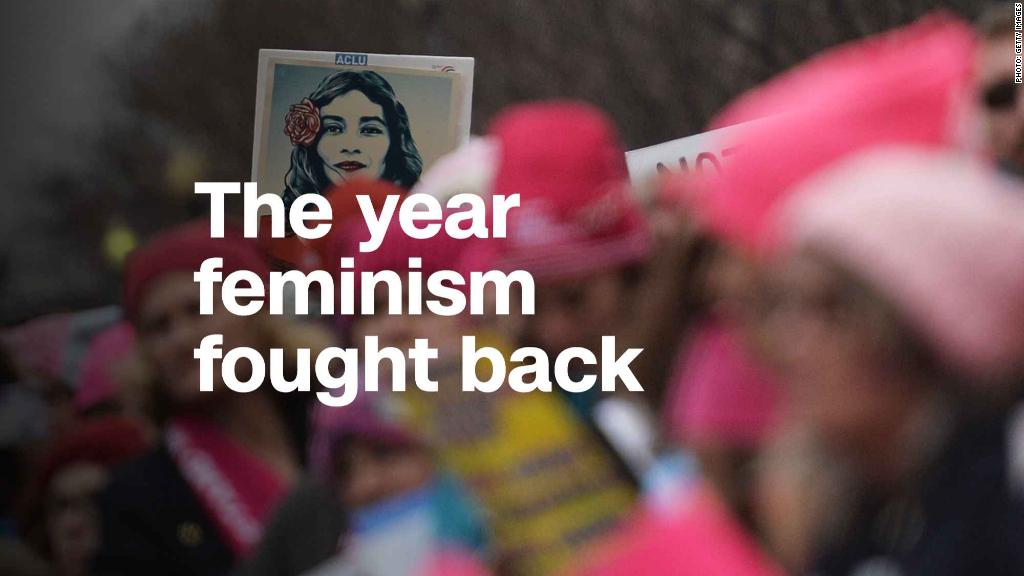
examples of empowerment illustrate how women everywhere are rising up
and taking the women's movement into the mainstream, says women's rights
champion Marianne Schnall, author of
"What Will It Take to Make a Woman President? Conversations about Women, Leadership and Power."
"Women
are protesting, marching, organizing and building power. From the
millions who joined the Women's March to the survivors who have bravely
come forward with their stories of sexual harassment and assault, to the
millions participating in the #MeToo movement, it's become clear that
women are not going to stay silent anymore," Schnall
wrote recently for CNN Opinion.
"The
'women's movement' has been swept into the mainstream and become more
diverse, and social media has become increasingly effective at
mobilizing younger generations of women and girls," said Schnall,
founder of
Feminist.com and the
"What Will It Take" movement.
Rachel Simmons,
a leading expert on girls' empowerment, bestselling author and
educator, said that when women are silenced, they're isolated from each
other, and that "exacerbates shame about their experiences."
"Shining
a light on harassment has forged a community where women feel
authorized to raise their voices in ways they never have before," said
Simmons, whose newest book,
"Enough As She Is: How to Help Girls Move Beyond Impossible Standards of Success to Live Healthy, Happy and Fulfilling Lives,"
will be released early in 2018. "The conversation has legitimized their
experience -- and they are infused with a sense of authority to tell
their stories."
'Psychological security' vital in the workplace
The
hope is that this feeling of empowerment will spread to women who may
feel that things haven't changed much for them in the workplace, such as
some in blue-collar professions.
Sanyin
Siang, a coach and adviser to chief executive officers, said that when
workers feel more empowered, they are more likely to thrive in the
workplace. This is vital, especially at a time when society faces
immense challenges and needs to draw on the best talent in every corner
of every organization, she said.
"If
people don't feel psychologically secure, they are not going to be able
to give their best and we're at a time when we need everyone, every
single organization, whether they're in a social sector, private sector,
public sector ... we need talent to be at their best and contributing
their best and that psychological security is so vitally critical to
that," said Siang, who is author of
"The Launch Book: Motivational Stories to Launch Your Idea, Business or Next Career."
One
of the "wonderful upshots" of the sexual harassment allegations is a
greater sense of psychological security in the workplace, "and hopefully
that trajectory will continue in that direction," Siang said.
"When
you have that psychological safety, whether you're man or woman, black,
Asian, white, you're going to be able to bring your best to your
organization, to society," she added.
Louise Sattler, co-founder and owner of
411 Voices,
a digital media marketing company, said she doesn't know whether she is
feeling more empowered, but she believes that recent events seem to
have opened opportunities for dialogue between men and women.
"For
example, I have noticed my recent business conversations with males
often end up with a discussion about specific cases of sexual harassment
or abuse that has been announced in the news," she said. "Many of the
men in my meetings seem distressed that some of their role models have
now been accused of heinous crimes."
This
opportunity for deeper dialogue between women and men also equalizes
the situation in the workplace, where it's about women helping men as
well as men helping women, Siang said.
"We're
seeing a deeper dialogue happening that cuts beyond just clichés and
... that enables both men and women to help each other and more
effectively work together," she added.